
FASHN AI: reimagining fashion and photography

fal Editorial
Deep dives with the companies taking AI seriously in the industries that matter. One company, one hard problem, and what it actually takes to solve it at scale.
FASHN, building on fal
The way fashion gets seen has always been a logistics problem. A brand schedules a studio, commits to a location, books models, and locks in a creative direction weeks before the shoot happens. On the consumer side, a shopper tries to imagine whether a garment will actually look right on their body based on a single image of someone else wearing it. Both problems share the same root: the tools for showing clothes have never kept pace with the ambition of the people selling or buying them.
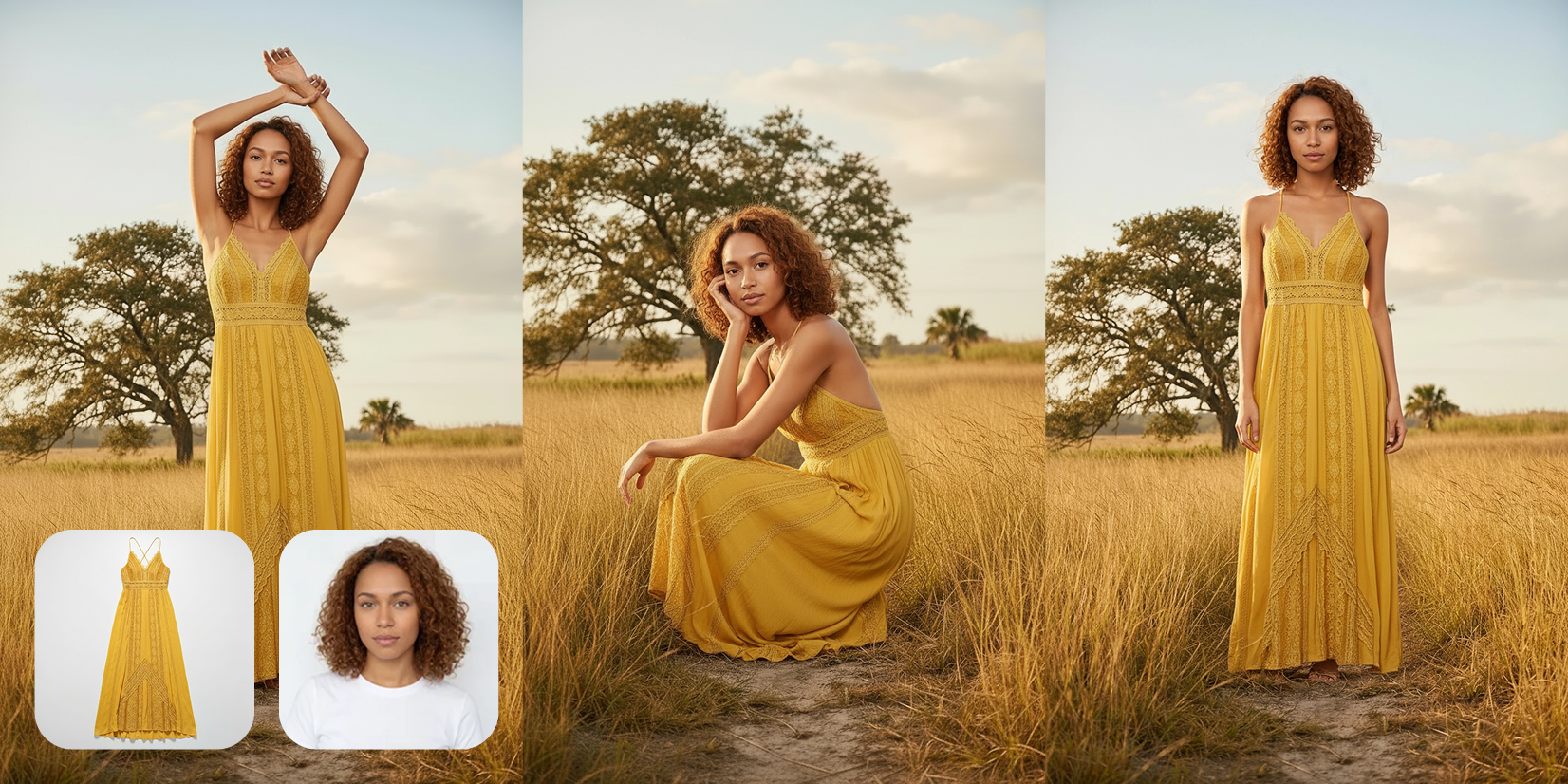
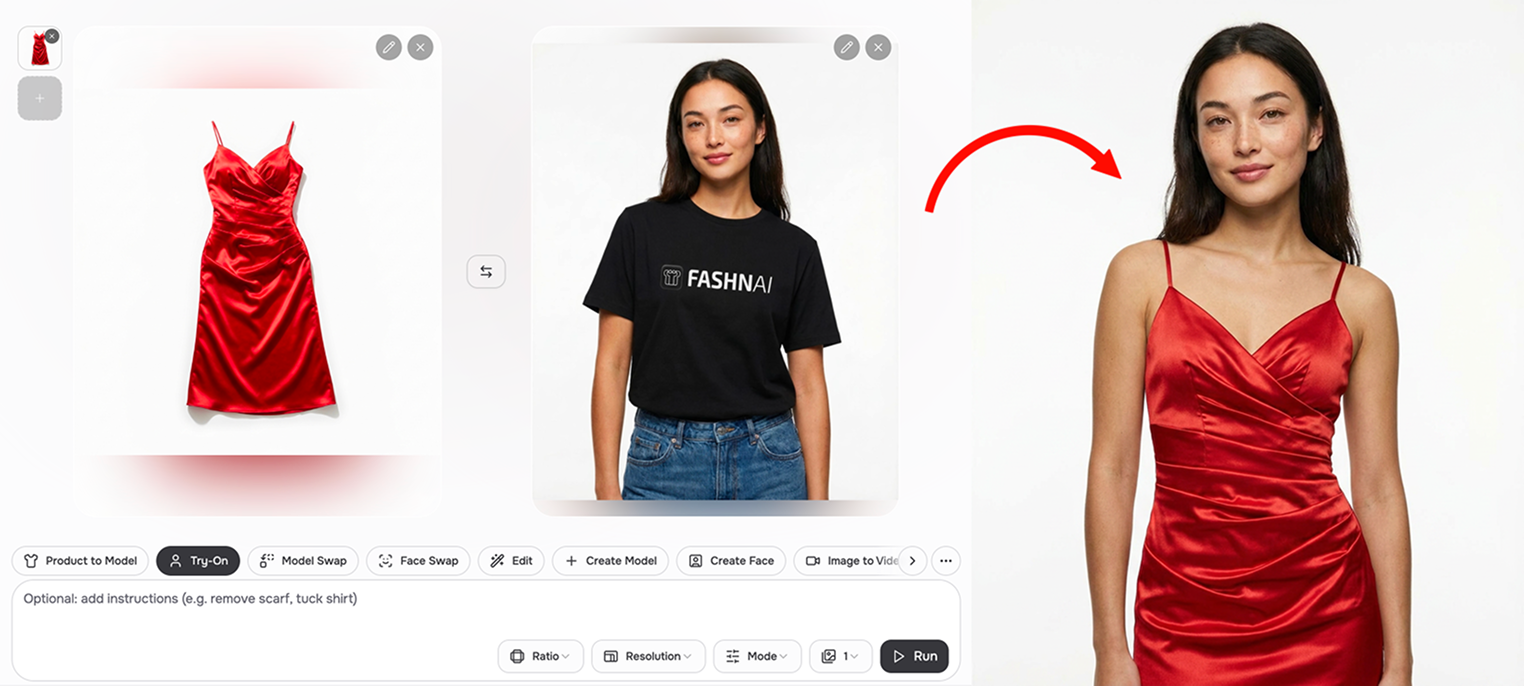
Dan Bochman and his co-founder started FASHN to close that gap. What they've built lets fashion brands generate on-model imagery at catalog scale, producing, iterating, and localizing photography without the logistics that have always defined the process, while also giving consumers a way to see clothes on their own bodies before they buy (virtual try-on).
The studio as a constraint
Fashion brands shoot their collections every season, and for faster-moving brands that cycle can compress to every few weeks. Each shoot commits a brand to a location, a set of models, and a creative direction. Once it's done, those assets are fixed. New product added to the collection after the shoot? Missed. A campaign that needs to speak to a different regional market? Start over. Creative direction you want to carry into next season? Book the same studio, hope the same photographer is available, try to reconstruct the same conditions.
The economics are quantifiable in a way that most AI benefits are harder to pin down. Brands running weekly or monthly shoots, each costing tens of thousands of dollars, have a clear baseline. When AI generation produces comparable imagery, the math is immediate. But cost is almost a distraction from the more fundamental shift, which is that the physical constraints of a shoot are no longer the boundaries of what's possible.
"Whether you want extreme diversification or extreme consistency, you are not limited by your physical means or your location."
Fast fashion brands like Shein and Temu have taken this further by skipping the physical source asset entirely. They design directly in 3D software and use those digital assets as the starting point, which means they can go end-to-end without a camera ever entering the process. The tradeoff is fidelity, those 3D renders don't carry the same precision as a well-lit physical garment, and if you look closely at the product imagery the digital origin is visible. For premium and mid-market brands the stakes around accurate representation are higher, which means the source asset still matters and the quality bar for everything built on top of it is stricter. That's exactly where the technical decisions FASHN made early become the deciding factor.
Dan points to Zara as a benchmark for what brand consistency at scale looks like when you build physical infrastructure around it. An entire building dedicated to photography, internal studio teams, standardized processes refined over years. That kind of consistency has historically required that level of investment.
The infrastructure requirement fashion AI doesn't talk about enough
The infrastructure requirements for fashion photography are different between fashion photography and virtual try-on. For consumer-facing try-on, the challenge is latency per request. Generations need to feel fast. For catalog photography, the challenge is what happens when an entire collection needs to move through the system at once.
A brand doesn't generate one image. They upload a full product directory and need all of it processed, at consistent quality, within a timeframe that fits into an actual production workflow. The relevant metric isn't how quickly a single image generates. It's how many can run in parallel without quality degrading across the batch.
FASHN runs at 500 concurrent requests for enterprise customers on fal's serverless infrastructure. At that threshold, a brand submits a full collection, steps away, and returns to completed assets.
"You upload an entire directory, click a button, grab a coffee, and come back to see all of those assets ready. That's what makes it usable for big brands."
Below that threshold, the workflow breaks down regardless of output quality. A brand processing a 300-piece collection sequentially isn't going to build this into their production process. Bulk concurrency isn't a nice-to-have. It's the difference between a tool that gets evaluated and a tool that gets used.
Why virtual try-on is harder than it looks
The early path most teams take with virtual try-on is fine-tuning an existing foundation model and layering on adapters until the outputs look convincing enough. Dan's team worked through every credible option available at the time, Stable Diffusion XL, Flux, Qwen Image, different encoders, different adapter architectures. None of them produced results that held up against what fashion brands actually require.
The fundamental issue is that latent space works well when the goal is plausibility. Generating a realistic image of a model in a generic outfit, is exactly what it's designed for. But virtual try-on isn't a generative task in that sense, but a precise editing one. You need to take a specific garment and warp it exactly onto a specific body, preserving every texture and pattern detail in the process. In latent space, that kind of pixel-perfect edit is hard to learn, and the training required to do it accurately largely offsets the computational efficiency you gained by compressing the image in the first place.
Fashion brands need their products represented exactly as they are. Fine textures, precise patterns, accurate color. Not because it looks better in a demo, but because getting it wrong has real consequences.
"They're scared of being accused of false marketing. They're scared of showing you a product that looks good but isn't the actual product, and then they get a return."
The only research at the time showing genuinely promising results operated in pixel space, meaning it worked directly with image data rather than compressing images into a more efficient but less precise intermediate representation. There was no open source implementation. FASHN built one from scratch, released it publicly, and trained on top of it. That choice set a quality ceiling high enough for the enterprise market, and the technical discipline it required shaped everything that came after.
Serving two customers who want opposite things
Virtual try-on surfaces a design problem that sits at the center of building AI tools for fashion. Brands and consumers both want accurate, convincing results, but their tolerance for how long they'll wait for one varies significantly.
Brands care about accuracy above everything. They will wait several minutes for a generation if the output faithfully represents their product. What they cannot accept is an image that looks plausible but gets the garment wrong.
End consumers care about speed most, but not at the expense of feeling seen. They will care a lot about an image that arrives in six seconds, but also still care that the image preserves their body shape, shows their tattoos, accounts for their piercings. The bar isn't perfection; it's enough realism that the experience feels personal rather than generic. What kills consumer adoption isn't imperfect accuracy, it's slow accuracy. A result that takes forty seconds, however precise, loses the customer immediately.
Same underlying technology, radically different requirements depending on which use case it's serving. That gap shaped how FASHN thought about latency, quality trade-offs, and the infrastructure needed to support both without forcing a compromise on either.
The gap between where virtual try-on is today and where it needs to be is still significant. Dan puts the current average generation time at around 40 seconds, against a consumer expectation closer to five. Brands are bridging that gap with clever UX workarounds for now, but the trajectory is clear. As generation speeds improve, those workarounds become redundant and the experience becomes genuinely interactive.
The last problem AI fashion hasn't solved yet
What AI fashion photography and virtual try-on share today is that both are essentially aesthetic achievements. Fashion photography can show a garment on a body convincingly, preserve texture and color faithfully, and do it at catalog scale. Virtual try-on can place that same garment on a consumer's own body quickly enough that the experience feels personal. What neither can do yet is tell you whether the garment will actually fit.
Solving that requires data from both sides. Accurate 3D construction data from brands on how a garment is built, and some form of body measurement data from consumers. The brand side is moving in that direction as 3D-native design workflows become standard. The consumer side requires a kind of participation most people haven't been asked to give yet.
Dan sees that convergence happening gradually as the infrastructure on both sides matures. When it does, the gap between seeing a garment and knowing it fits closes in a way that makes everything built so far look like the foundation rather than the finish line.
FASHN builds AI fashion photography and virtual try-on tools for brands and enterprises, leveraging fal's infrastructure.