
Seedream 5.0 Lite Prompting Guide

Seedream 5.0 Lite dropped in February 2026 and it's a different beast from what we've been used to. Every single image on this page was generated with the exact prompt shown.
This is an independent guide based on our own testing. We just really like what this model can do and wanted to share what we found.
What Makes Seedream 5.0 Lite Different
Before diving into prompts, what sets this model apart:
- It reasons before it generates. Before any pixels get drawn, the model runs a multi-step reasoning pass over your prompt. It evaluates how objects relate to each other in space, whether the physics make sense, whether the lighting holds up across the scene. The upshot: complex scenes that would trip up other models just work here.
- It can search the internet. The model pulls in real-world visual knowledge on the fly. Ask for a specific building, a brand logo, or a regional architectural style and it has something concrete to reference instead of guessing.
- It handles text properly. Put text in quotation marks and it renders correctly. Works for neon signs, chalkboard menus, even small engraved text on a brass plate. It reads your prompt and writes what you asked for.
- It edits with context. Feed it a reference image and tell it what you want different. It'll figure out what to leave alone on its own. Want to turn summer into winter? Change the art style? Recolor a product? All from a single edit prompt.
The Prompt Formula That Works
After probably 1000+ test generations, this is the structure We keep coming back to. Not the only way to do it, but the most reliable one We've found:
Subject > Setting > Style > Lighting > Technical
Each piece controls something different:
- Subject: The main thing in your image. Be specific about materials, textures, and actions.
- Setting: Where is this happening? Environment, time of day, background details.
- Style: What should this look like? Photography style, art movement, film reference.
- Lighting: How is the scene lit? Direction, quality, color temperature.
- Technical: Camera specs, lens, depth of field, aspect ratio. These act as rendering instructions.
The rest of this guide shows how each piece affects the output. You don't always need all five. Sometimes Subject + Style is enough. But the more you specify, the less the model decides for you.
Building a Prompt Step by Step
Same subject (a coffee mug) at three levels of detail. Watch how each level gives you more control over the final image.
Level 1: Simple
A red ceramic coffee mug on a wooden table.
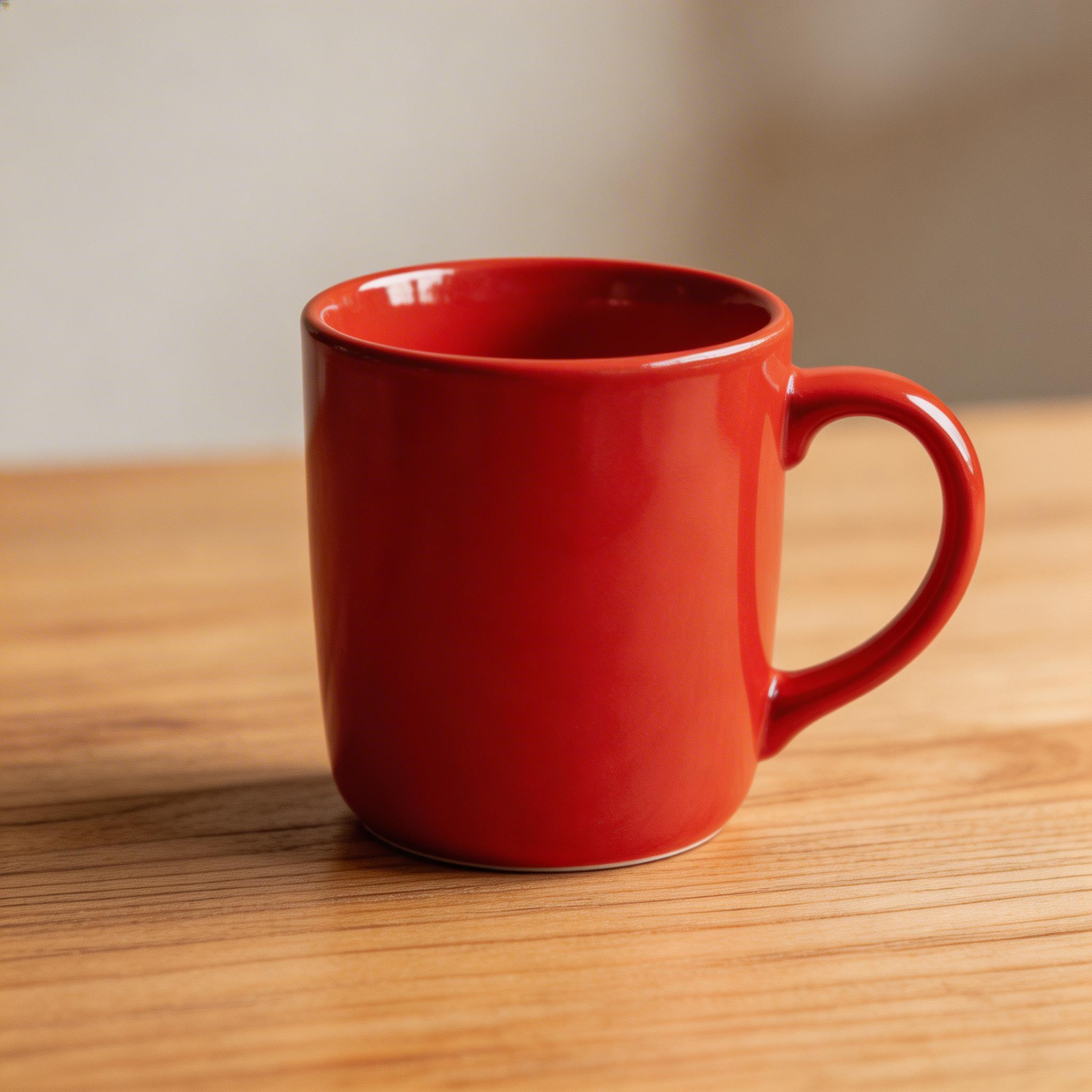
You get a coffee mug on a table. The model fills in everything you didn't specify. Nothing wrong with it, but zero control over the decisions.
Level 2: Adding Context
A red ceramic coffee mug on a rustic wooden table, steam rising from the black coffee inside. A small spoon rests on a white saucer beside it. Morning sunlight from a nearby window.
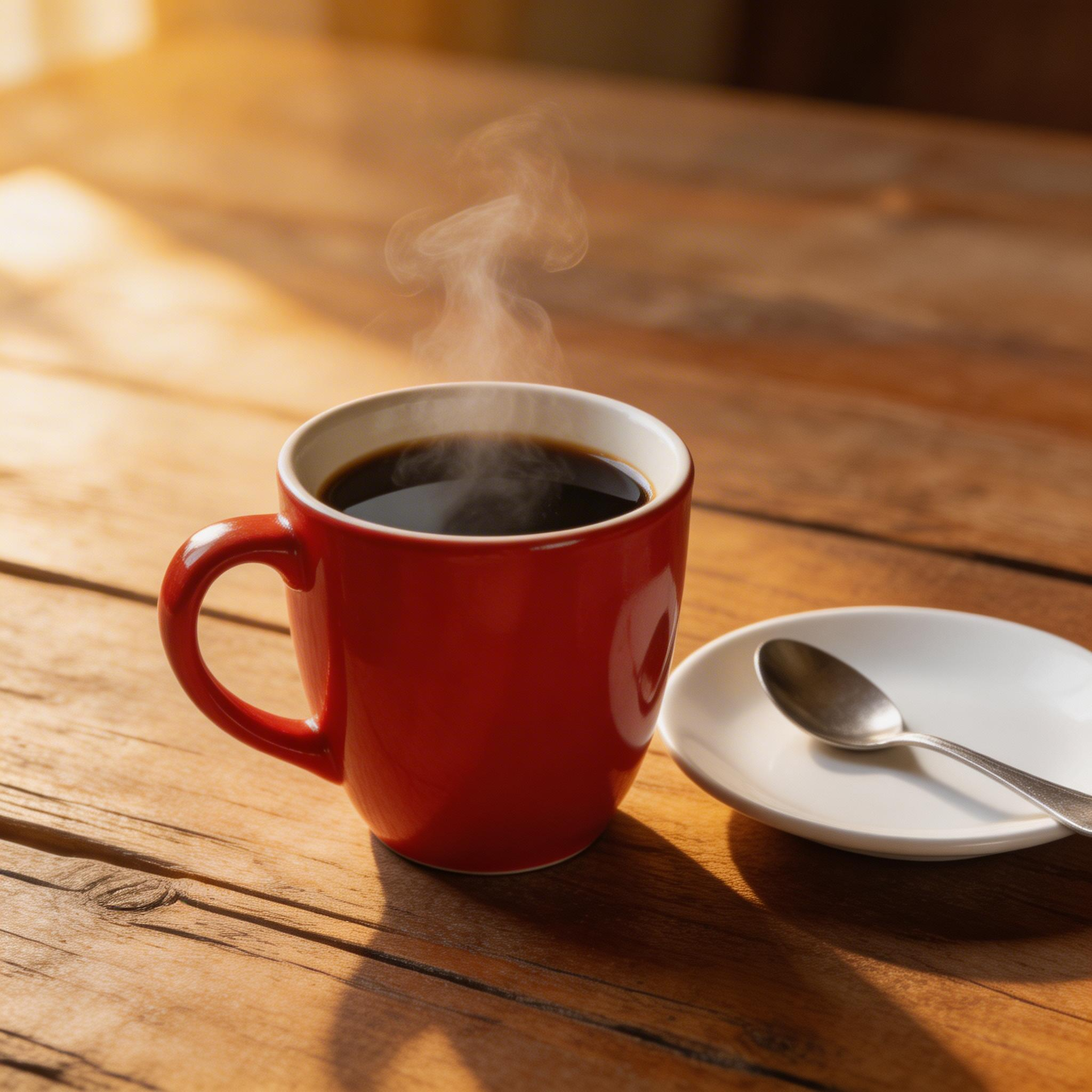
The steam, saucer, window light: each detail gives the model a concrete decision. The scene has a story. Someone just poured this coffee.
Level 3: Full Control
A handmade red ceramic coffee mug with a slightly uneven glaze on a weathered oak farmhouse table. Wisps of steam curl up from the dark coffee inside, catching the warm morning light streaming through a frosted kitchen window on the left. A tarnished silver spoon rests on a white porcelain saucer beside the mug. In the soft background, a folded newspaper and a pair of reading glasses are barely visible. Food photography, shot on Fujifilm X-T5 with 56mm f/1.2 lens, shallow depth of field, Kodak Portra tones.
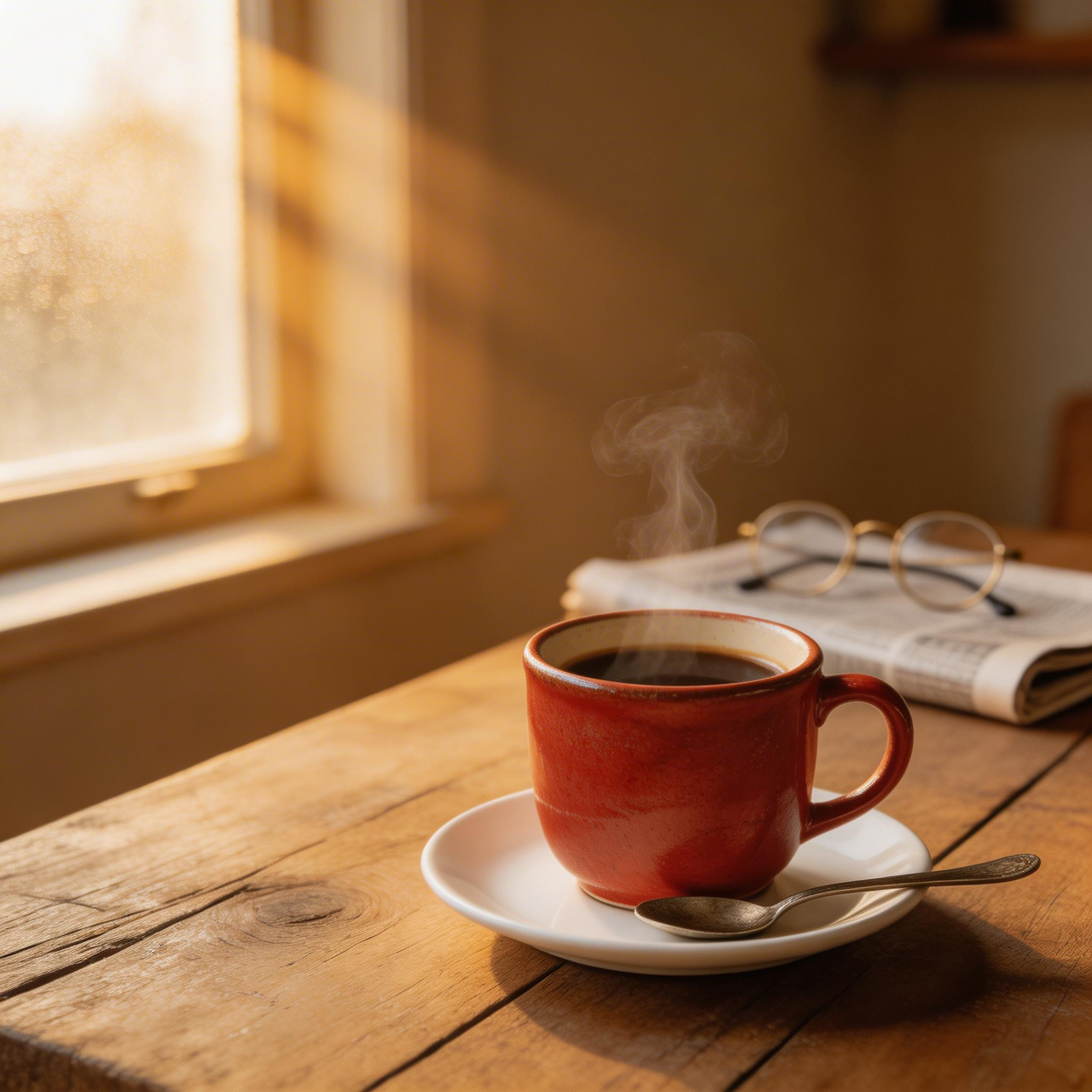
Now you own every pixel. The glaze texture, table material, lighting direction, background props, camera and film stock. Every sentence removes one decision from the model and gives it to you.
The takeaway? Start simple, add detail where it matters. You don't need Level 3 for every image. But when something specific matters to you, say it explicitly. Otherwise the model fills in the blanks however it wants.
Text Rendering
The key rule: put text in quotation marks and it renders correctly. Use quotes around the words you want in the image.
Neon Signs
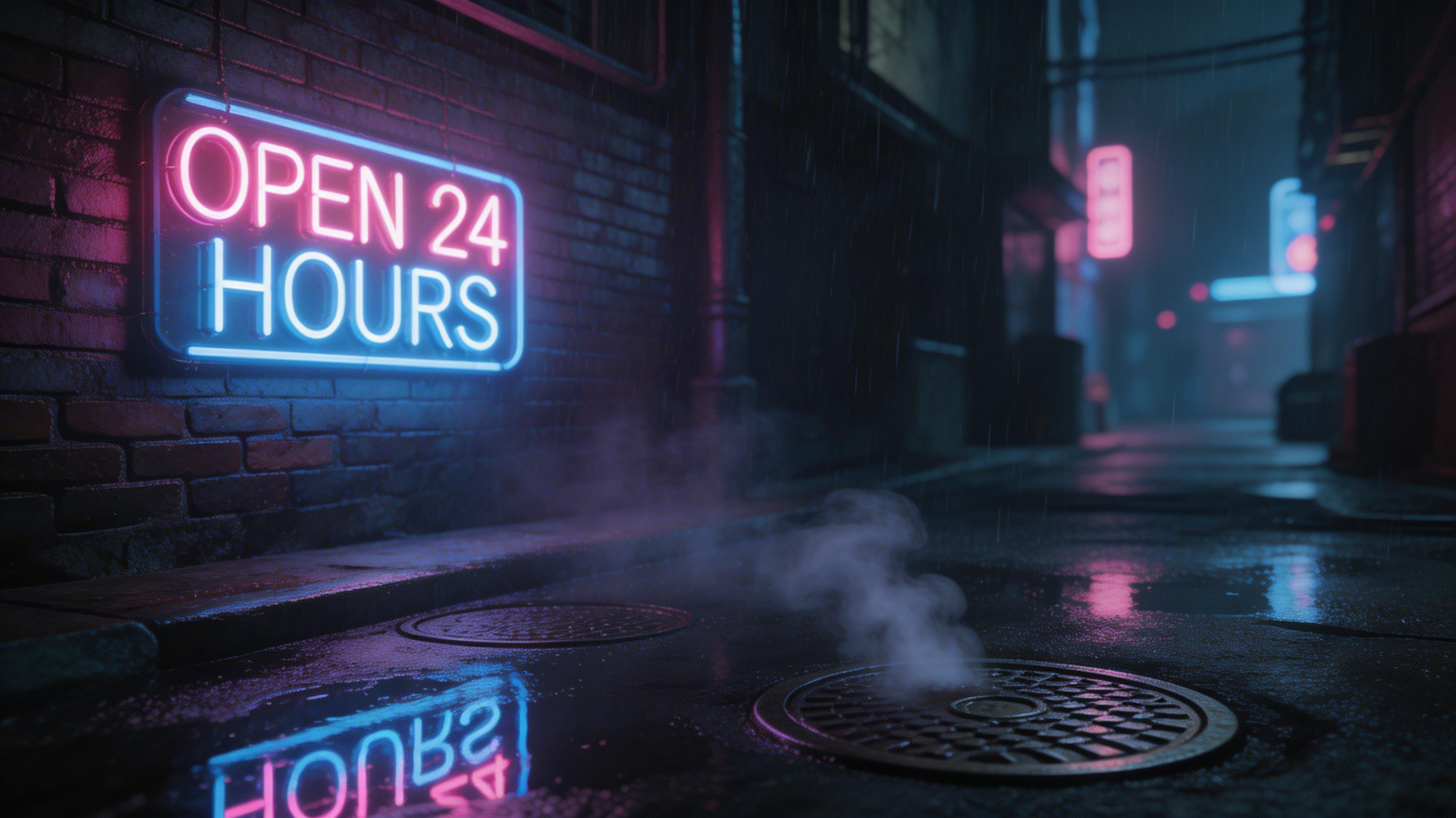
A neon sign reading "OPEN 24 HOURS" glowing in a rain-soaked city alley at night, cyberpunk atmosphere, reflections of pink and blue neon light on wet asphalt, steam rising from a manhole cover
Chalkboard Menus
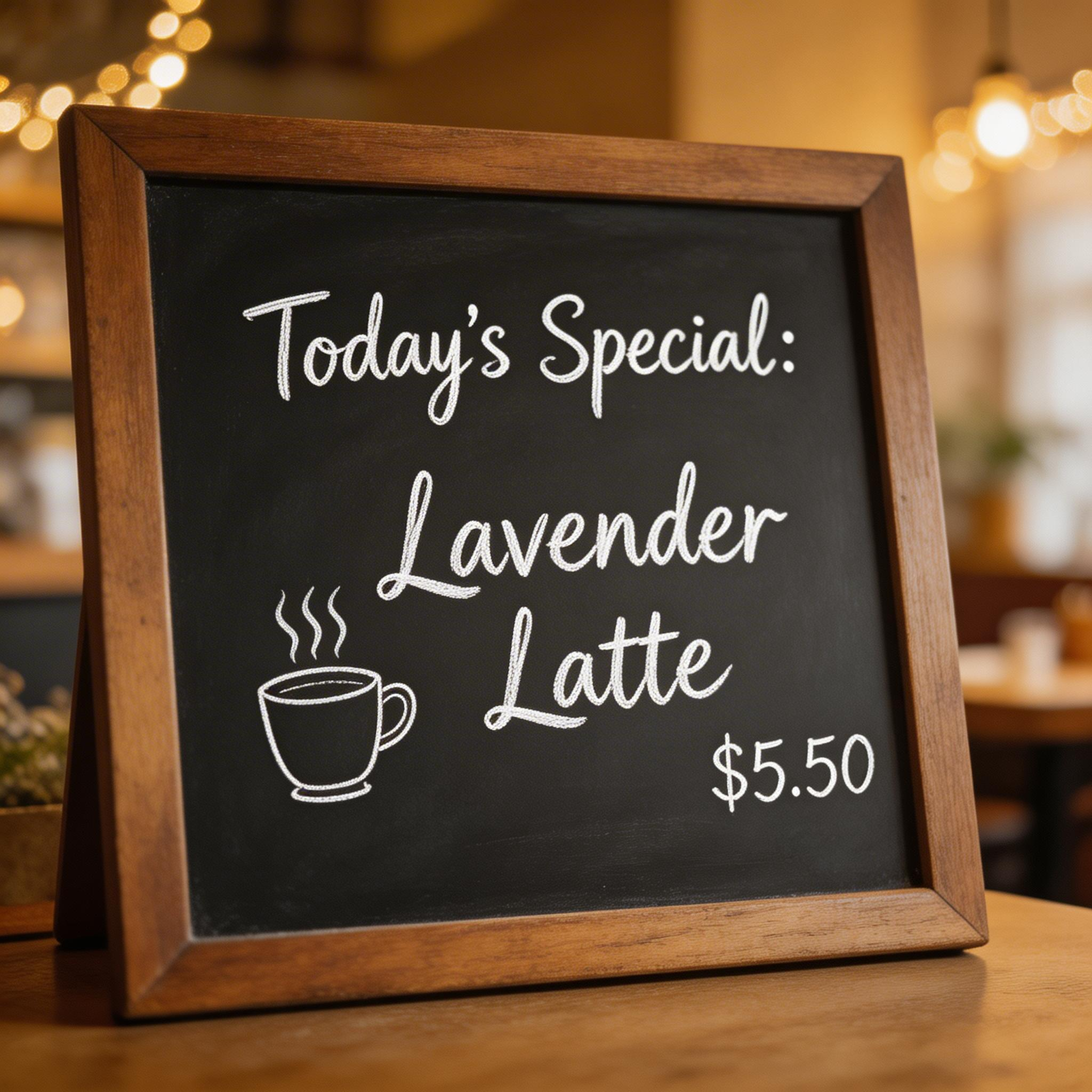
A vintage-style coffee shop chalkboard menu displaying "Today's Special: Lavender Latte $5.50" in beautiful handwritten chalk lettering with small chalk-drawn coffee cup illustration, warm interior cafe lighting, bokeh string lights in the background
Tips for text rendering:
- Short text works best. Single words and short phrases render cleanly.
- Describe the text style. "Neon lettering", "hand-painted sign", "engraved brass plate".
- Give it a surface. The model needs to know where text lives physically.
- Quotation marks are mandatory. Without them, text becomes descriptive keywords.
HEX Color Control
You can drop HEX color codes directly into your prompt, and the model actually uses them. Not "sort of close," but actually uses them. For brand and design work, that level of color accuracy is a big deal.
Gradient Control
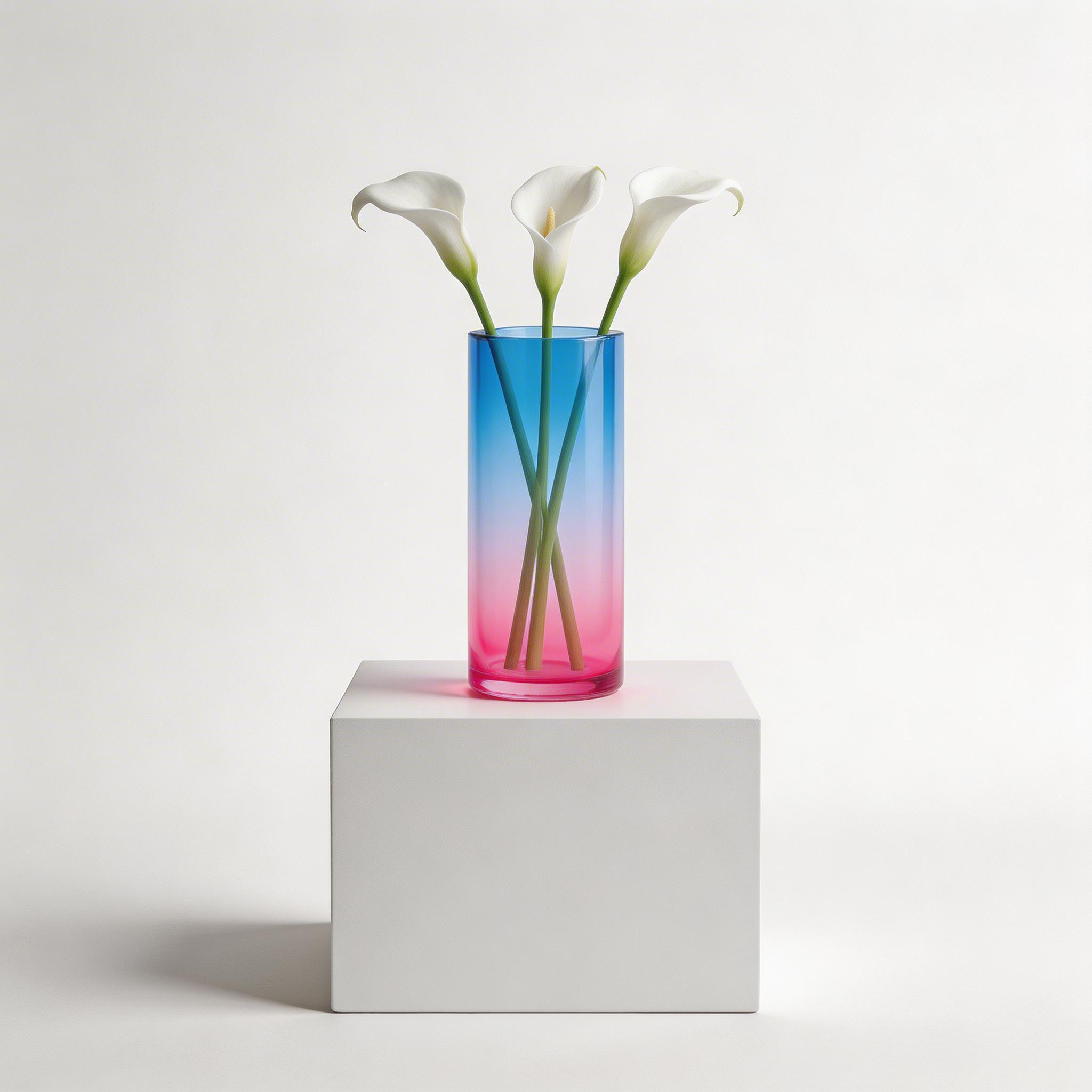
A tall glass vase on a white pedestal in a minimalist room. The vase has a smooth gradient color, starting with color #FF006E hot pink at the base and transitioning to color #3A86FF electric blue at the top. Inside the vase, three white calla lilies with stems visible through the glass. Clean product photography, soft studio lighting, white background.
Graphic Design with Precise Colors
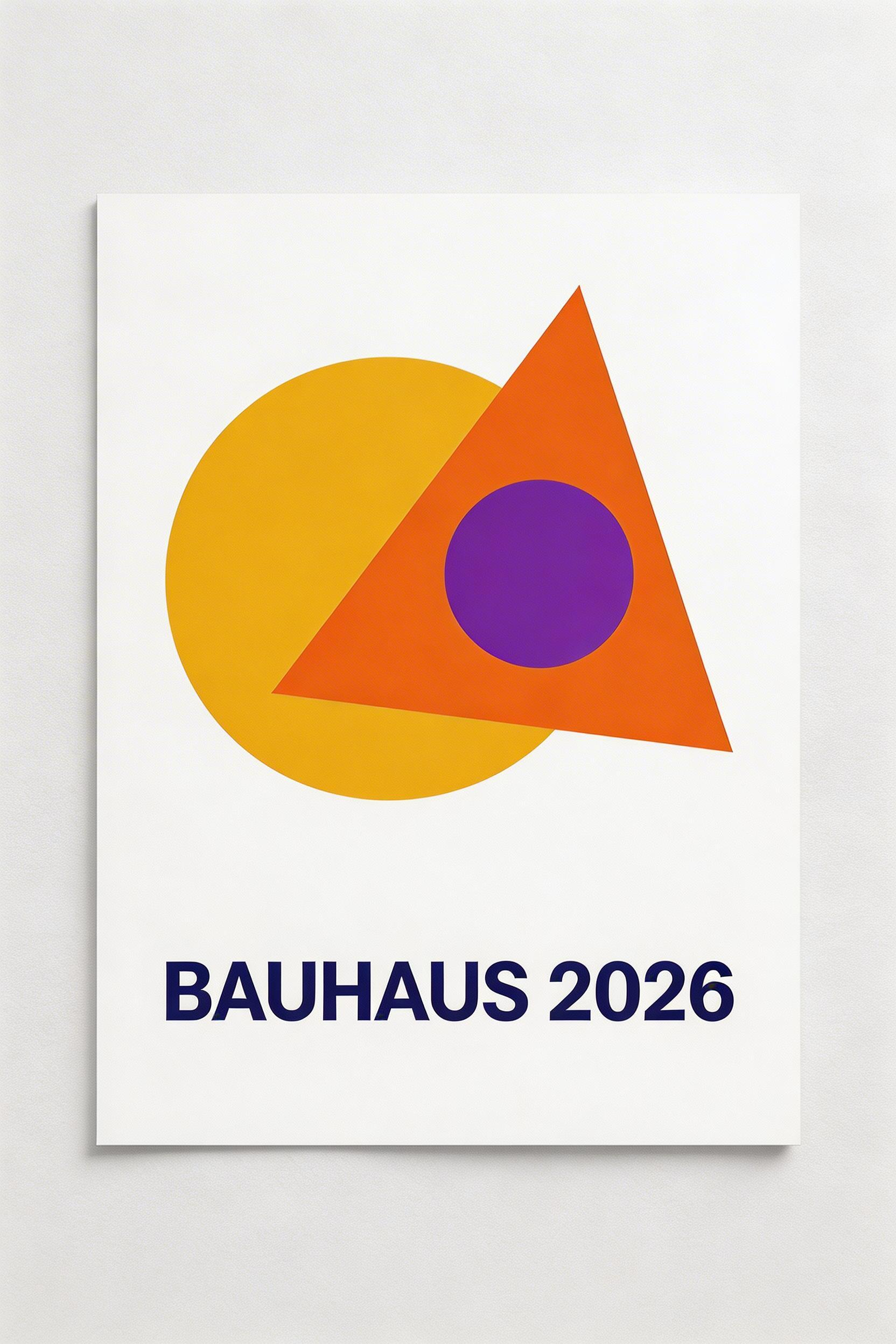
A modern geometric poster design on a white wall. The poster features overlapping circles and triangles. The largest circle is color #FFBE0B golden yellow, the triangle overlapping it is color #FB5607 deep orange, and a smaller circle is color #8338EC rich purple. Bold sans-serif text at the bottom reads "BAUHAUS 2026" in color #3A0CA3 dark indigo. Clean graphic design, museum exhibition poster aesthetic.
Tips for HEX colors:
- Pair hex with color names.
#FF006E hot pinkworks better than#FF006Ealone. - Large areas work best. Product body, backgrounds, large shapes.
- Great for gradients. Specify start and end colors.
- Brand consistency. Use exact hex values across assets.
JSON Structured Prompting
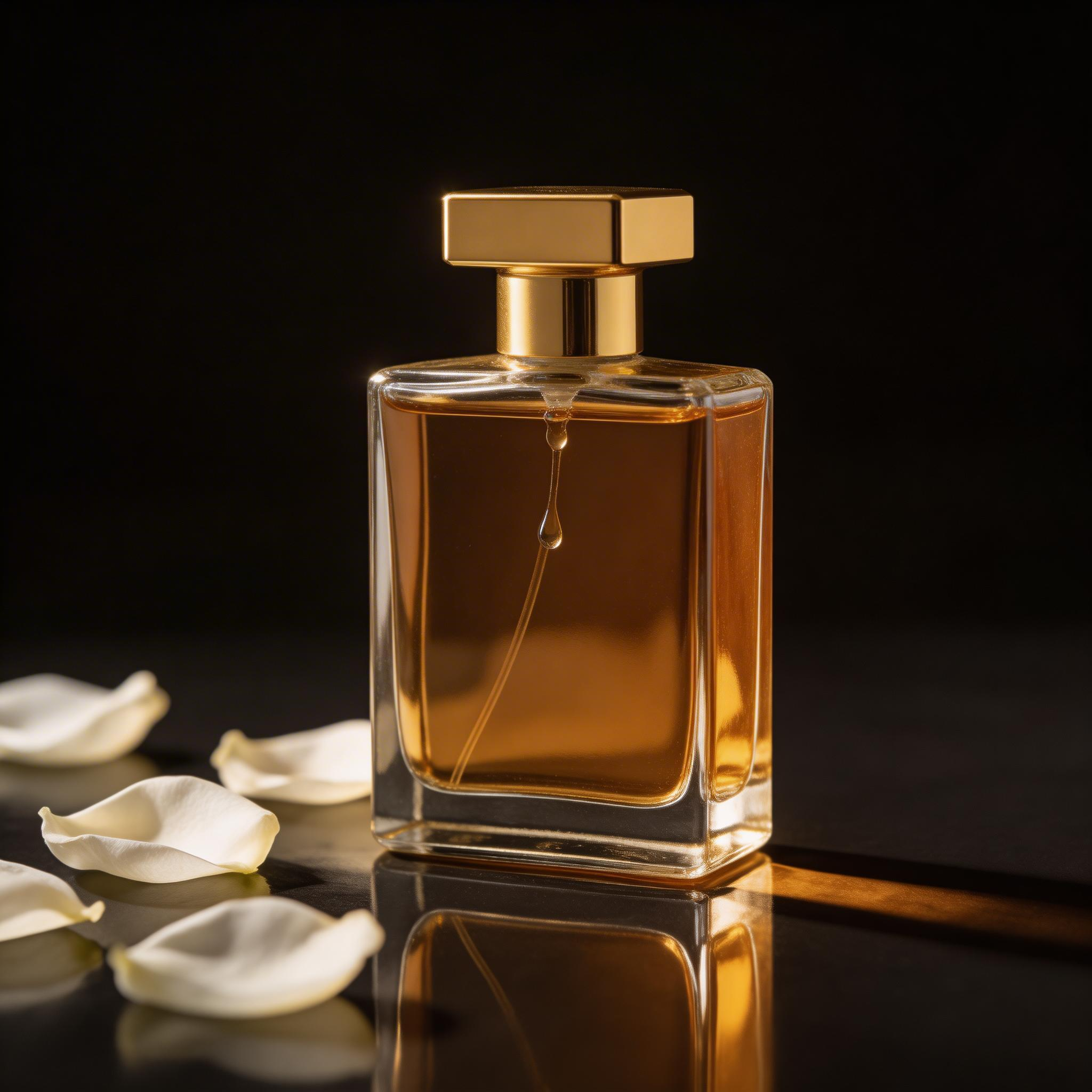
You can pass the prompt as a JSON object. Each element gets its own description, position, and color. This works well when you have multiple subjects and need precise placement.
Product Photography (Perfume)
{
  "scene": "Luxury perfume bottle product advertisement on reflective black surface",
  "subjects": [
    {
      "description": "Tall rectangular glass perfume bottle with gold cap and amber liquid",
      "position": "center frame",
      "action": "standing upright with a single water droplet running down the glass"
    },
    {
      "description": "Scattered white rose petals",
      "position": "around the base of the bottle"
    }
  ],
  "style": "High-end luxury product photography, Chanel advertisement aesthetic",
  "color_palette": ["#1a1a1a", "#D4AF37", "#FFFFFF", "#8B4513"],
  "lighting": "Single dramatic side light from the left, rim lighting on bottle edge",
  "camera": {
    "angle": "slightly low angle looking up",
    "lens": "100mm macro",
    "depth_of_field": "shallow, petals in foreground slightly blurred"
  }
}
Food Flat Lay with 6 Subjects
{
  "scene": "Overhead flat lay breakfast spread on a marble surface",
  "subjects": [
    {
      "description": "Acai smoothie bowl with banana, granola, chia seeds",
      "position": "upper left",
      "color": "deep purple #6B2FA0"
    },
    {
      "description": "Cup of black coffee in white ceramic cup",
      "position": "upper right",
      "color": "dark brown #3E1F00"
    },
    {
      "description": "Sourdough toast with avocado",
      "position": "lower left",
      "color": "green #568203"
    },
    {
      "description": "Glass of fresh orange juice",
      "position": "lower right",
      "color": "bright orange #FF8C00"
    },
    {
      "description": "Bowl of mixed berries",
      "position": "center"
    },
    {
      "description": "Folded sage green linen napkin",
      "position": "bottom edge"
    }
  ],
  "style": "Instagram-worthy food photography, editorial flat lay",
  "lighting": "Soft natural window light from the top",
  "camera": {
    "angle": "directly overhead, 90 degrees",
    "lens": "35mm wide"
  }
}
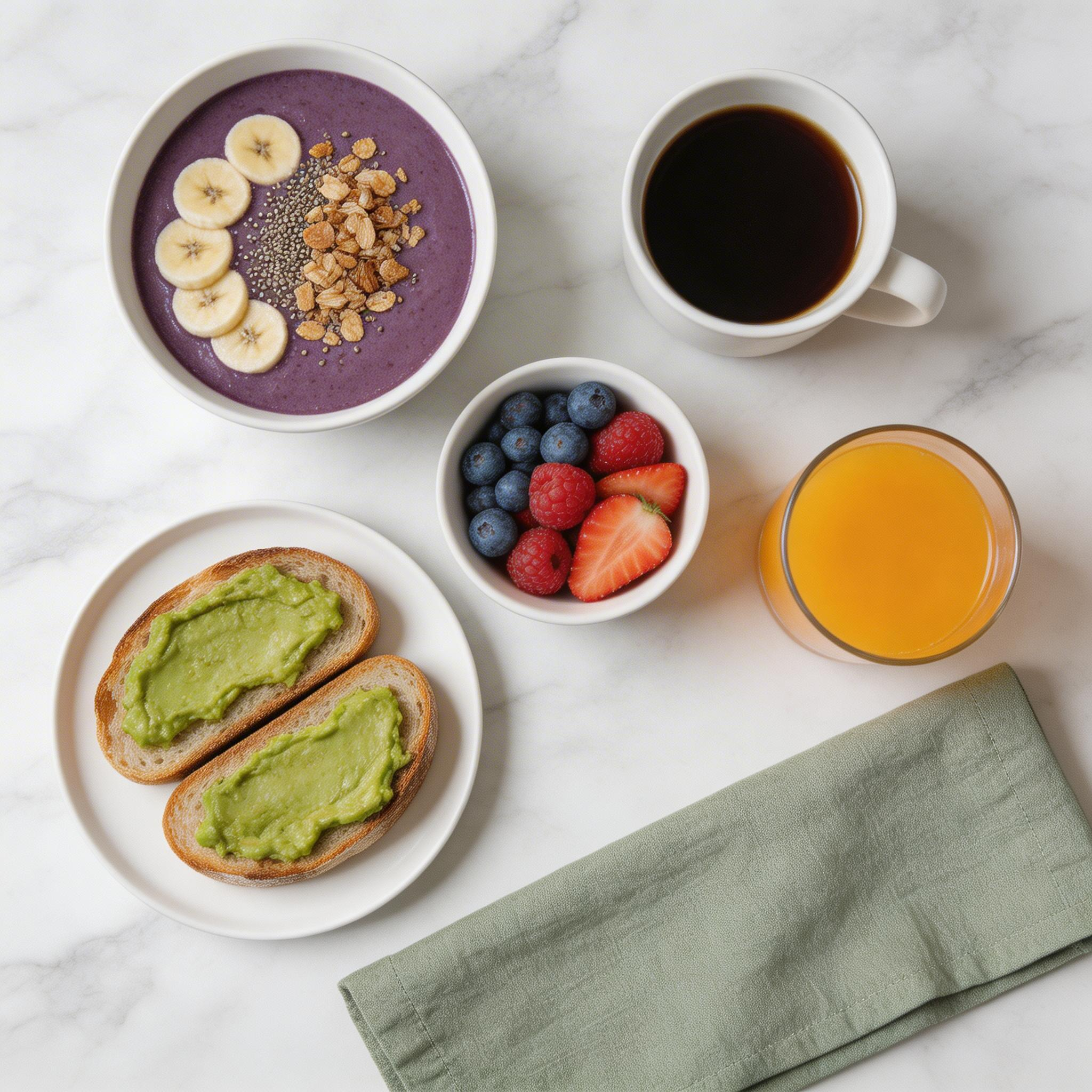
Six subjects, each pinned to a position with its own color.
When to use JSON vs plain text:
- Plain text for single-subject, creative/artistic, or when you want model freedom.
- JSON for multi-subject placement, per-element color control, commercial art direction.
- Mix both. Use JSON for structure, natural language for descriptions within fields.
Multi-Language Prompting
This actually works. Writing a prompt in French doesn't just translate the request. The output genuinely looks more French. The architecture, the light, the whole atmosphere shifts to match the language. We tested 12 languages and they all had this effect.
French - Parisian Bakery
Une boulangerie parisienne traditionnelle au petit matin. La vitrine dorée présente des croissants dorés et des pains au chocolat. Une enseigne en fer forgé indique "Boulangerie" au-dessus de la porte. Lumière chaude de l'aube, pavés mouillés par la rosée matinale. Photographie de rue, ambiance nostalgique.
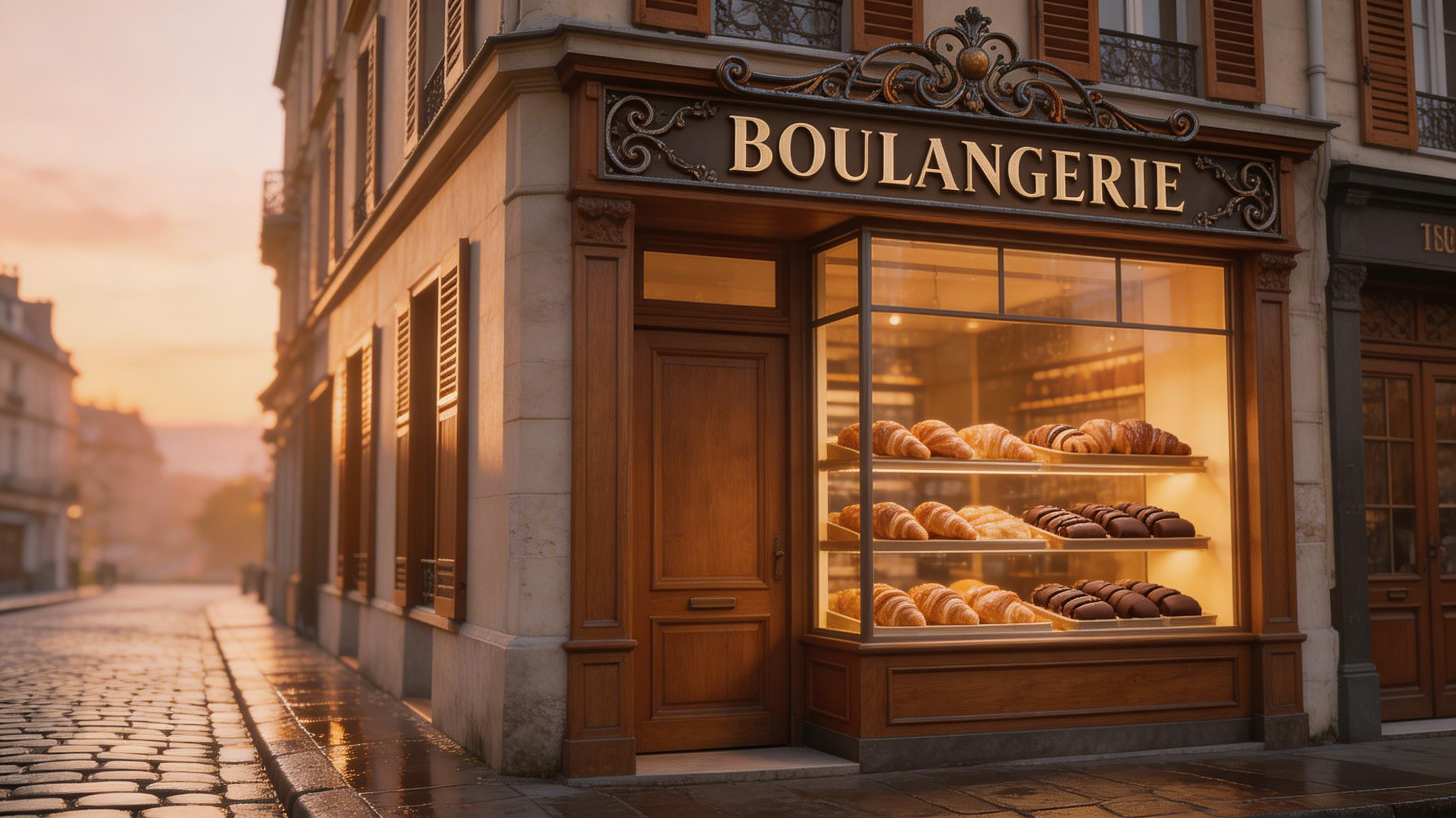
The wrought iron sign, the golden dawn, the wet cobblestones. You can tell this was prompted in French just by looking at it.
Japanese - Tokyo Back Alley
東京の裏路地にある小さなラーメン屋。赤い提灯が軒先に並び、暖簾がそよ風に揺れている。雨上がりの石畳に提灯の光が反射している。夜、映画のようなライティング、フィルム写真の質感。
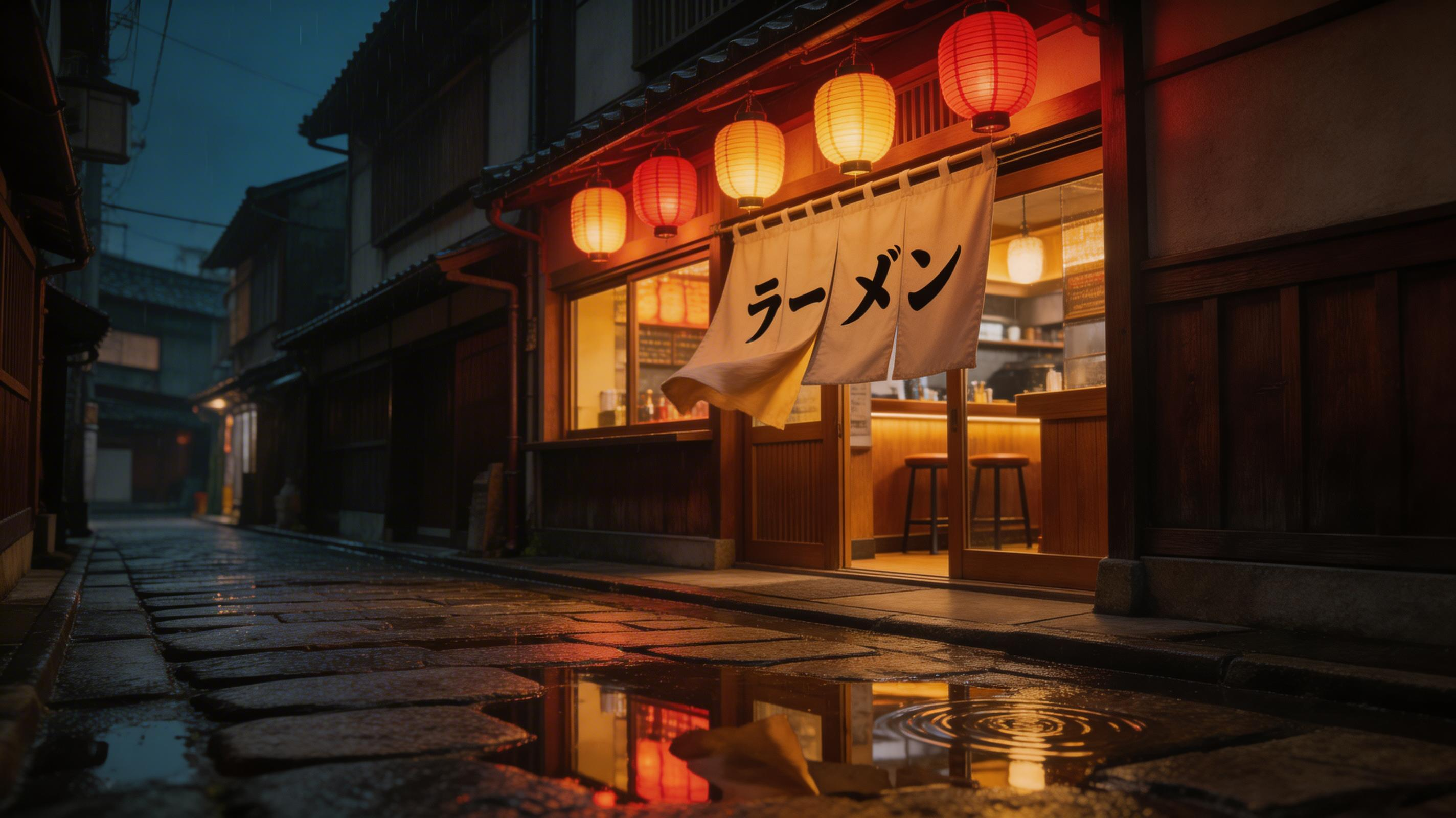
Red lanterns, noren curtain, wet stone pavement. Everything about the scene screams late-night Tokyo, and none of those details were spelled out in the prompt.
Turkish - Grand Bazaar, Istanbul
İstanbul Kapalıçarşı'nın içinden bir sahne. Renkli cam lambalar tavandan sarkarken, altın takılar ve seramik tabaklar tezgahlarda parlıyor. Dar geçitte yaşlı bir esnaf çay içiyor. Sıcak amber ışık, dokulu taş kemerler, canlı renkler. Belgesel fotoğrafçılık stili, 35mm film.
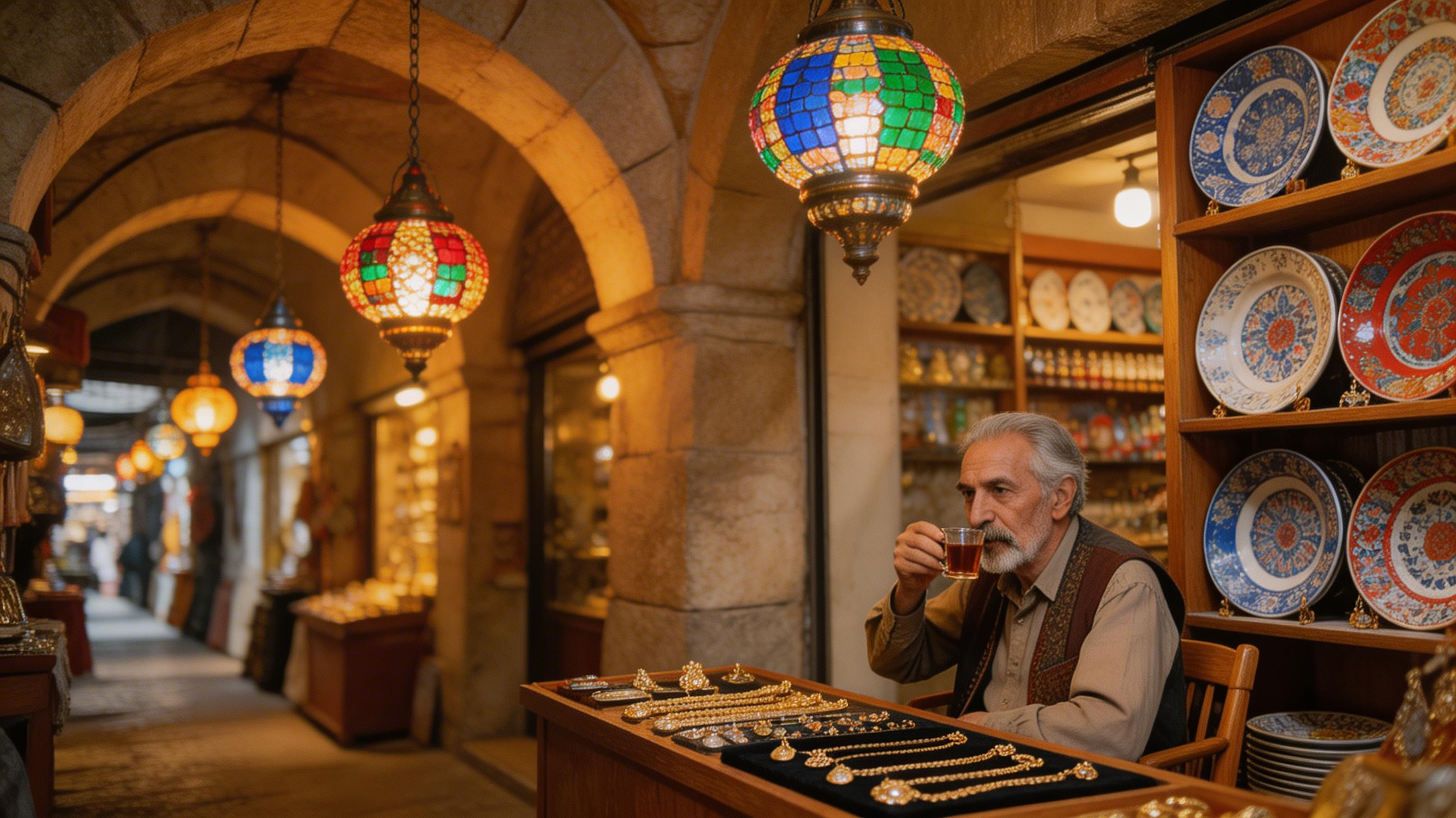
Glass lamps catch the light over gold jewelry and ceramic plates. An old shopkeeper sips tea under stone arches. The Turkish prompt nailed the bazaar atmosphere without any explicit direction.
Korean - Bukchon Hanok Village
서울 북촌 한옥마을의 좀은 골목길. 전통 기와지붕이 늘어선 골목 사이로 먼 산이 보인다. 한복을 입은 젖은 여성이 골목을 걸어가고 있다. 돌담 위에 감나무가 열매를 드리우고 있다. 가을 오후 햇살, 따뜻한 톤, 다큐멘터리 사진, 35mm 필름.
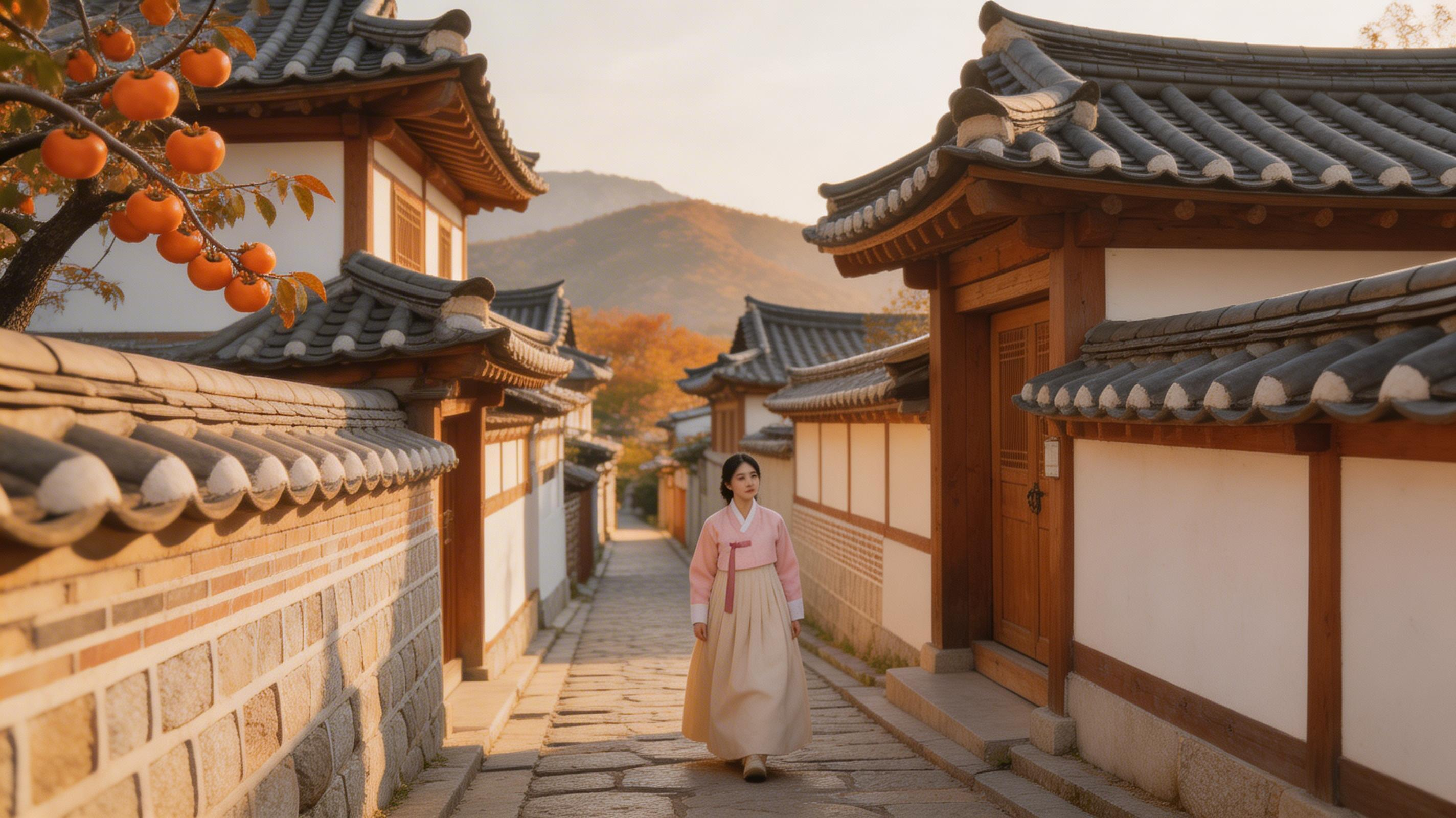
Tiled roofs, stone walls, persimmon tree. The autumn afternoon light is so specific to Seoul it almost looks like a reference photo.
Arabic - Moroccan Riad
فناء رياض مغربي تقليدي في مراكش. بلاط الزليج الملون يحيط بنافورة مركزية. أشجار البرتقال تظلل الفناء. ضوء الشمس يتسلل عبر الأقواس المزخرفة. تصوير معماري، ألوان دافئة، ضوء طبيعي ناعم.
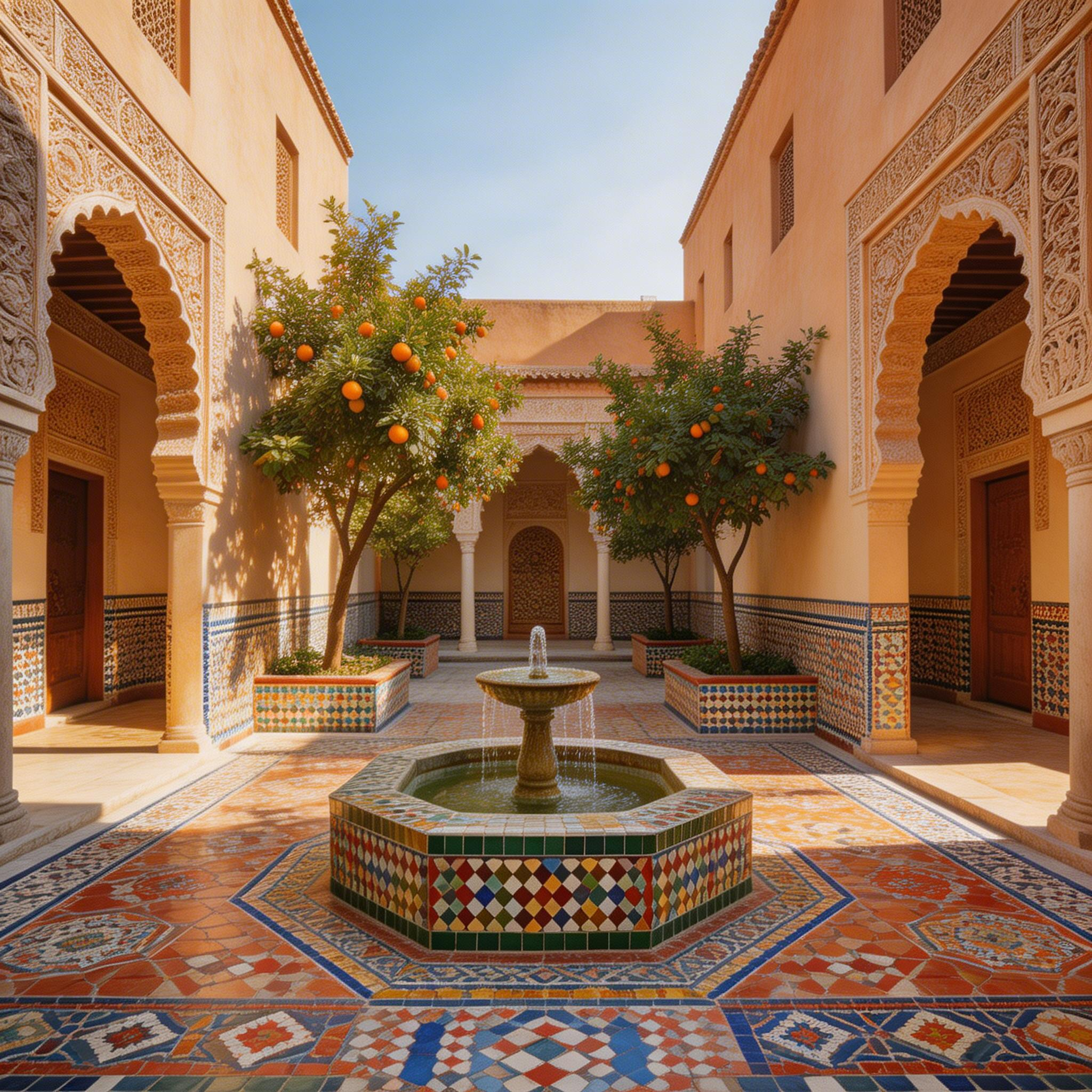
Zellige tiles surround a central fountain, orange trees shade the courtyard, light pours through ornate arches. Writing the prompt in Arabic brought out a warmth in the scene that an English equivalent probably wouldn't have.
Hindi - Diwali Night, Varanasi
दीपावली की रात वाराणसी के घाट पर हजारों दीये तैरते हुए। गंगा नदी में दीयों का प्रतिबिंब सुनहरा चमक रहा है। दूर मंदिरों की रोशनी और आतिशबाजी। सिनेमैटिक फोटोग्राफी, गर्म सुनहरी रोशनी, लंबा एक्सपोज़र।
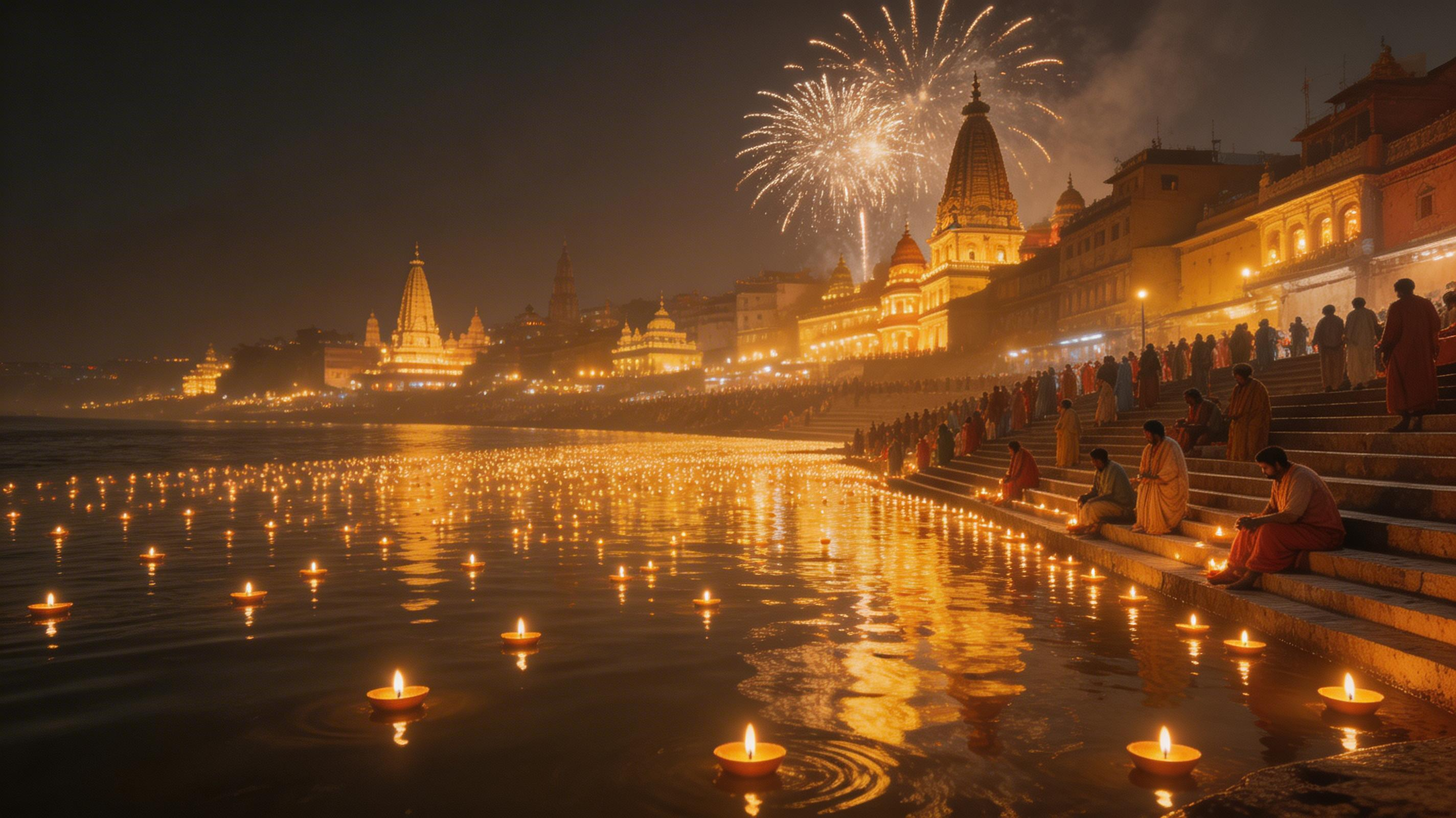
Thousands of diyas floating on the Ganges, golden light doubled in the water, fireworks far off. The Hindi prompt went straight to the spiritual weight of the scene, not just the visuals.
Spanish - Flamenco in Seville
Una bailaora de flamenco en un tablao de Sevilla. Su vestido rojo con volantes gira en movimiento congelado. Guitarrista sentado en la sombra detrás. Suelo de madera gastado, paredes encaladas con azulejos andaluces. Iluminación dramática con un solo foco cenital, fotografía de espectáculo, 85mm f/1.4.
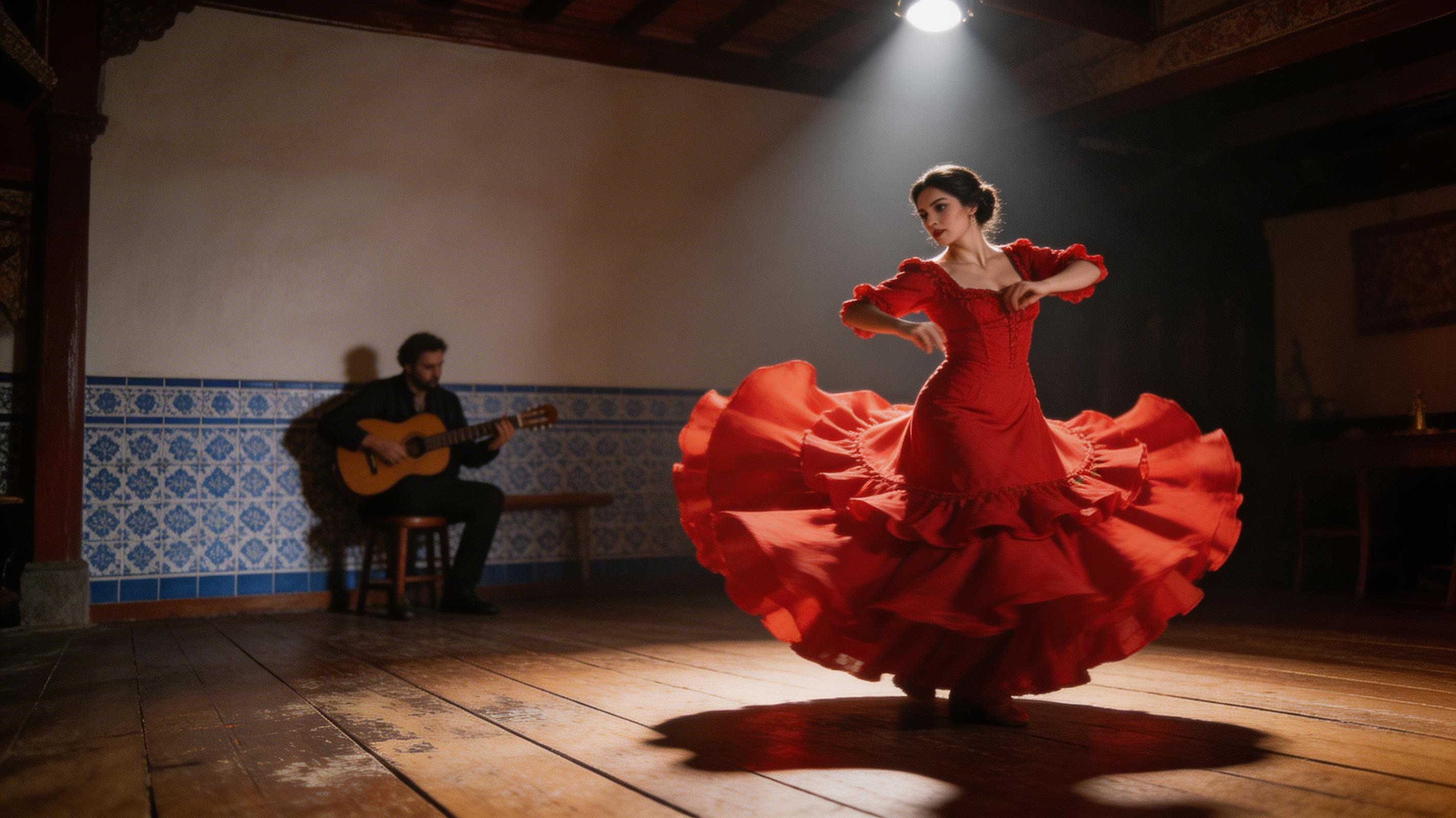
The red ruffled dress is frozen mid-spin under a single overhead spot. Worn wood floor, whitewashed walls, Andalusian tiles. Writing this in Spanish brought out an intensity that would have been hard to prompt for in English.
German - Nuremberg Christmas Market
Ein traditioneller Weihnachtsmarkt in Nürnberg bei Nacht. Holzbuden mit warmem Licht verkaufen Glühwein und Lebkuchen. Eine gotische Kirche im Hintergrund. Leichter Schneefall, goldene Lichterketten, dampfende Tassen. Straßenfotografie, gemütliche Atmosphäre, Kodak Portra 800 Filmkörnung.
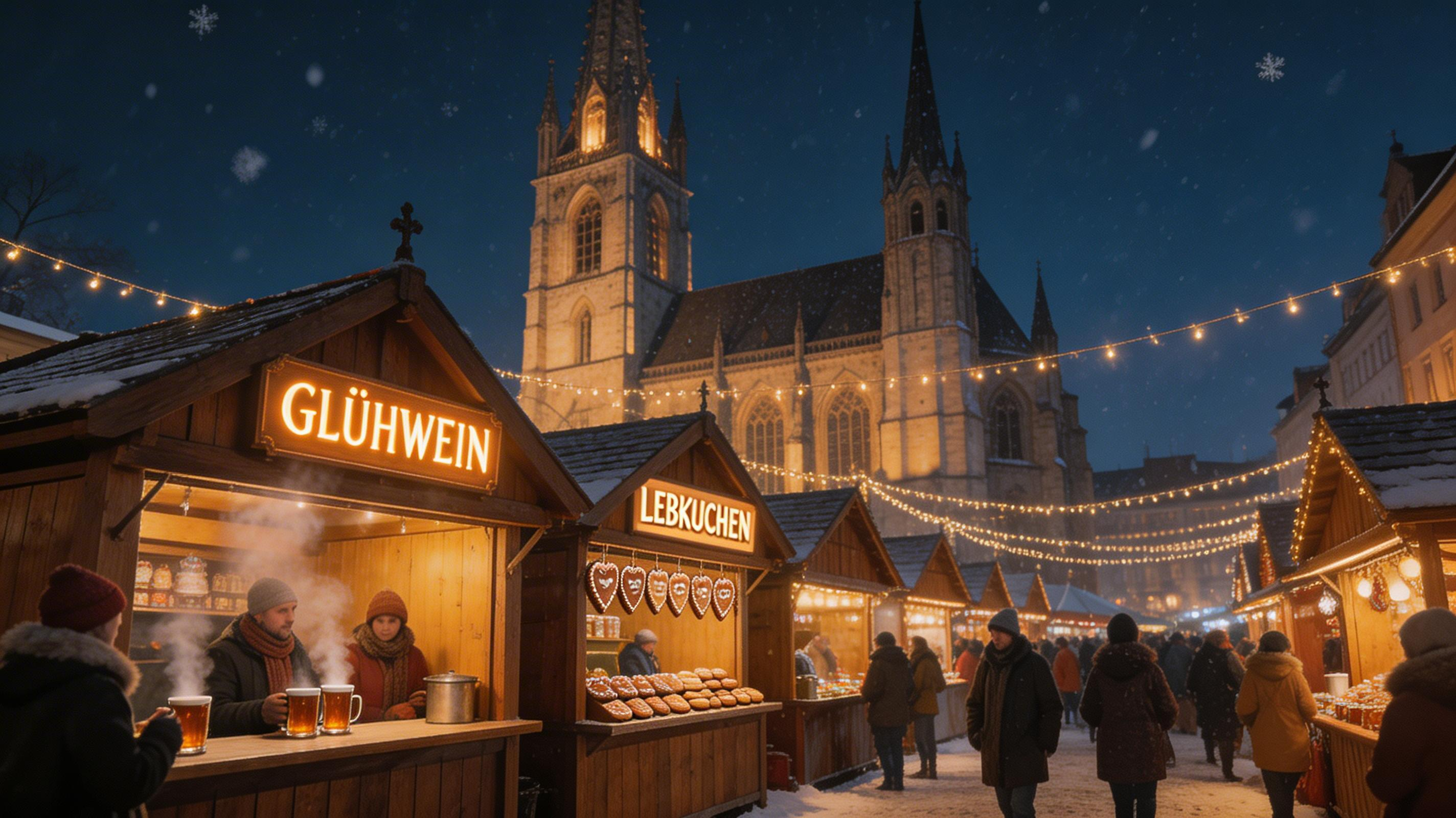
Wooden stalls selling Glühwein and Lebkuchen, a gothic church behind them, golden lights in gentle snowfall. The word "gemütliche" in the prompt basically became the image's mood. Cozy is hard to fake.
Portuguese - Rio Carnival
Carnaval no Rio de Janeiro ao anoitecer. Uma passista com fantasia dourada e penas azuis dançando no Sambódromo. Arquibancadas lotadas ao fundo desfocado. Confetes coloridos no ar. Fotografia editorial, flash de alta velocidade congelando o movimento, cores vibrantes, lente 70-200mm.
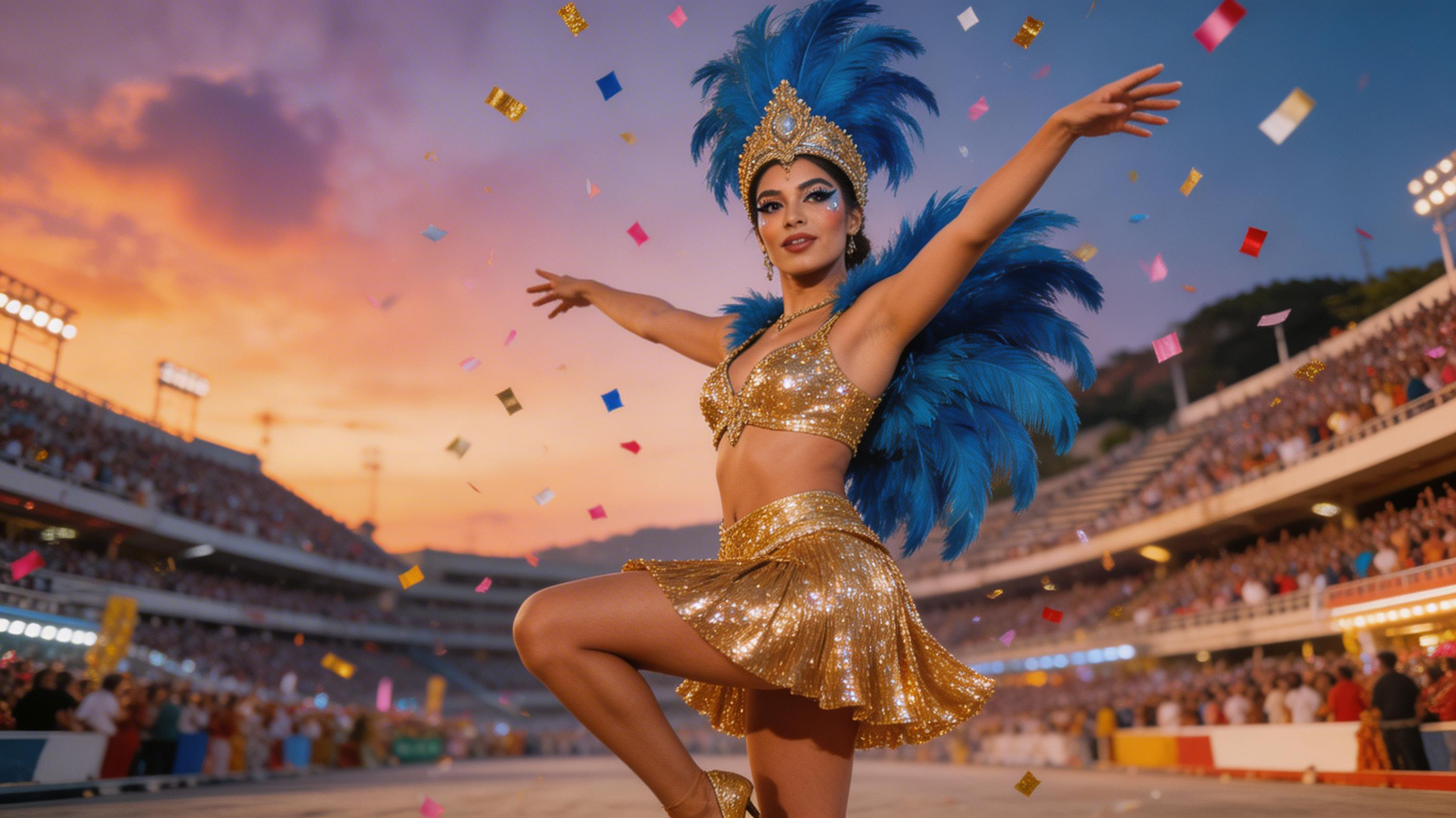
Golden costume, blue feathers, confetti suspended mid-air. The flash froze everything. You can almost hear the samba drums.
Russian - Red Square, Moscow
Зимний вечер на Красной площади в Москве. Собор Василия Блаженного покрыт снегом, его купола ярко освещены. Пара гуляет под зонтом в метель. Фонари отражаются на мокрой брусчатке. Кинематографическая фотография, холодные голубые тони с тёплыми огнями, плёночная эстетика.
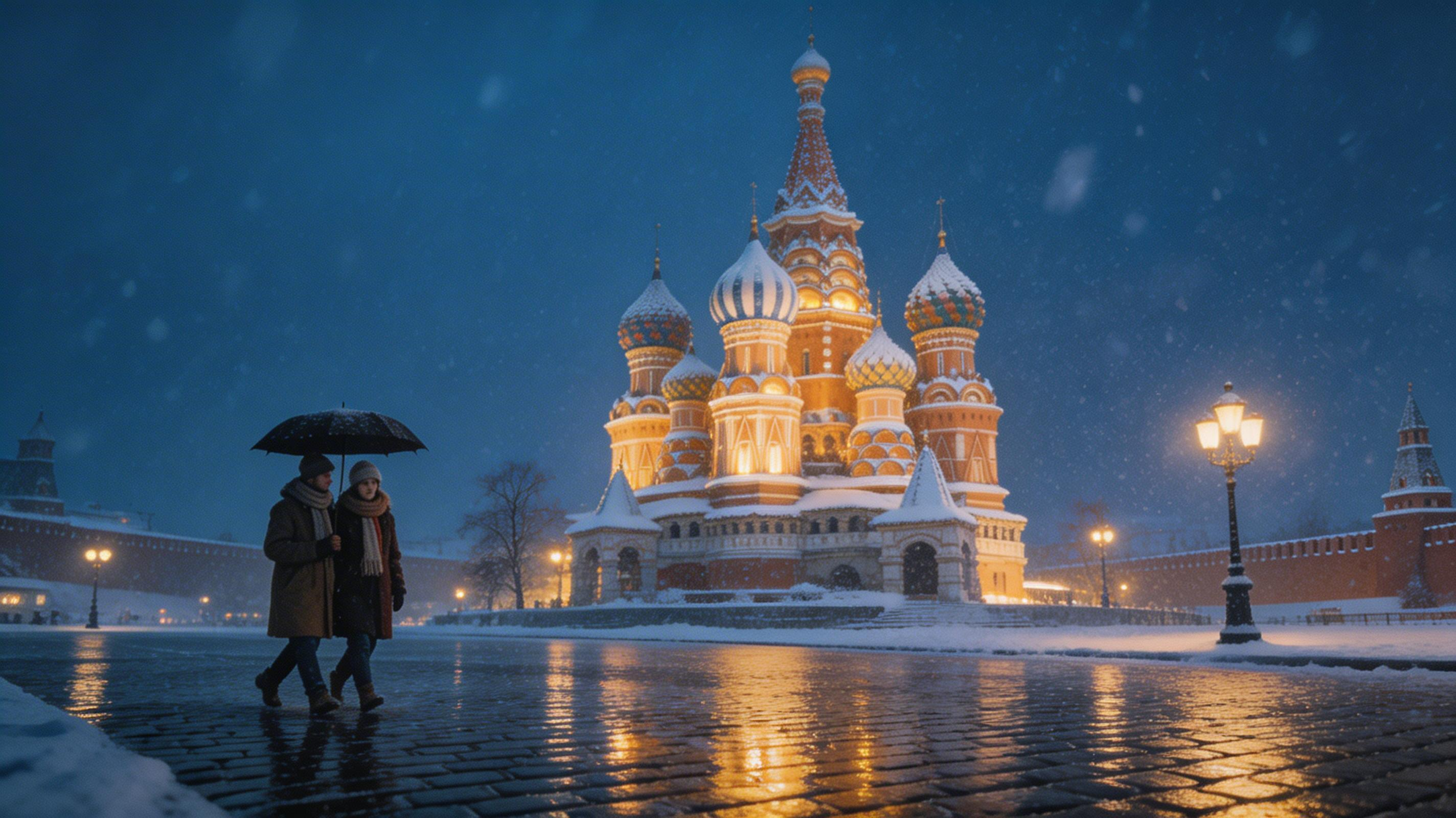
St. Basil's under snow, a couple walking through a blizzard, lanterns throwing warm light on wet cobblestones. That cold-blue vs warm-orange tension is exactly right.
Chinese - Jiangnan Watertown
A traditional Chinese watertown at dawn. White walls and dark tile roofs of ancient buildings reflected in the calm canal. A wooden boat with a boatman glides under a stone bridge. Morning mist, weeping willows, ink painting atmosphere. Documentary photography, soft natural light, medium format film quality.
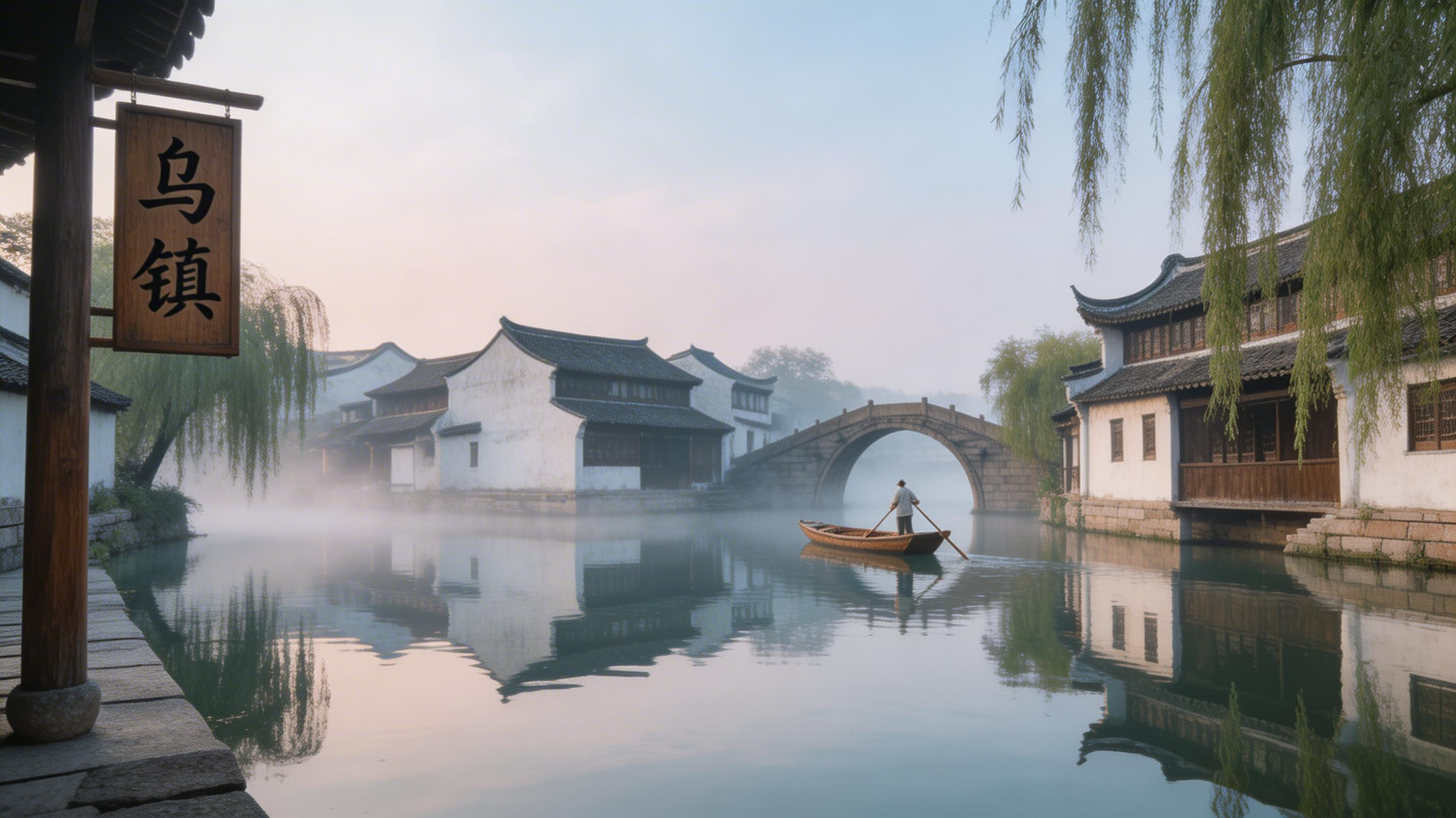
White walls, dark tiles, canal reflections, morning mist. Even with an English prompt describing a Chinese scene, the cultural context carried through. The ink-painting quality in the atmosphere is unmistakable.
Italian - Amalfi Coast
Vista panoramica della Costiera Amalfitana al tramonto. Case colorate a pastello aggrappate alla scogliera sopra il mare turchese. Barche da pesca nel porticciolo in basso. Bouganville viola sui balconi. Luce dorata dell'ora d'oro, fotografia di viaggio, lente grandangolare 24mm, colori Kodachrome.
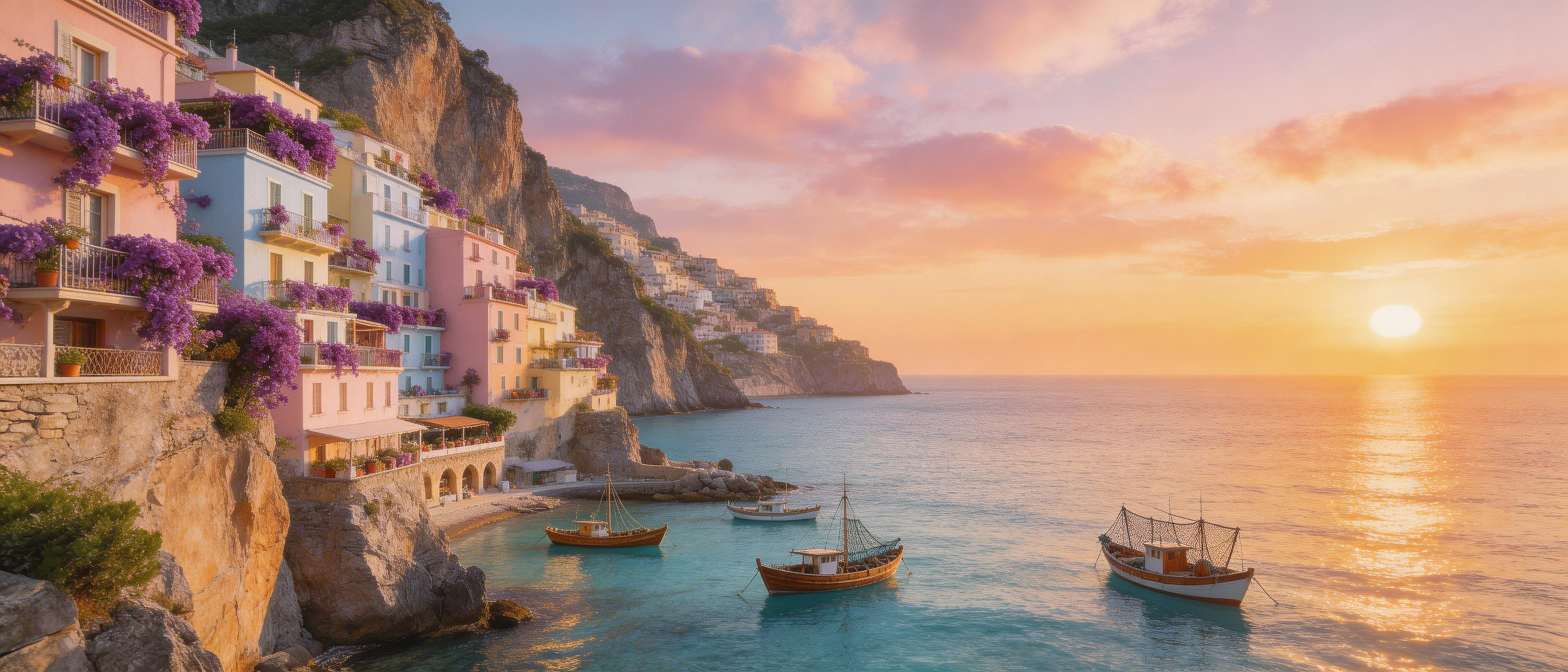
Pastel houses on cliff faces, turquoise water below, bougainvillea spilling off balconies. Writing this in Italian gave the golden hour light that specific Mediterranean quality. Not just warm, but that particular kind of warm.
Multi-language tips:
- Match language to scene. A French cafe described in French produces more authentic results.
- Mix languages. Native scene description + English technical terms works great.
- RTL scripts work. Arabic prompts produce culturally accurate Middle Eastern scenes.
- Devanagari, Hangul, Cyrillic. All scripts are supported for prompting.
Complex Scenes & Spatial Reasoning
If the image has more than one subject, spatial language is everything. "Two people at a table" gives you a coin flip on positioning. Explicit directions remove all ambiguity.
Don't write this:
two people at a cafe table, one in red and one in blue
Write this instead:
On the left side of a small round marble cafe table, a man in a rust-colored linen shirt. On the right side, a woman in an oversized cream knit sweater laughing. Two steaming cappuccinos between them.
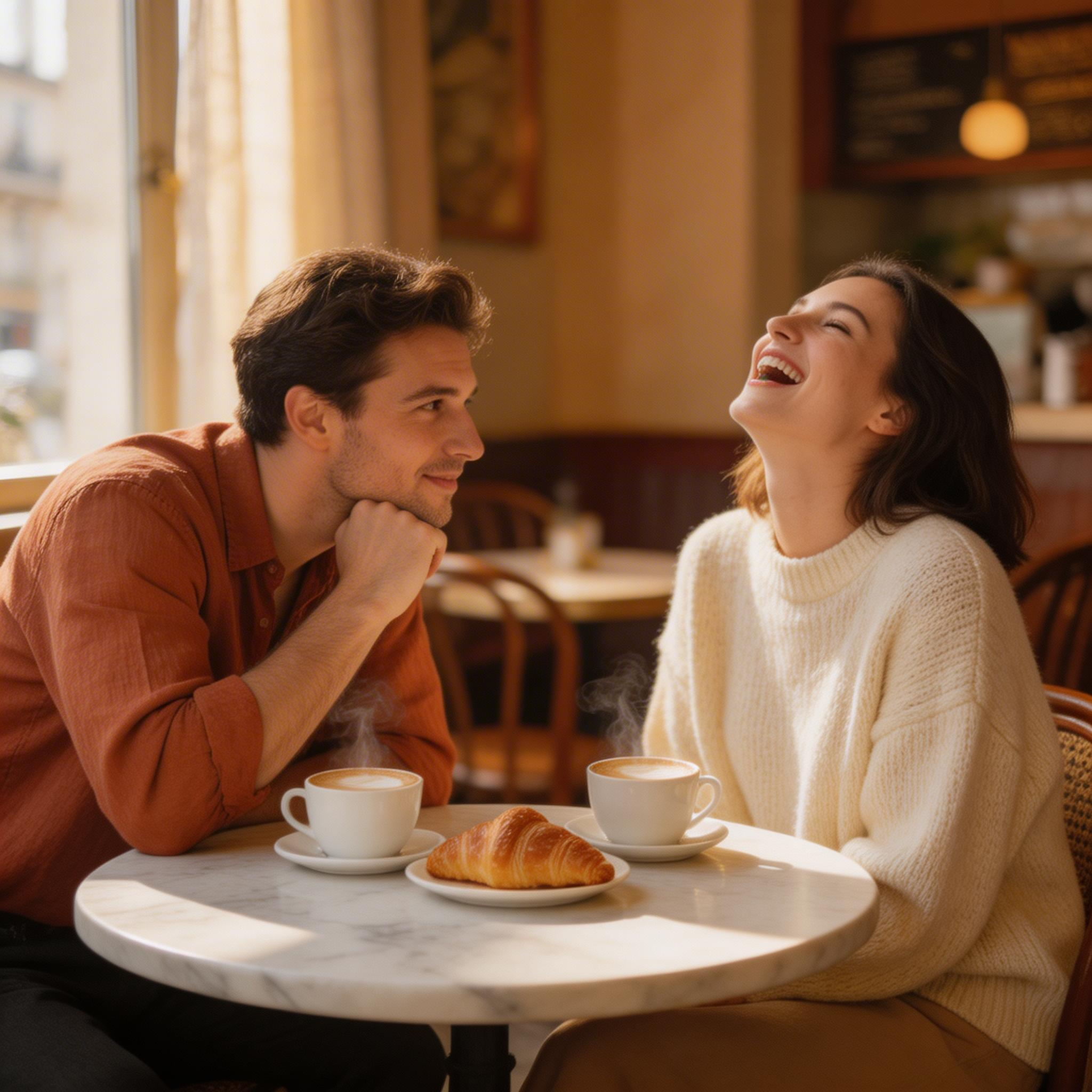
See the difference? "On the left side", "on the right side", "between them." Each phrase pins something to a specific location.
Spatial keywords that work:
- Positional: "on the left", "on the right", "in the center", "in the foreground", "in the background"
- Relational: "between them", "behind", "above", "below", "beside"
- Scale: "towering over", "dwarfed by", "filling the frame"
- Camera: "lower right third", "upper left corner", "dead center"
Cinematic Scenes
A useful tip: drop real camera names and film references into your prompts. Say "ARRI Alexa" and suddenly everything looks like it was shot by Roger Deakins. Say "Sergio Leone style" and you get those gorgeous wide compositions. The model clearly knows what these things look like.
Blade Runner / Neo-Noir
A lone figure in a long dark coat walking through a rain-soaked neon-lit alley in Tokyo at night. Reflections of red and blue neon signs shimmer on wet asphalt. Steam rises from a grate. Cinematic widescreen composition, anamorphic lens flare, Blade Runner aesthetic, 2.39:1 aspect ratio feel, shallow depth of field, shot on ARRI Alexa.
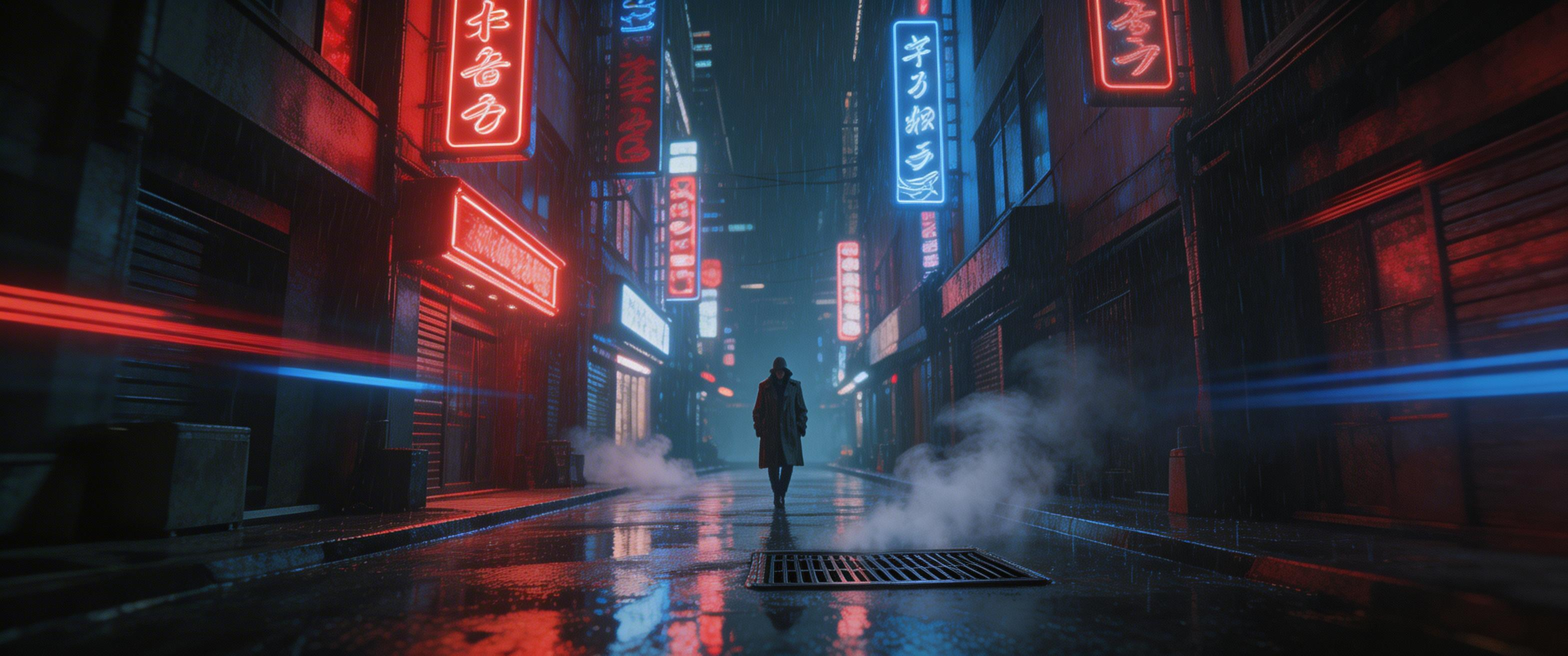
Anamorphic lens flares, neon reflections, rain-soaked streets. Pure cinema.
Spaghetti Western
A dusty frontier town at high noon. A lone cowboy stands in the middle of an empty main street, hand hovering over his holster. Tumbleweeds rolling past saloon doors. Harsh overhead sunlight casting deep shadows. Cinematic western, Sergio Leone style, extreme wide shot, warm sepia tones, shot on 65mm IMAX film.
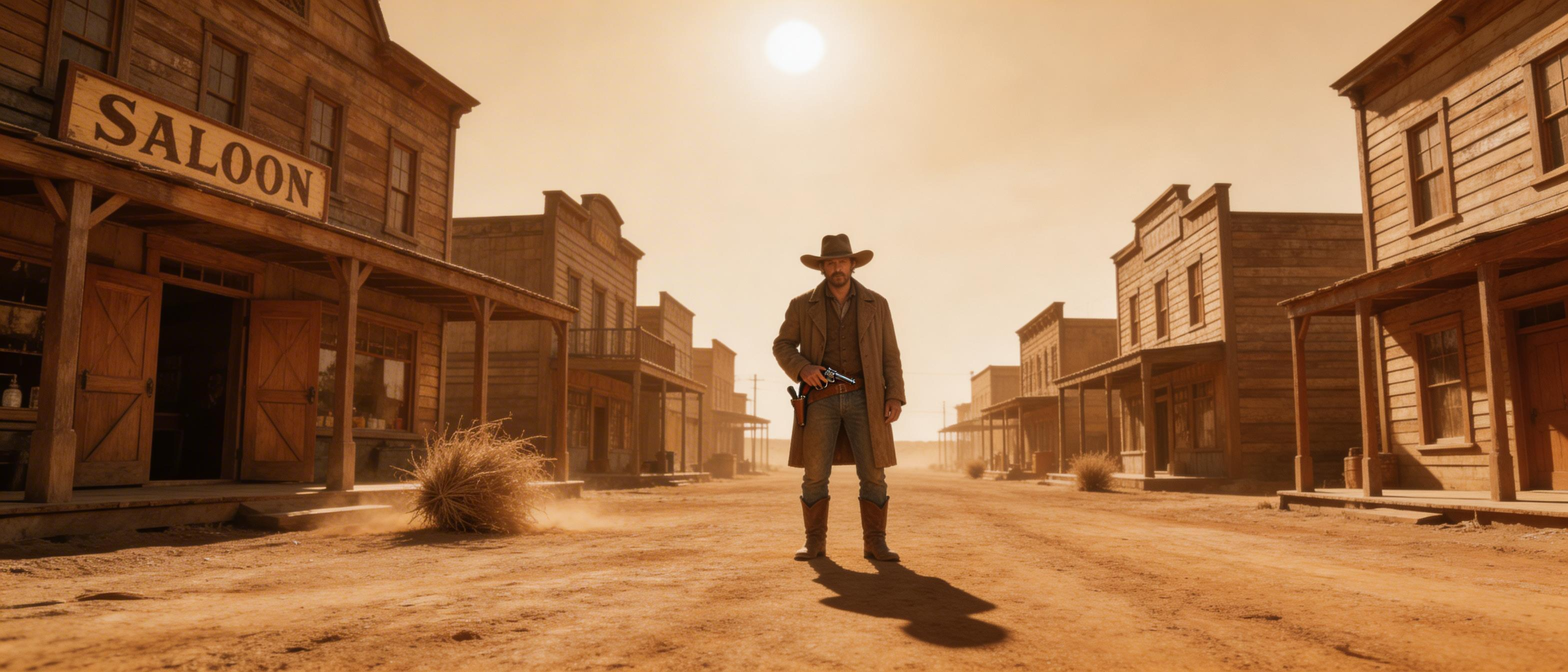
Sergio Leone framing. Harsh noon light, tumbleweeds, empty main street. The sepia tones and wide shot sell the era.
Cinematic keywords that work:
- Camera: "ARRI Alexa", "shot on 65mm IMAX", "anamorphic lens", "Steadicam tracking shot"
- Directors: "Sergio Leone style", "Kubrick symmetry", "Nolan scale"
- Aspect ratios: "2.39:1 widescreen", "4:3 Academy ratio"
- Film stocks: "Kodak 5219 500T", "pushed Tri-X 400", "Fujifilm Eterna"
Fantasy & Science Fiction
Fantasy scenes put the reasoning engine to serious use. You're asking it to handle impossible physics, multiple planes of existence, creatures with made-up anatomy, all in a single frame. If you describe the spatial relationships clearly, the model gets them right.
Ice Dragon
A massive ice dragon perched atop a crumbling mountain fortress, wings spread wide against a sky filled with twin moons and aurora borealis. The dragon breathes crystalline frost that creates intricate ice formations on the castle towers. Epic fantasy art, highly detailed scales and feathers, volumetric lighting, concept art by a AAA game studio.
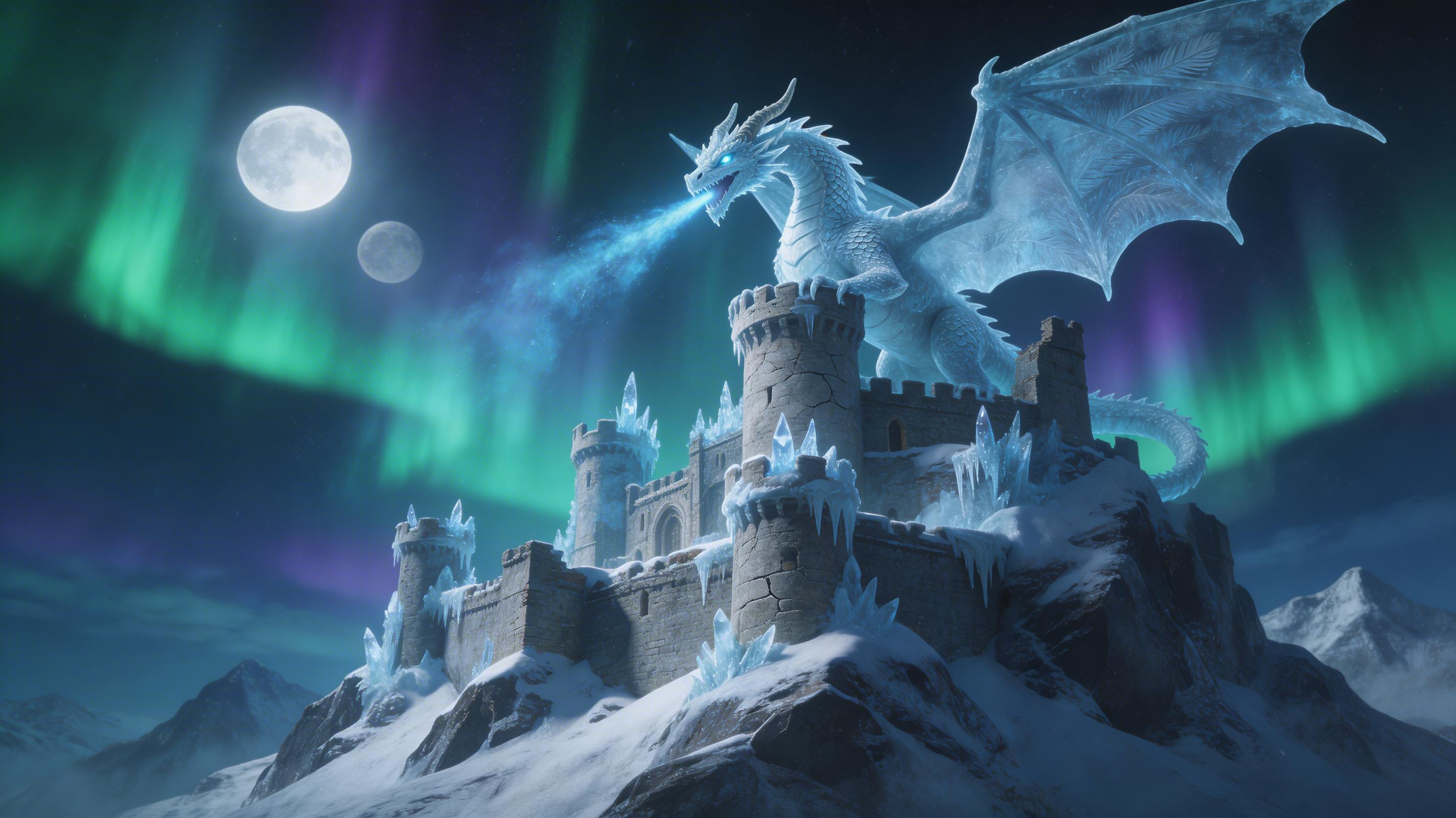
Twin moons, aurora borealis, crystalline frost breath. The scale is epic.
Enchanted Forest
An ancient enchanted forest with trees that have glowing bioluminescent bark in shades of blue and purple. Tiny fairy-like creatures leave trails of golden light as they fly between enormous mushrooms the size of houses. A hidden elven path winds through the undergrowth. Fantasy illustration, ethereal atmosphere, magical realism, Studio Ghibli meets James Cameron.
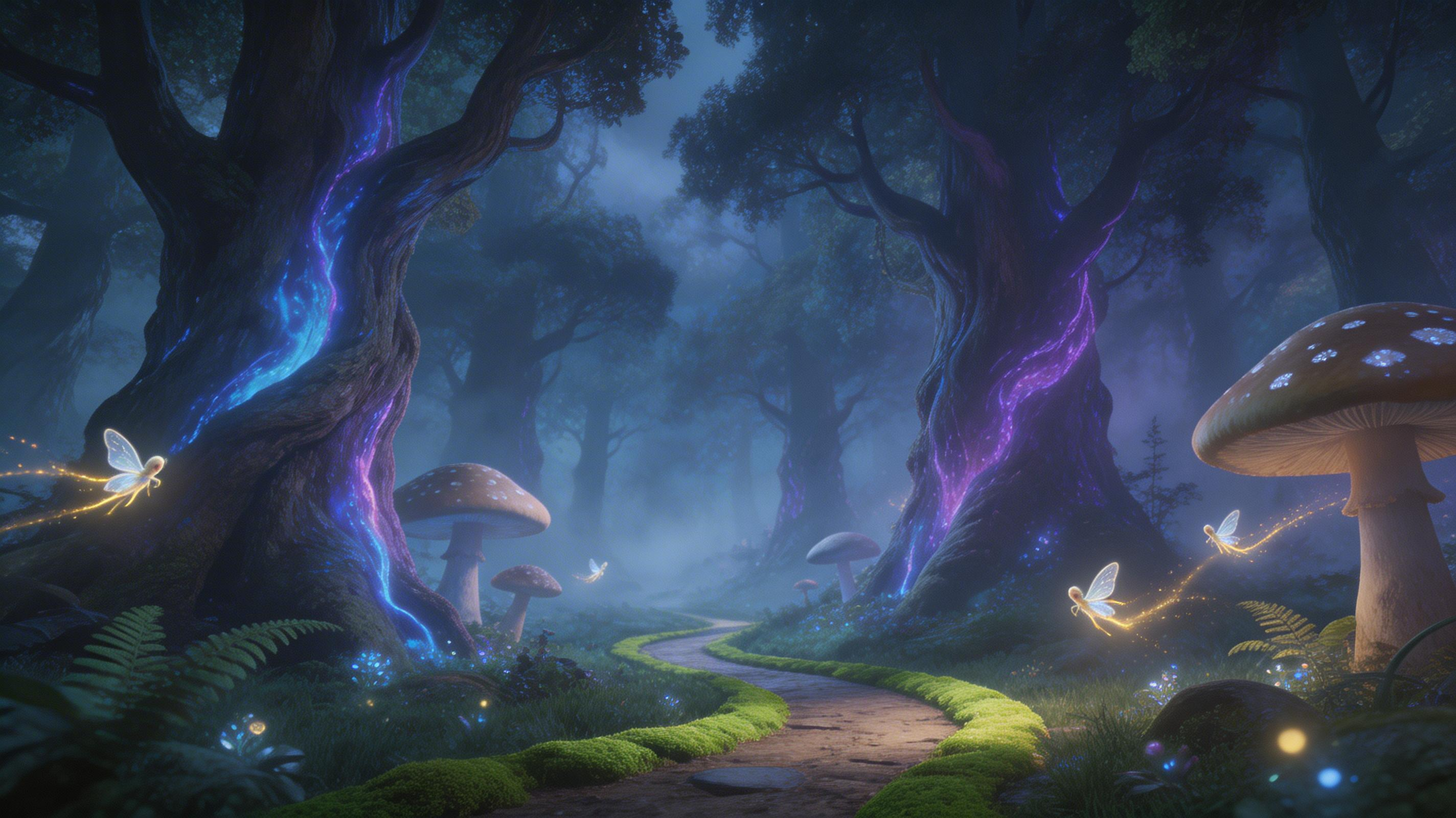
Bioluminescent trees, giant mushrooms, fairy trails. Ghibli meets Avatar, and it actually looks like both at once.
Space Station
Interior of a massive rotating space station. A botanical garden with full-size trees growing under artificial sunlight panels. Through floor-to-ceiling windows, Earth hangs in the blackness of space. A woman in a sleek white jumpsuit tends to plants in zero-gravity soil beds. Hard science fiction aesthetic, clean and bright, Christopher Nolan Interstellar style, wide angle lens.
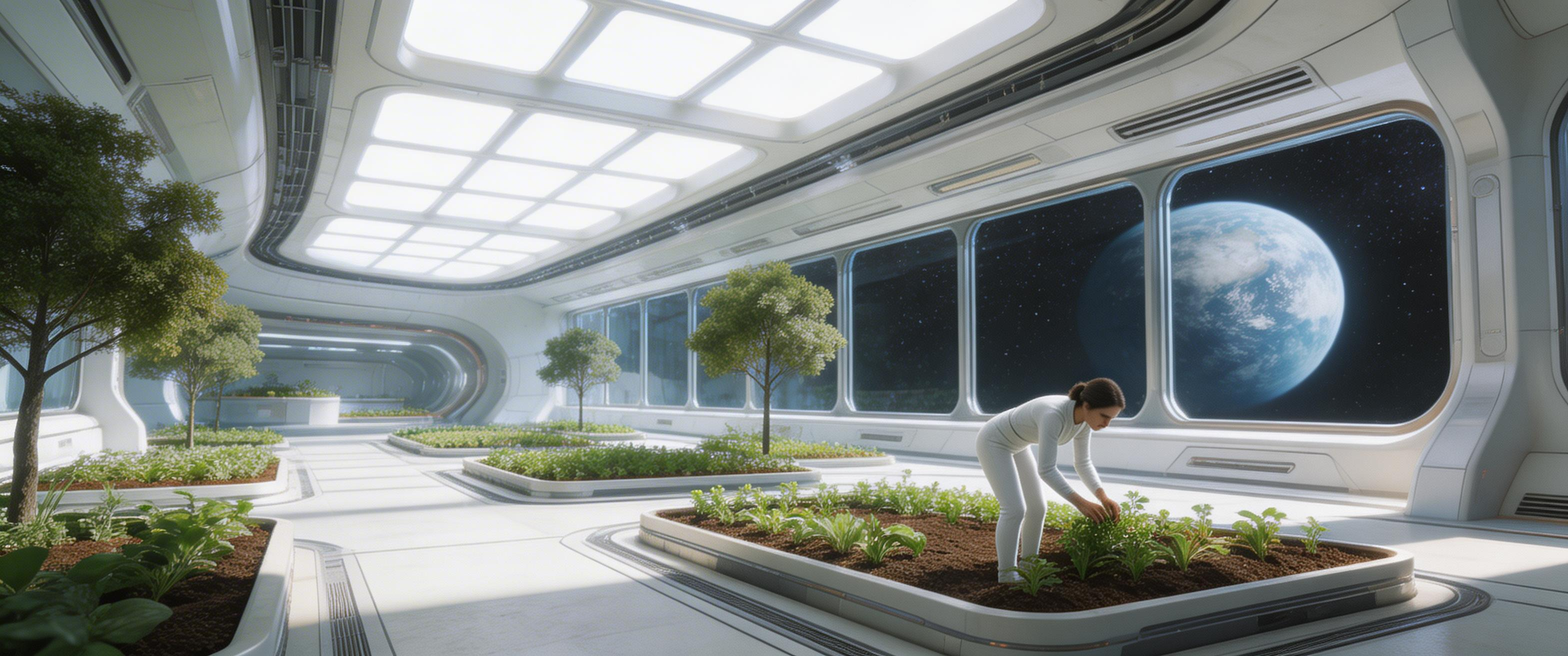
Hard sci-fi botanical garden in orbit. Earth through the windows, a woman tending plants in zero-g. The Interstellar reference did its job.
Alien Bazaar
A bustling alien marketplace on a desert planet with three suns setting on the horizon. Merchant stalls made of salvaged spacecraft hulls sell exotic fruits and strange technologies. Diverse alien species haggle over goods. Dust and golden light fill the air. Star Wars cantina meets Moroccan souk, cinematic concept art, detailed world-building.
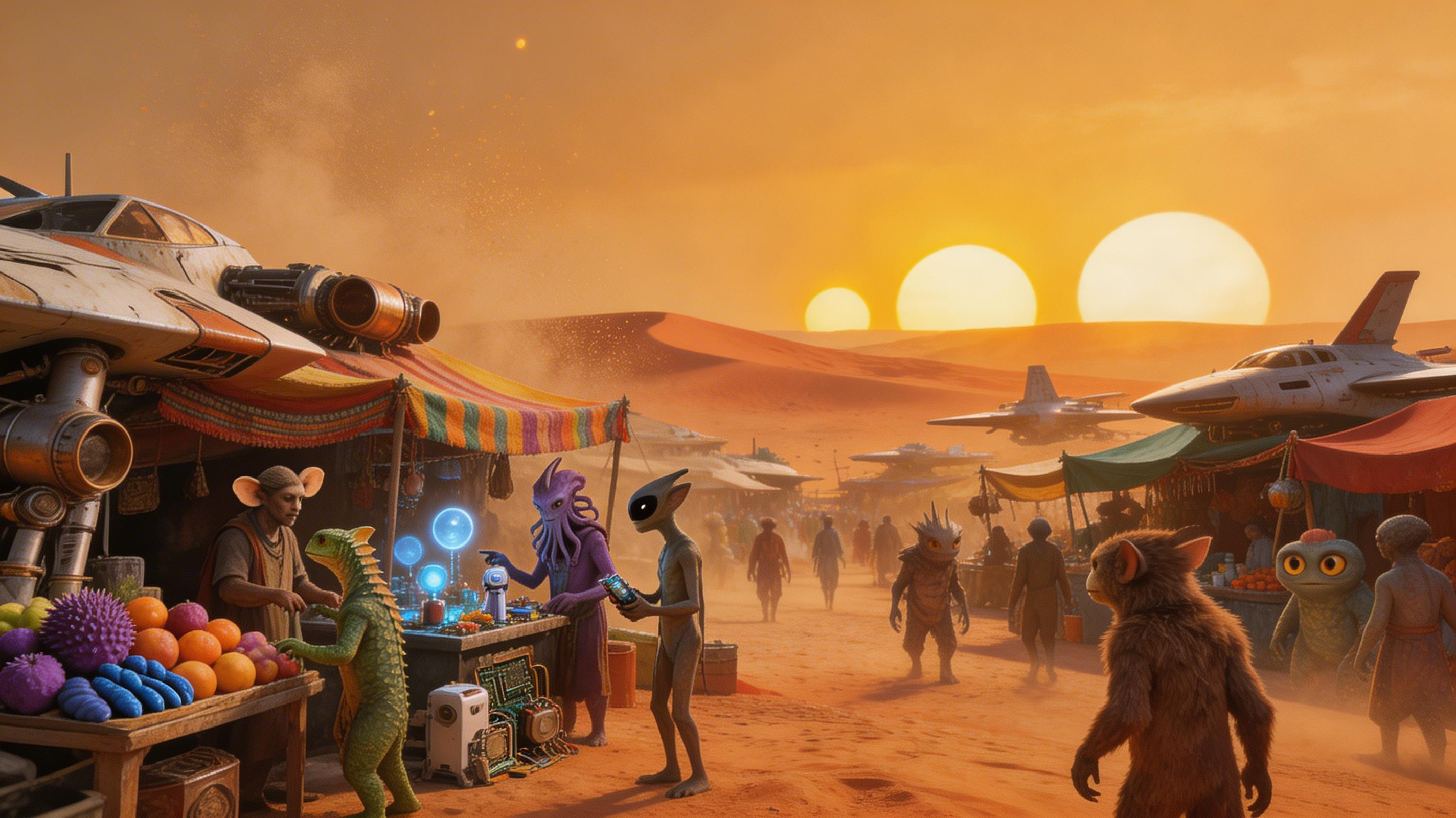
Three suns, salvaged spacecraft stalls, alien species haggling over strange goods. The "Star Wars cantina meets Moroccan souk" prompt gave it exactly the right amount of lived-in grit.
Historical Eras
Be specific about materials, not just time periods. Don't just say "1920s." Say "beaded flapper dresses, geometric gold-and-black ceiling, crystal chandeliers." Naming physical details pushes the result from generic period aesthetics to something convincing.
1920s Art Deco
A lavish 1920s Art Deco ballroom in full swing. Crystal chandeliers hang from a geometric gold-and-black ceiling. Women in beaded flapper dresses and men in white dinner jackets dance the Charleston. A jazz band plays on a raised stage. Champagne towers on mirrored tables. The Great Gatsby aesthetic, warm amber lighting, period-accurate details, cinematic photography.
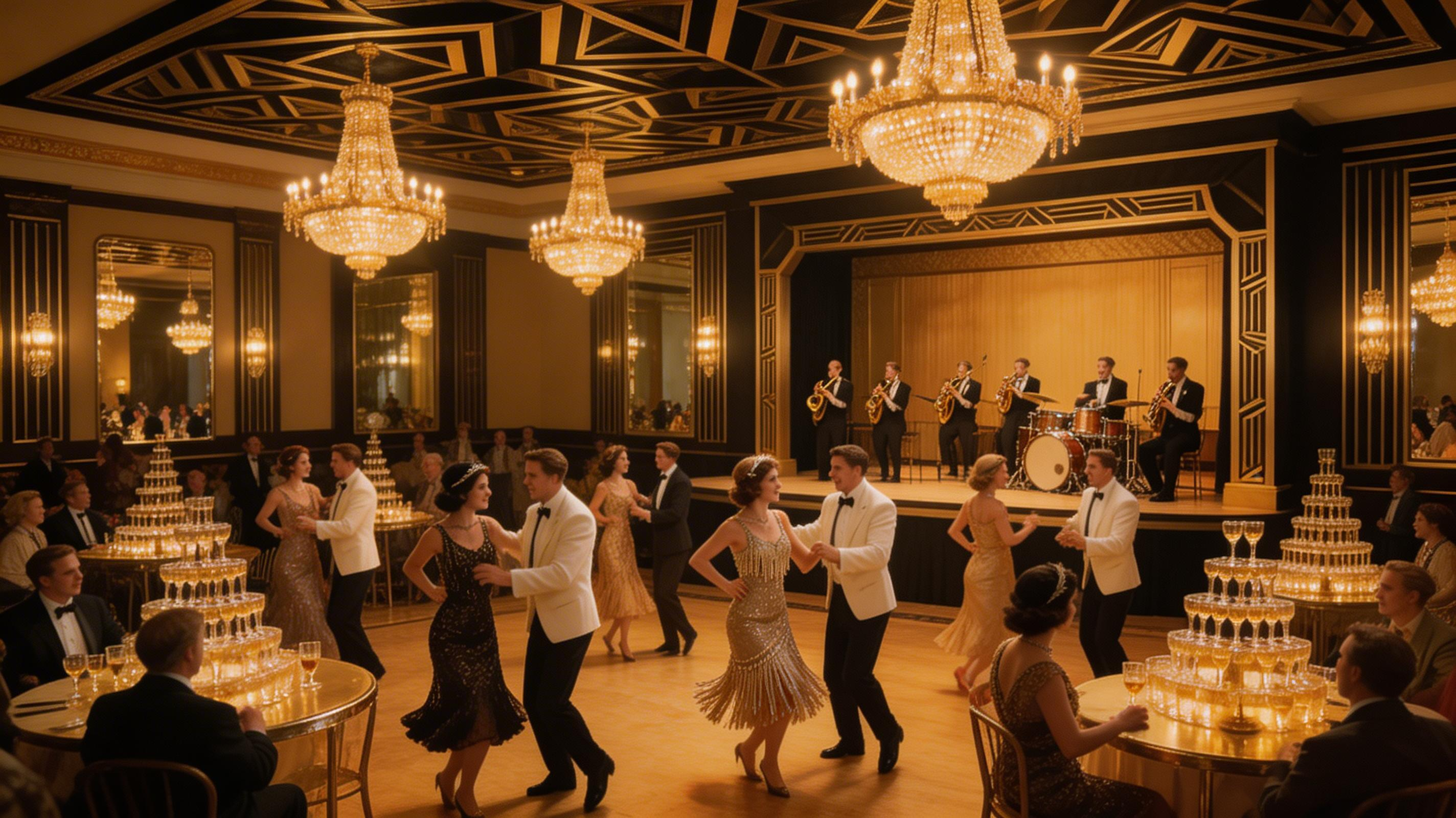
Art Deco geometry, flapper dresses, champagne towers. The Great Gatsby brought to life.
Medieval Market
A bustling medieval market square in a European town. Half-timbered buildings frame the square. A blacksmith hammers at his forge sending sparks flying. Market stalls display fresh bread, dried herbs, fabrics, and pottery. Chickens roam freely. A knight on horseback rides through. Late afternoon sunlight, painterly realism, Vermeer lighting, historical accuracy.
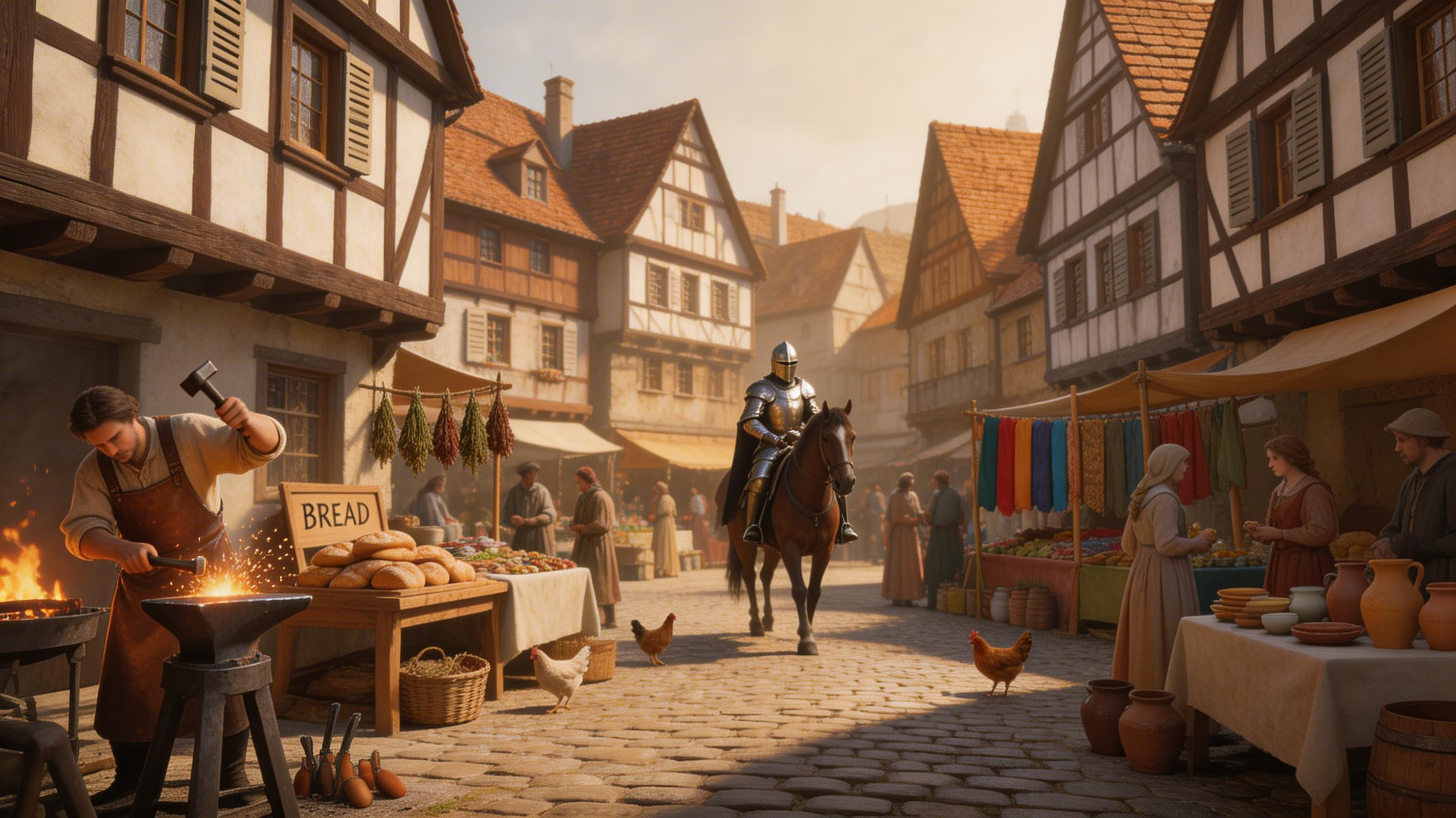
Half-timbered buildings, blacksmith sparks, free-roaming chickens. The Vermeer lighting reference gave everything that soft, golden late-afternoon look.
Edo Period Japan
A samurai in full traditional armor standing at the edge of a wooden bridge over a misty river during cherry blossom season. Petals fall like pink snow around him. His katana is sheathed but his hand rests on the hilt. Mount Fuji barely visible through the morning mist in the distance. Edo period Japan, Akira Kurosawa cinematography, dramatic composition, muted earth tones with pink accents.
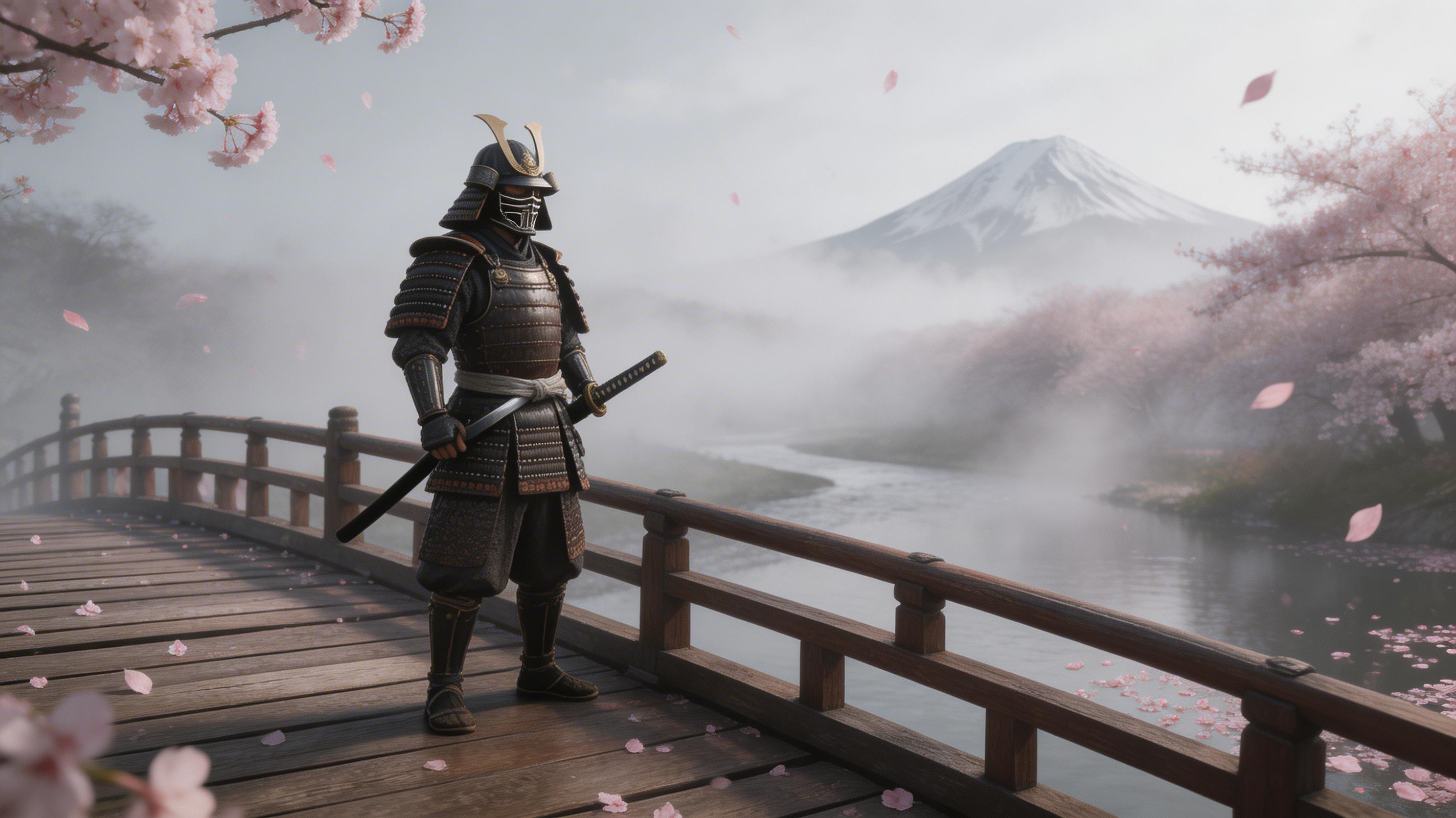
Cherry blossom samurai on a wooden bridge. Kurosawa cinematography, Mount Fuji in morning mist. The muted earth tones with pink accents create exactly the right contrast.
Double Exposure & Surrealism
Double exposure sounds simple but most models botch it. The trick: tell the model explicitly what stays sharp. Say "the eyes remain sharp and piercing" and it will keep the eyes crisp while everything else dissolves into the second exposure.
Wolf x Forest
Double exposure photograph merging a wolf portrait with a dense pine forest. The wolf face is composed of tree trunks, branches, and misty forest canopy. The eyes remain sharp and piercing amber while the body dissolves into the treeline. Black and white with subtle gold tones, fine art photography, dark moody atmosphere.
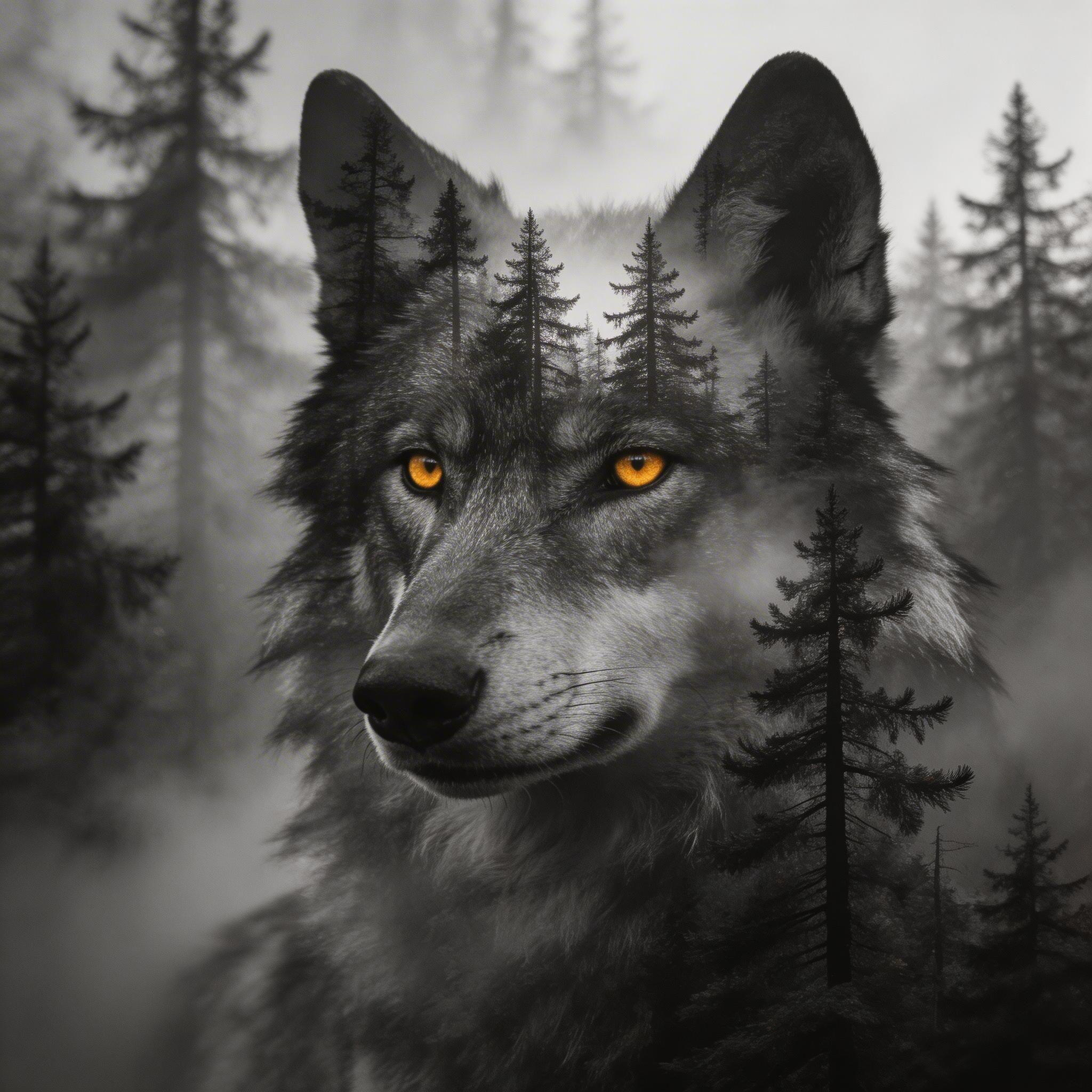
Wolf portrait dissolving into pine forest. Amber eyes stay sharp while everything else melts into the treeline.
City x Portrait
Double exposure portrait of a woman in profile silhouette filled with a nighttime cityscape. Skyscrapers, lit windows, and city lights form the texture of her hair and face. The city skyline forms her jawline. Teal and orange color grading, editorial fashion photography, fine art print quality, clean white background.
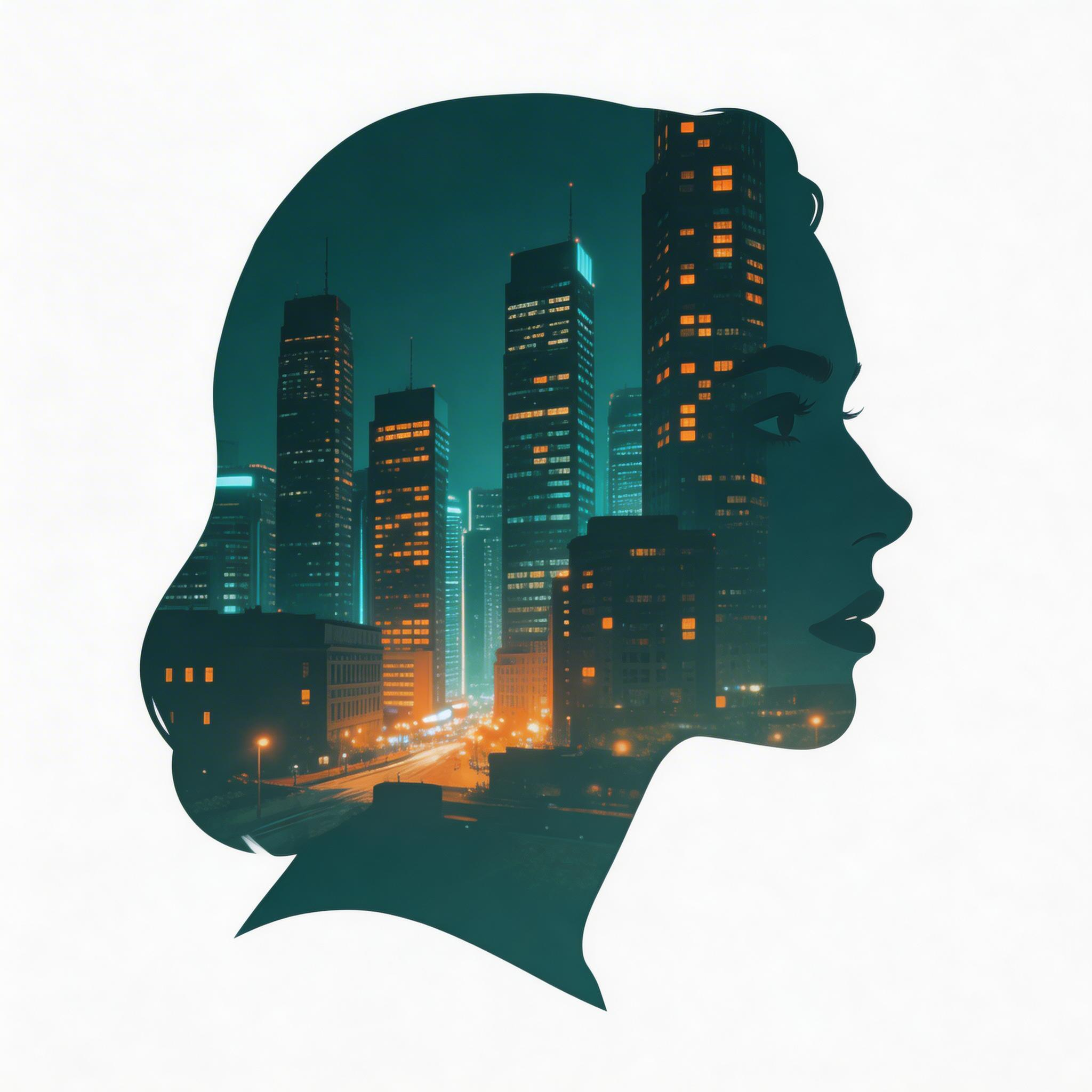
Profile silhouette filled with city lights. Skyline becomes jawline.
Surreal Library
A vast library where books float in mid-air, arranged in spiraling galaxies of knowledge. Readers sit on floating armchairs connected by golden chains. Staircases lead to nowhere and doorways open to different worlds. A giant pocket watch melts over a bookshelf. Salvador Dali meets M.C. Escher, dreamlike surrealism, warm library lighting, impossible architecture.
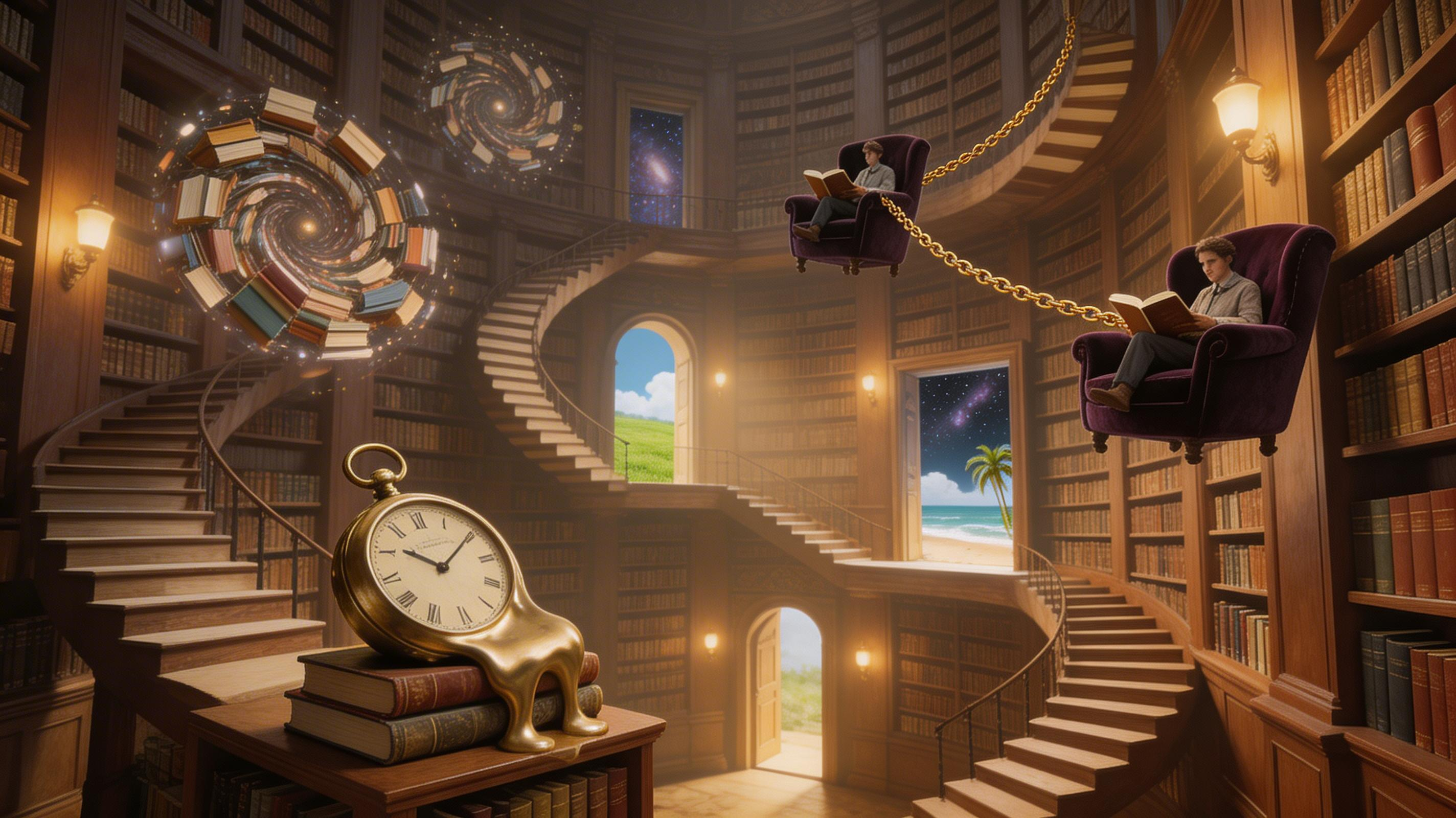
Floating books in spiral galaxies, melting clocks, impossible staircases. Dali meets Escher. The warm library lighting keeps it from feeling cold or clinical.
Retro & Vintage
Want a specific decade? Name the artifacts. "VHS scan lines" screams 80s. "Kodak Gold 200, visible film grain, light leaks" is pure 70s. These analog details are what sell the era. The model knows exactly what they look like.
80s Synthwave
A DeLorean DMC-12 speeding down a neon-lit highway at night. Chrome body reflects hot pink and electric blue neon. A geometric sunset of horizontal stripes in orange and purple fills the background. Palm trees silhouetted on both sides. Synthwave aesthetic, 80s retro-futurism, chrome and neon, VHS scan lines subtle overlay, outrun color palette.
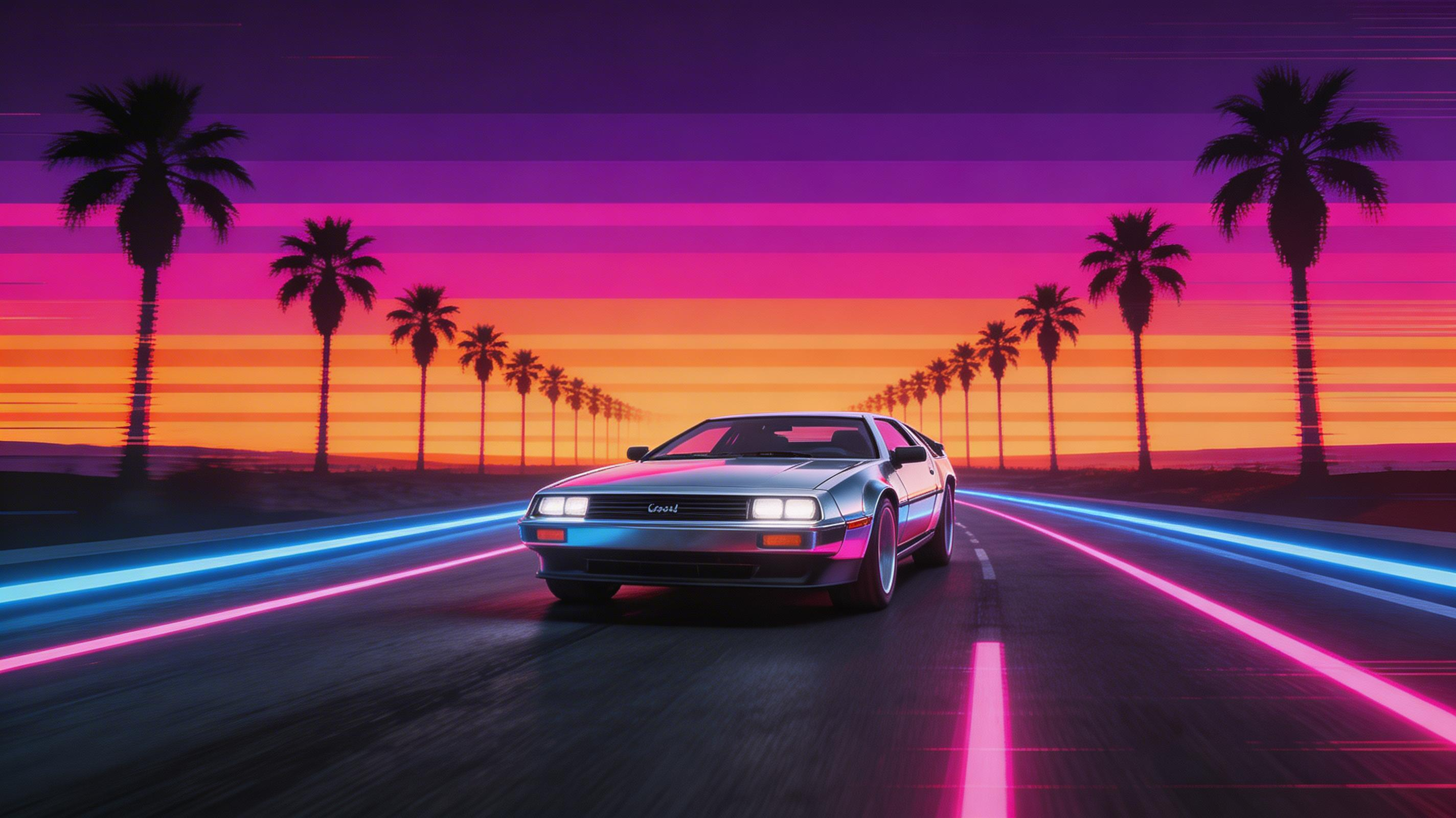
Chrome DeLorean, neon highway, geometric sunset. Pure synthwave.
70s Film
A 1970s Volkswagen Type 2 van parked at a California beach at sunset. The van is painted in faded burnt orange and cream with hand-painted flowers and peace signs. Surfboards lean against its side. A young couple sits on a blanket nearby. Film photography shot on Kodak Gold 200, warm color cast, visible film grain, light leaks, nostalgic summer vibes.
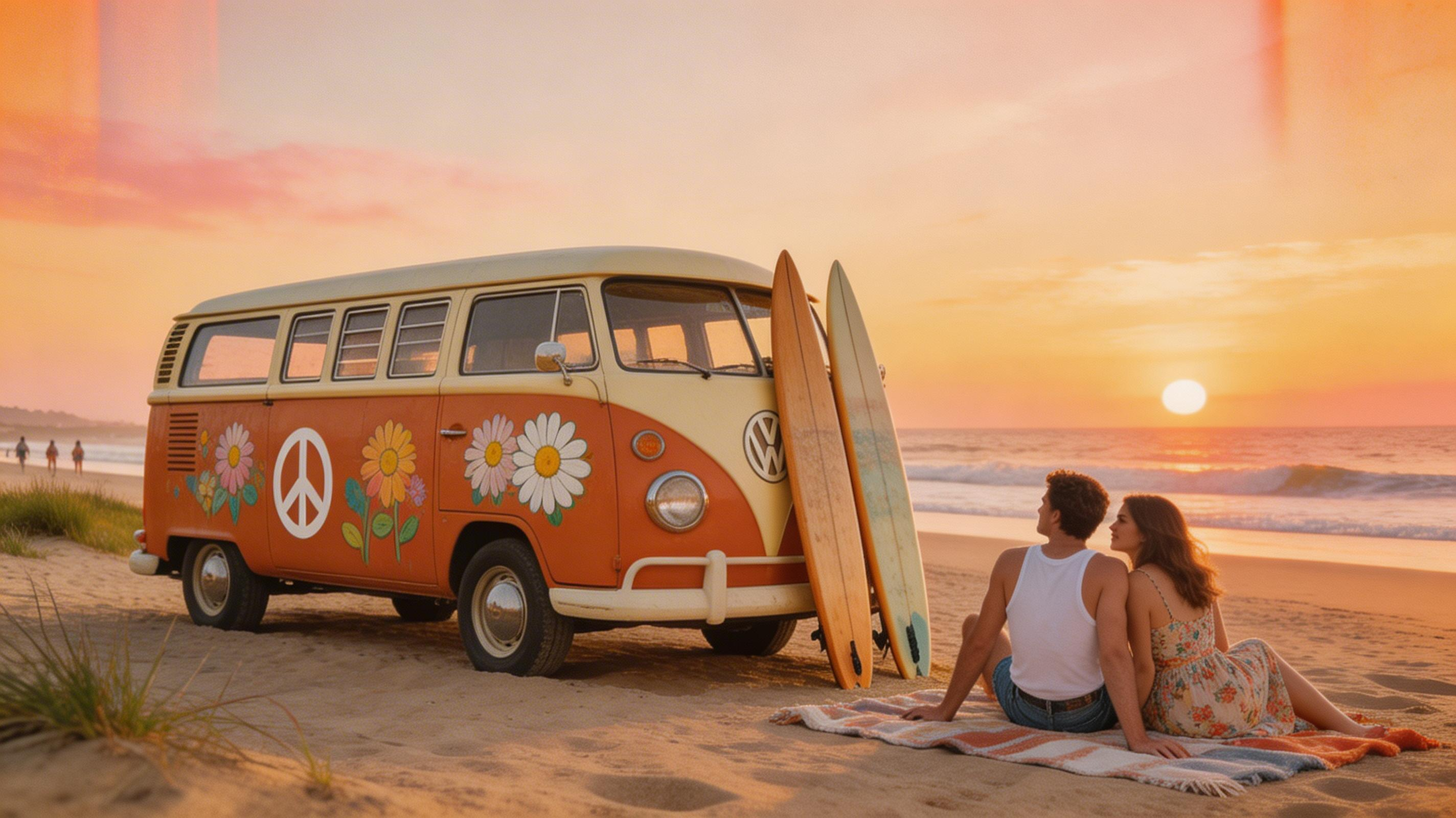
VW van, surfboards, light leaks. Kodak Gold warmth and nostalgia.
Portraits & Fashion
Portraits reward specificity more than almost any other category. Vague portrait prompts give you generic-looking people. But describe a specific person in a specific place doing a specific thing (a marine biologist on a research vessel rather than just "woman by the ocean") and you get something that feels real.
Environmental Portrait (Marine Biologist)
Female marine biologist on a research vessel deck, weathered face with a genuine smile and sun-kissed skin, holding a water sampling kit, ocean horizon stretching behind her, golden hour side lighting creating rim light on her hair, documentary photography style, 85mm lens shallow depth of field
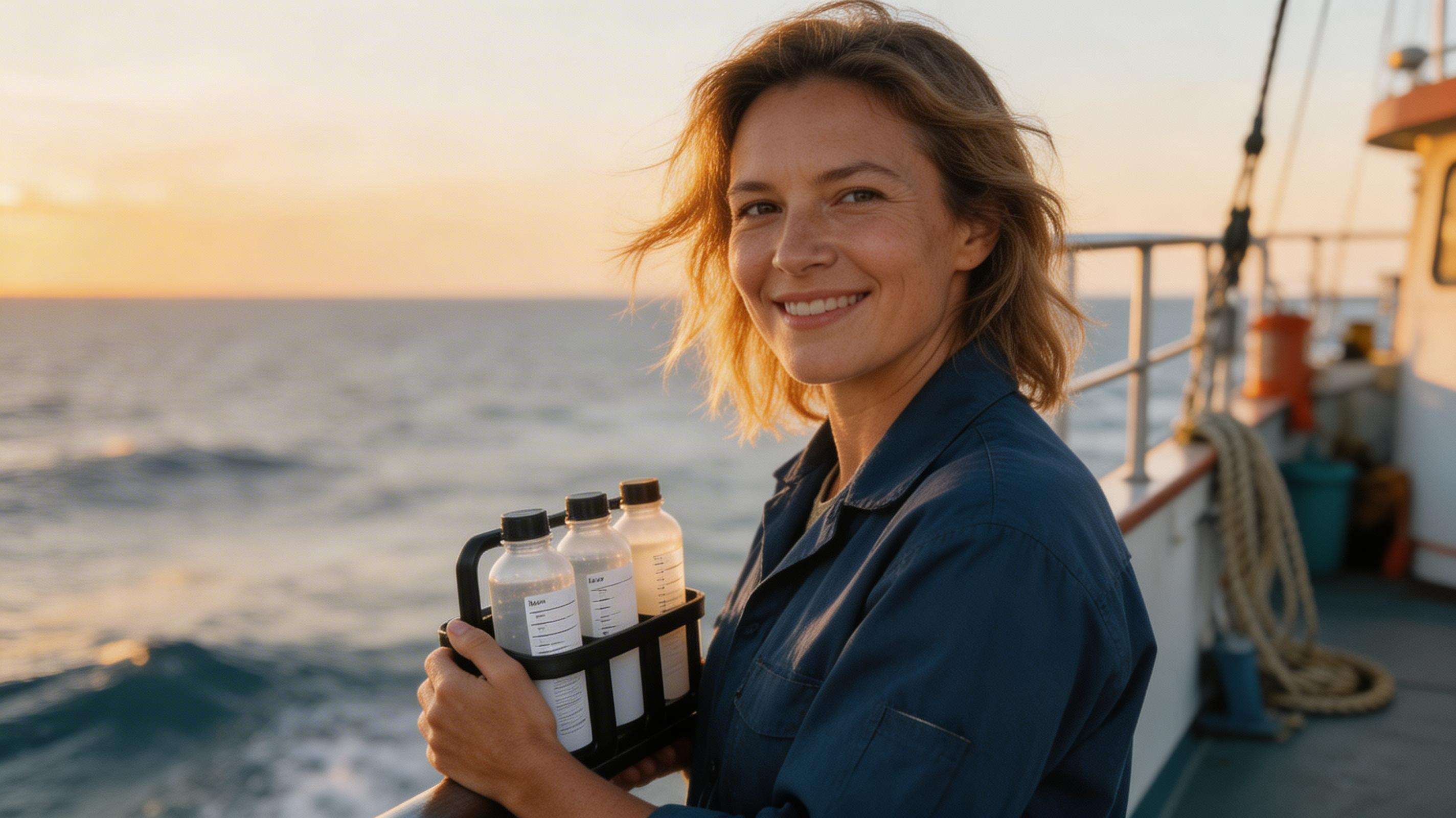
Specific identity, natural expression, explicit lighting, defined lens. This is what a real portrait prompt looks like.
High Fashion Editorial (Vogue Desert)
High fashion editorial photograph. A model in an flowing oversized burnt orange silk gown stands atop a sand dune in the Sahara Desert. The fabric billows dramatically in the wind. Her silhouette is backlit by the setting sun. Vogue magazine aesthetic, Annie Leibovitz lighting, 85mm portrait lens, shallow depth of field, warm golden tones, minimal retouching look.
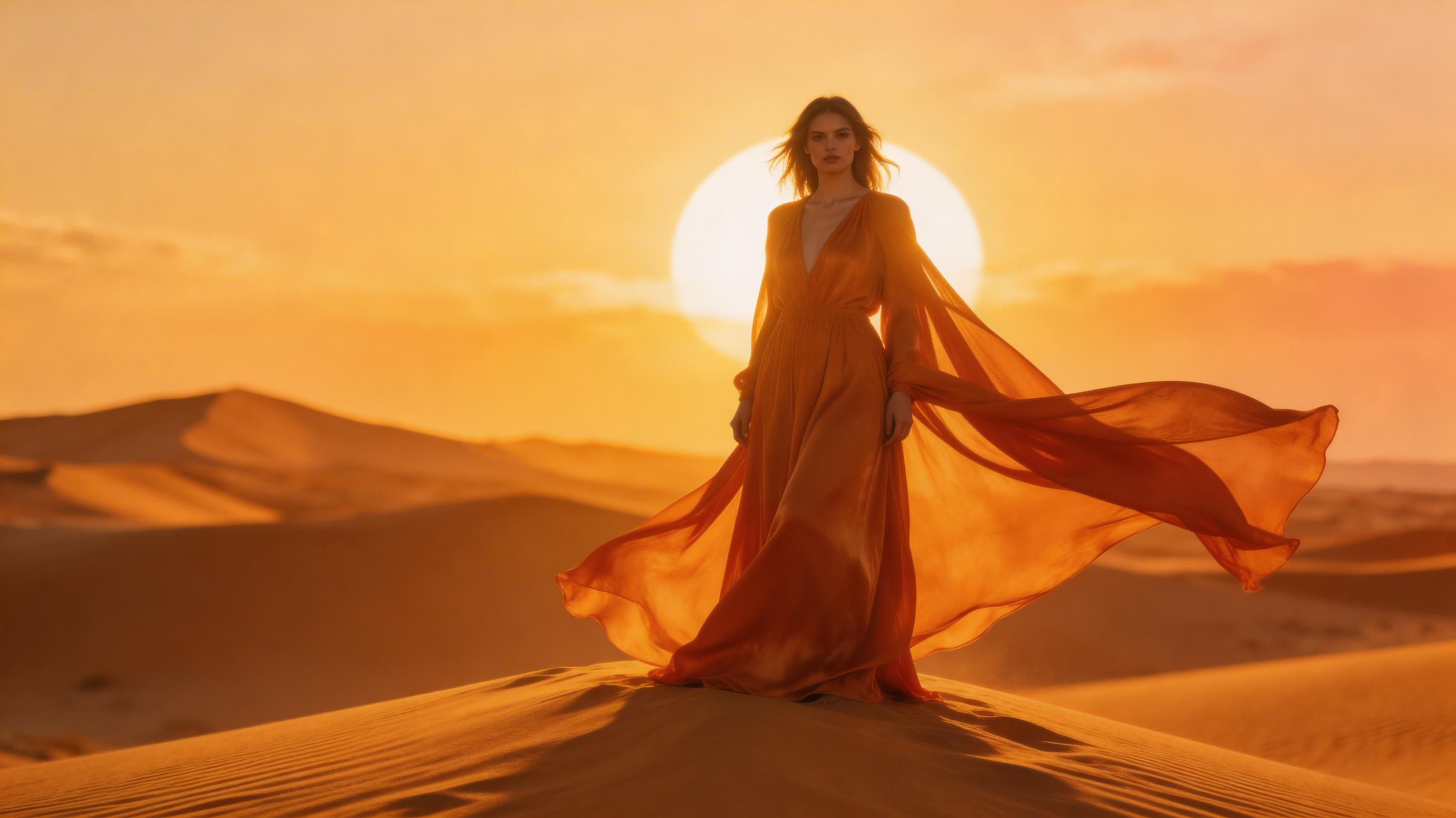
Burnt orange silk billowing in desert wind. Backlit silhouette against the Sahara. The Annie Leibovitz reference set the tone for the whole image.
Street Style (Harajuku)
Street style photography in Harajuku, Tokyo. A young person wearing an avant-garde layered outfit: oversized deconstructed denim jacket over a neon green mesh top, wide-leg cargo pants, and chunky platform sneakers. They lean against a wall covered in Japanese movie posters. Natural daylight, candid pose, Hypebeast magazine aesthetic, 50mm street photography lens.
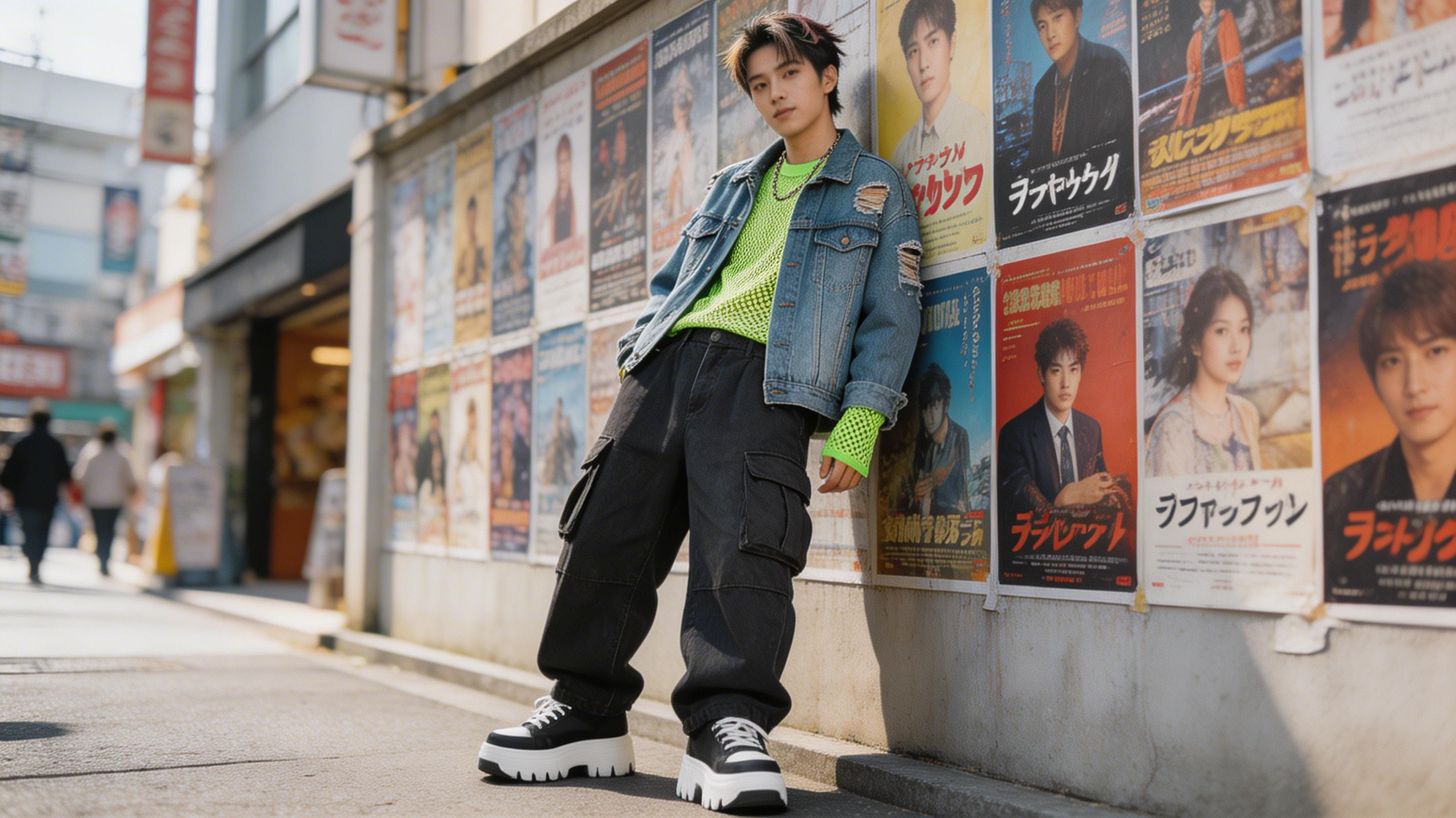
Avant-garde layers, deconstructed denim, neon accents. The movie poster wall and the candid lean sell the Harajuku street photography feel.
Product Photography
For product shots, we found that material descriptions matter more than anything else. "Matte white," "anodized aluminum," "brushed steel." These surface-level details give the model everything it needs to nail the rendering.
Hero angle product shot of minimal wireless earbuds in a matte white charging case, anodized aluminum finish with brushed steel accent, soft studio lighting with crisp edge highlights reflecting off the surface, seamless white background, ultra-sharp commercial product photography, rule of thirds composition
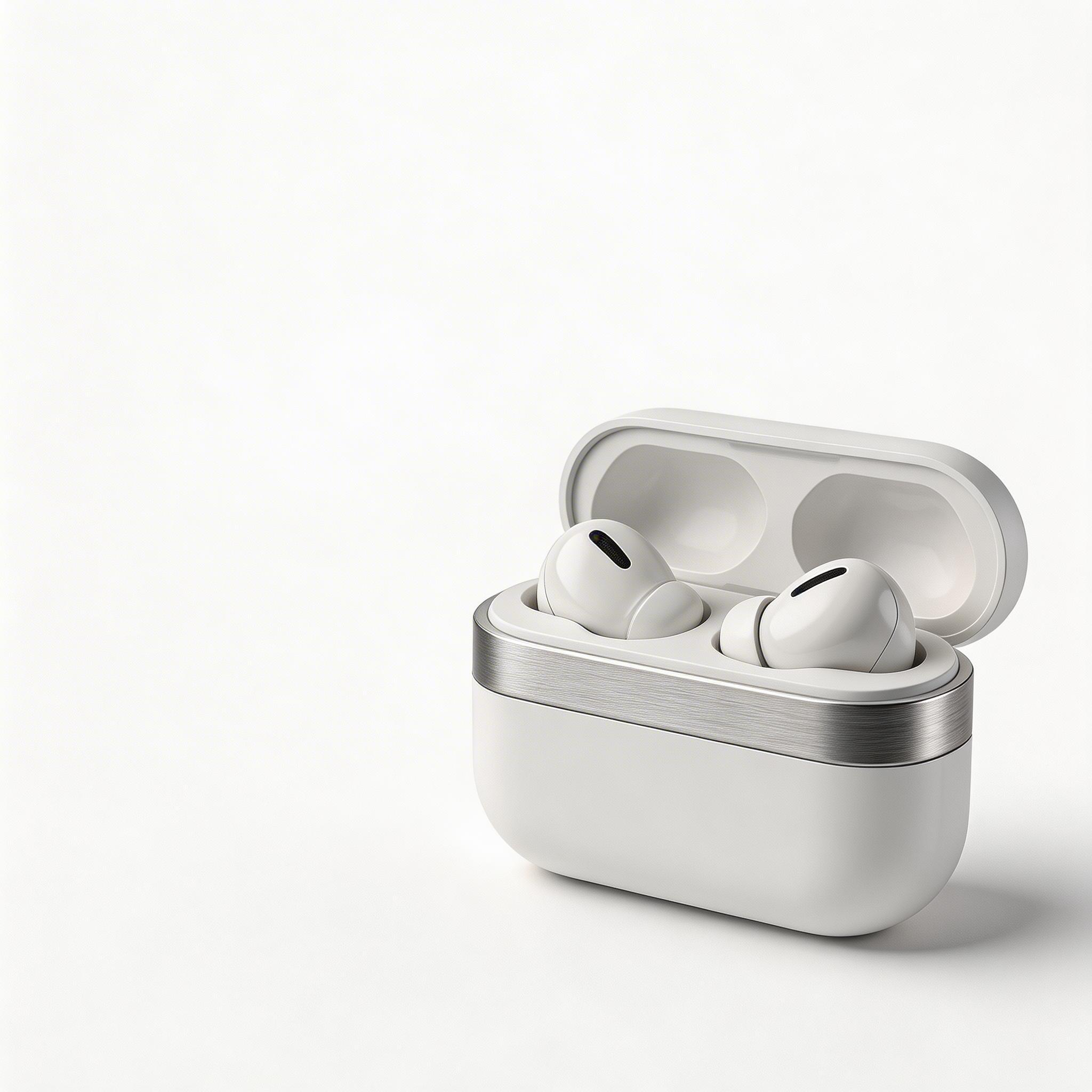
Material descriptions are the secret weapon for product shots. "Anodized aluminum" and "brushed steel" produce far better surface rendering than generic terms like "shiny" or "metallic."
Food Photography (Ramen)
A steaming bowl of tonkotsu ramen, perfectly arranged with chashu pork slices, a soft-boiled egg cut in half showing the jammy yolk, fresh scallions, nori sheet, and sesame seeds. Steam visibly rising from the rich milky broth. Dark wooden counter, moody izakaya restaurant lighting, overhead food photography angle, 50mm prime lens
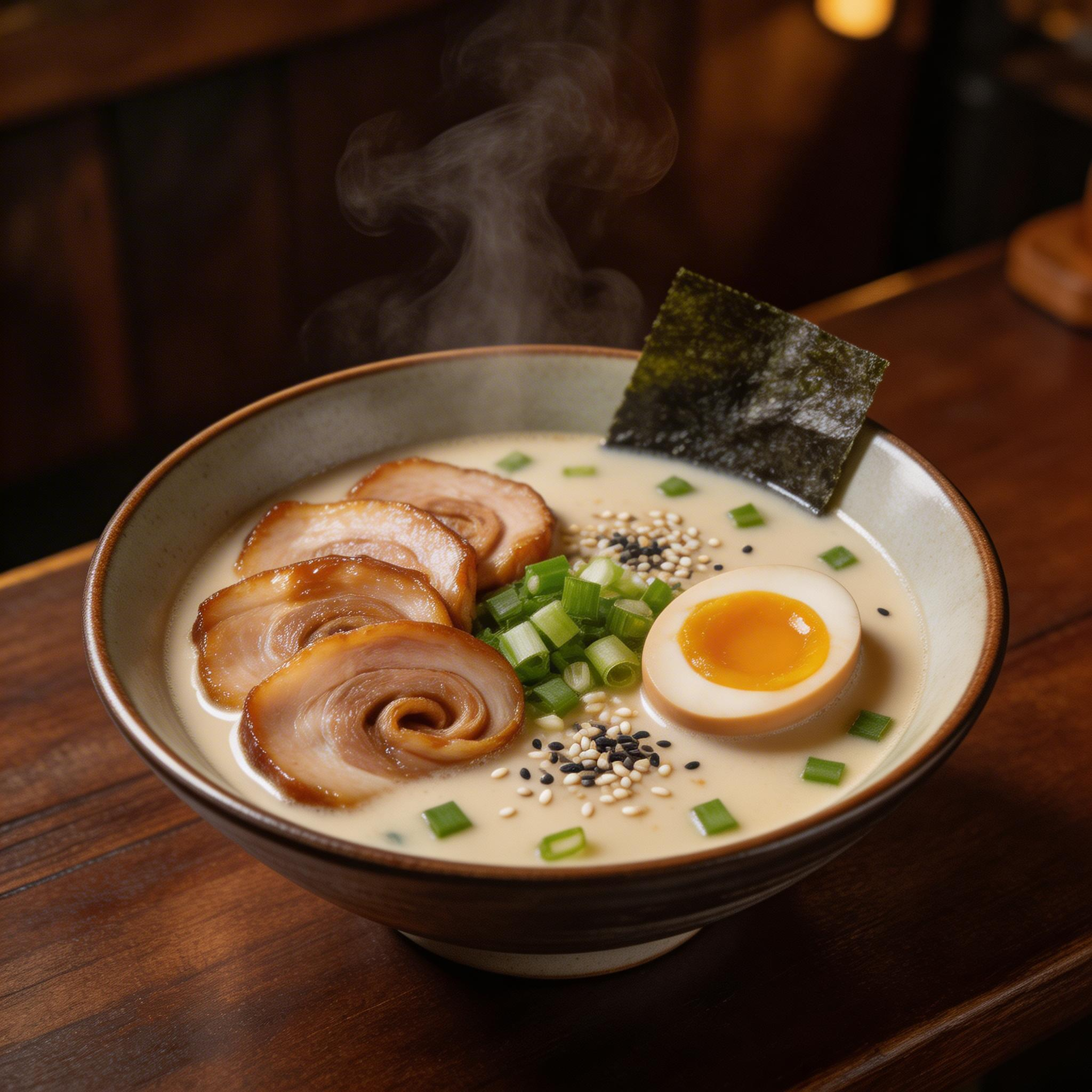
For food photography, describe the plating, garnishes, steam, surface material, and lighting angle. Every element matters.
Landscapes & Architecture (Brutalist Library)
Interior of a massive brutalist concrete public library, towering geometric bookshelves reaching five stories high connected by floating concrete walkways and spiral staircases. A single person reading at a desk far below, dwarfed by the scale. Natural light pouring in through narrow vertical slot windows. Architectural photography, wide angle lens
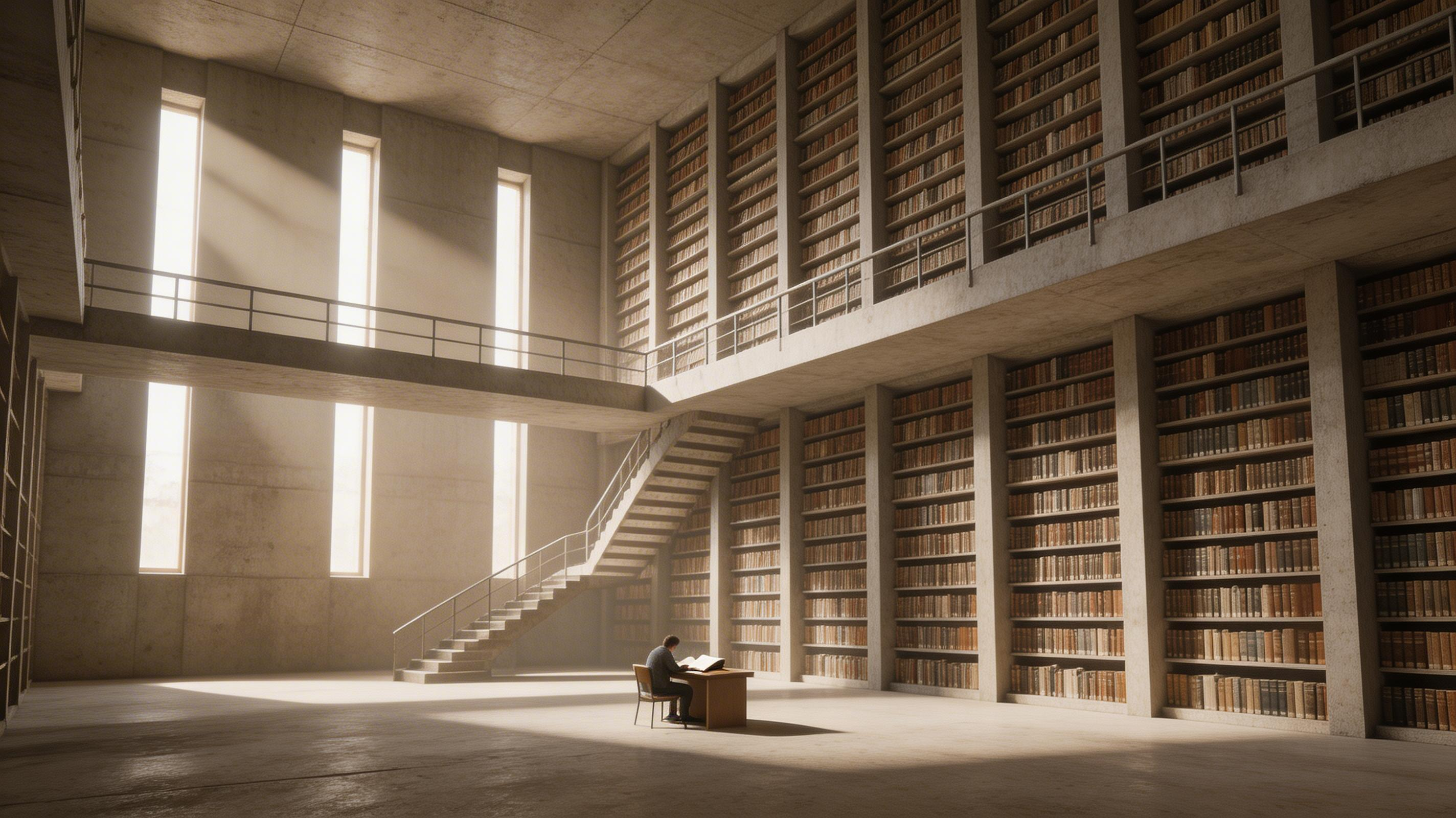
Scale and atmosphere: go big with your descriptions. The single person at the desk sells the massive scale of the architecture.
Illustration & Artistic Styles
Watercolor
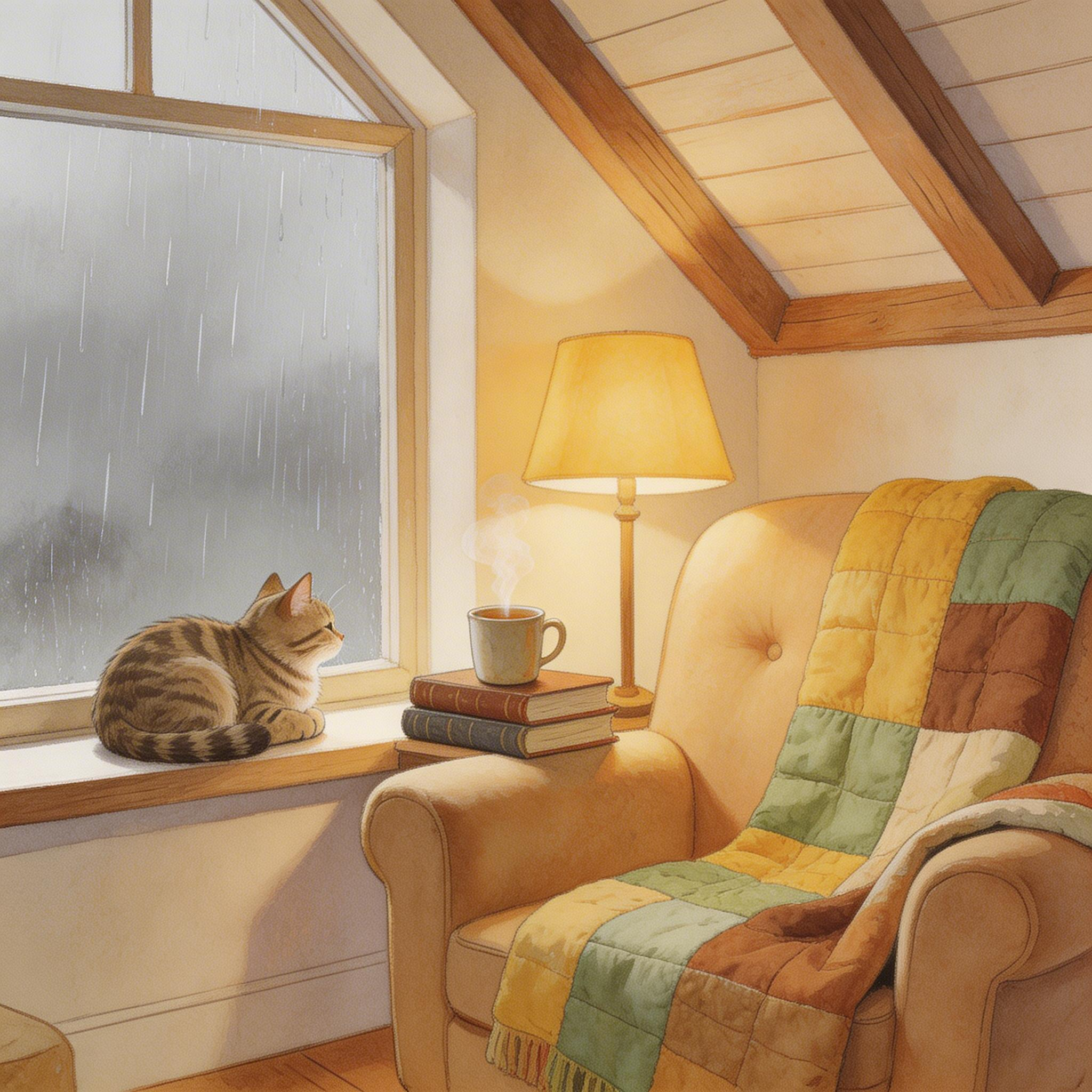
Adding "watercolor illustration" as a style anchor produces soft, painterly results with visible paper texture and natural color bleeding.
Matte Painting
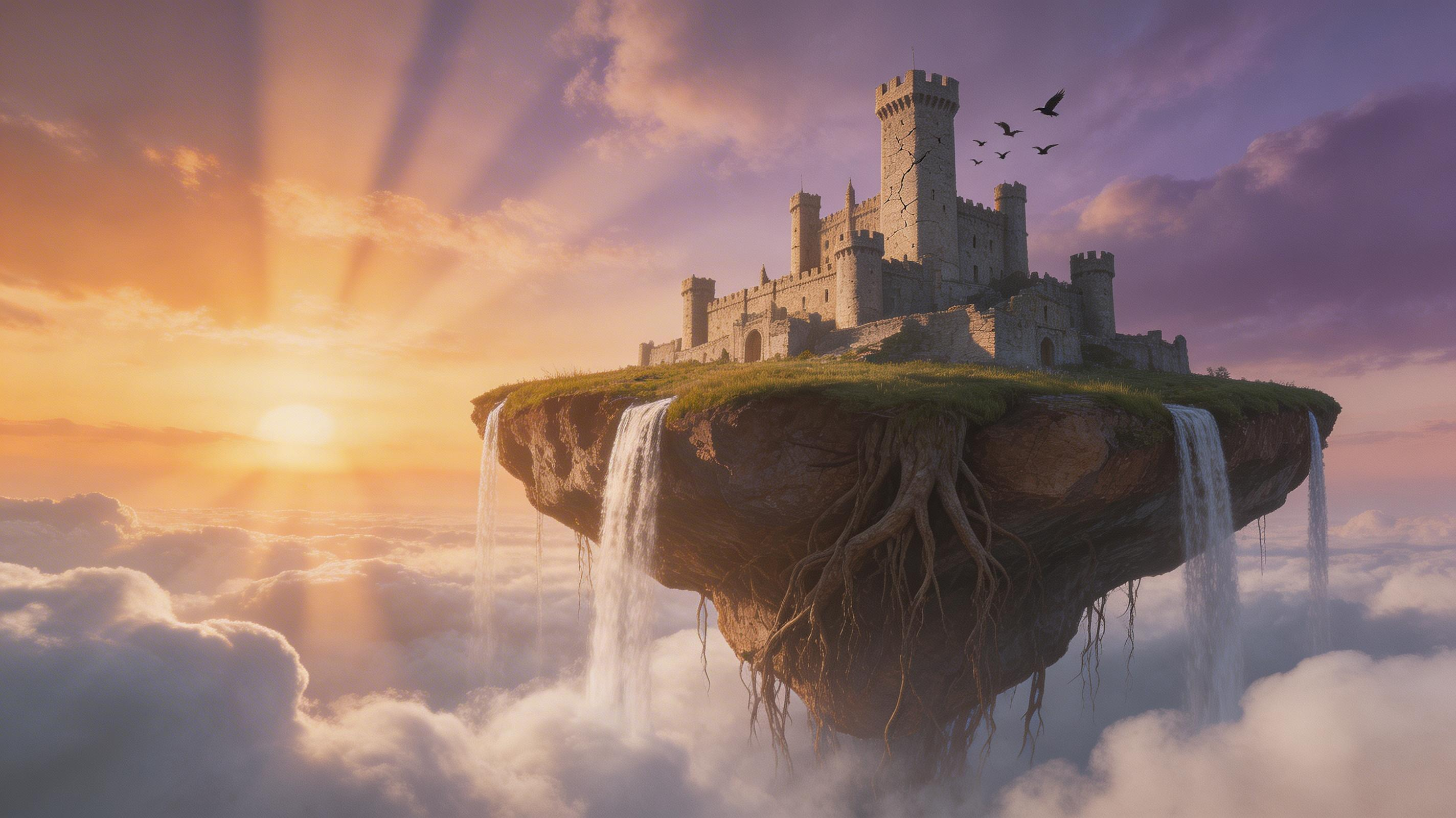
"Cinematic matte painting" gives you those epic, sweeping landscape illustrations that feel like concept art for a blockbuster film.
Wildlife & Nature
Two things make wildlife shots work: telephoto lens references and specific animal behavior. "400mm telephoto, f/2.8" tells the model to render that signature compressed background with creamy bokeh. And "walking through tall golden savanna grass" is far more effective than "lion in Africa."
Lion (400mm Telephoto)
A male African lion with a magnificent dark mane walking through tall golden savanna grass at sunset. Warm backlight creates a glowing halo around his mane. His amber eyes look directly at the camera with calm authority. Dust particles float in the air. Wildlife photography, 400mm telephoto lens, f/2.8, creamy bokeh, National Geographic cover quality.
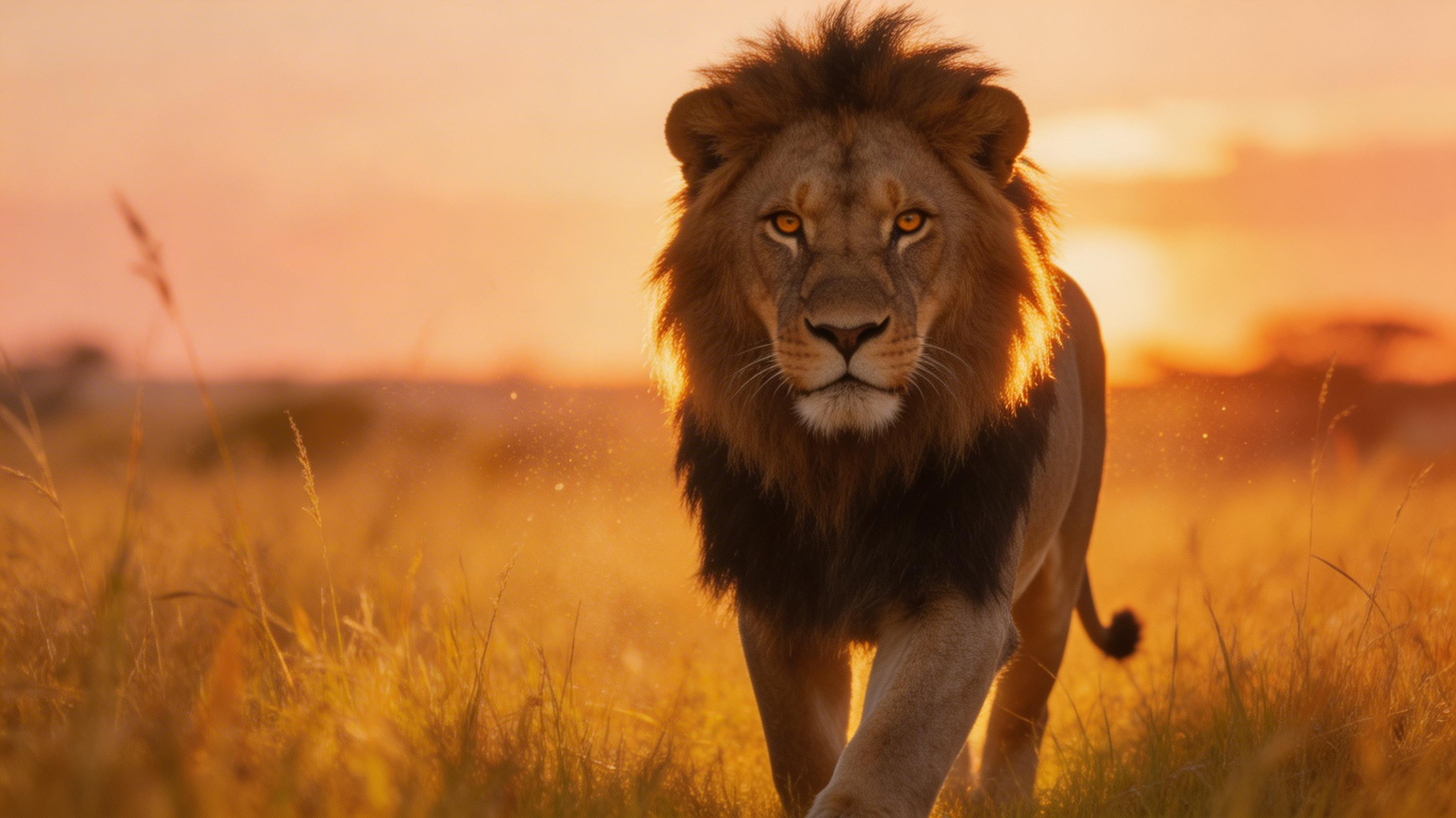
Backlit mane, amber eyes, golden savanna. National Geographic cover shot.
Hummingbird (1/8000s Freeze)
A Ruby-throated hummingbird frozen in flight, wings spread wide showing iridescent green feathers. It hovers in front of a bright red trumpet vine flower, its long beak reaching for nectar. A single water droplet hangs in the air. Extreme high-speed photography at 1/8000 shutter speed, perfect focus on the bird, softly blurred garden background, macro wildlife.
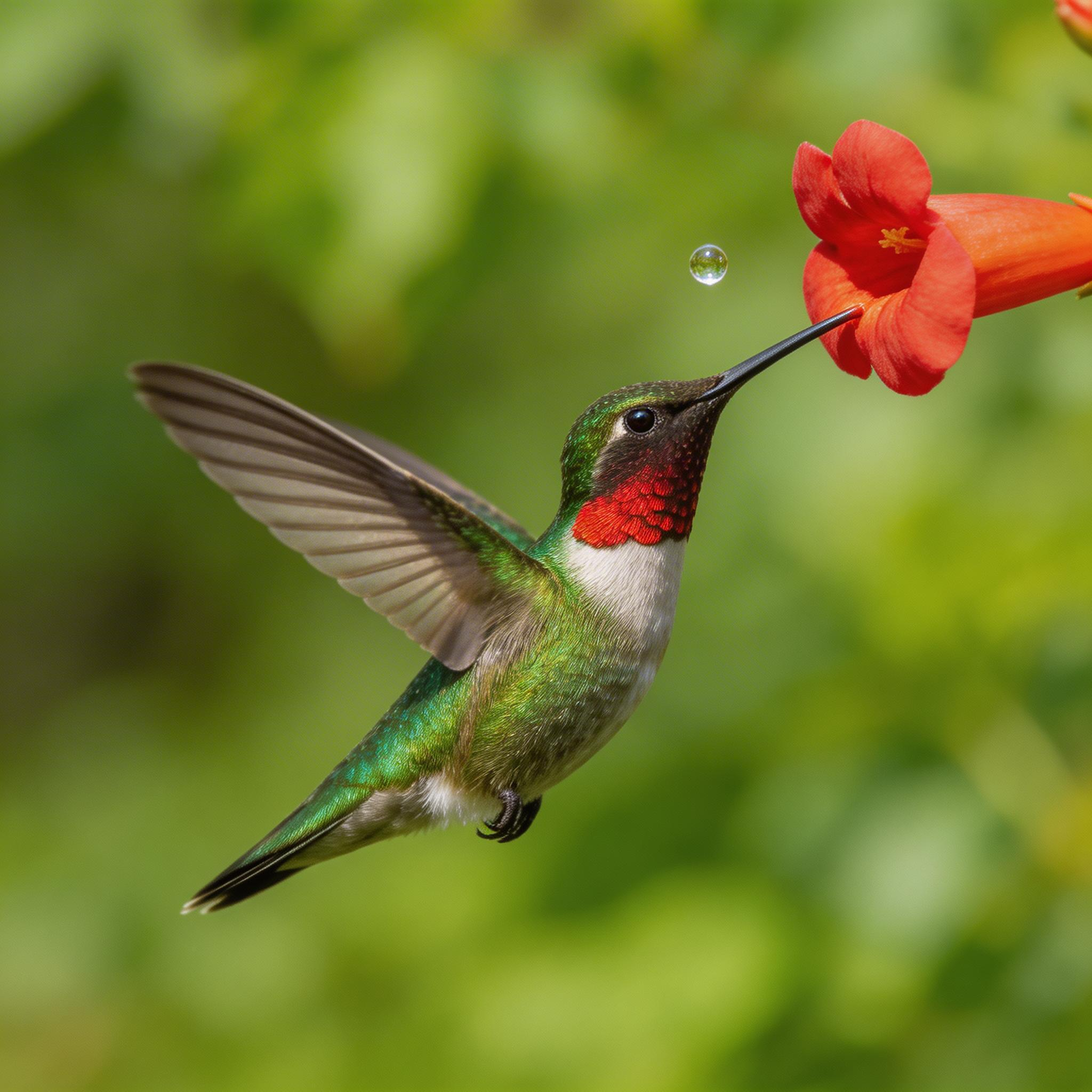
Wings frozen at 1/8000s. Iridescent feathers, single water droplet suspended in mid-air.
Night & Astrophotography
Including actual exposure settings like "25-second exposure, 14mm ultra-wide" makes the model render the corresponding visual effects: star trails from long exposure, smooth light trails from car headlights. It reflects what those camera settings produce in real life.
Milky Way
The Milky Way galaxy arching over Monument Valley at midnight. Sandstone buttes silhouetted against a sky filled with millions of stars. A small campfire in the foreground casts warm orange light on the desert floor, creating contrast with the cool blue star field. Astrophotography, 14mm ultra-wide lens, 25-second exposure, low noise, sharp stars, foreground illuminated by firelight.
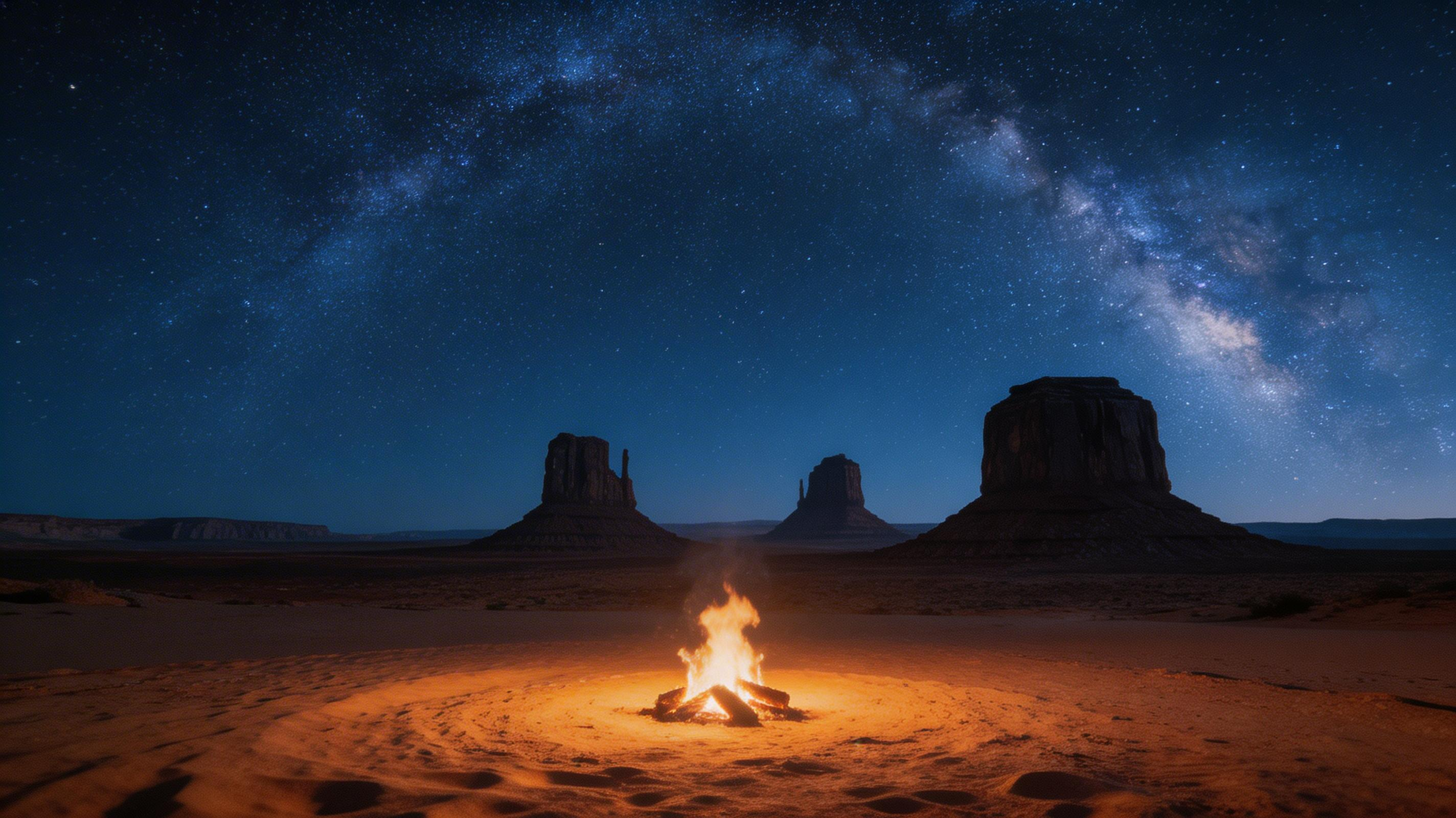
Milky Way arch, campfire warmth vs cool starlight. Real astrophotography settings produce real astrophotography results.
Light Trails
Long exposure photograph of a busy intersection in downtown Manhattan at night. Car headlights and taillights create smooth red and white light trails weaving between yellow taxi cabs frozen in place. Skyscrapers frame the scene with thousands of lit windows. Wet pavement reflecting everything. 30-second exposure, f/11, tripod shot, urban night photography.
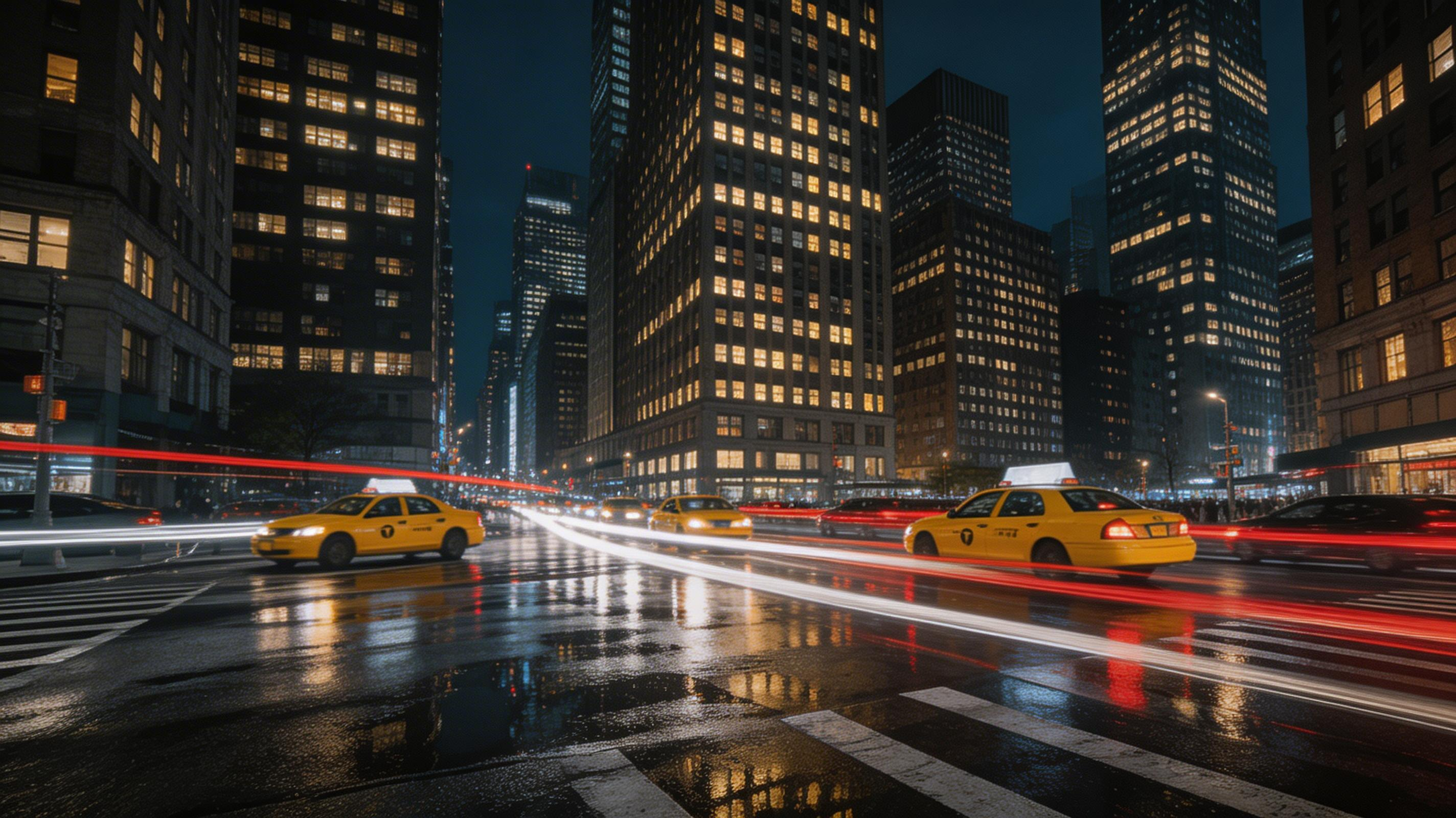
Smooth light trails, wet reflections, thousands of lit windows. Classic long exposure urban photography.
Underwater Photography
Underwater scenes are a good stress test because they require the model to understand light physics: how sunlight penetrates water, how colors shift with depth, how caustic light patterns form. The model handles this better than we expected it to.
An underwater cathedral formed by massive living coral structures in vivid orange, purple, and electric blue. Schools of tropical fish swim through the coral arches like stained glass windows. Shafts of sunlight penetrate from the surface above creating god rays through the clear turquoise water. Underwater photography, National Geographic quality, wide angle with Snell window effect.
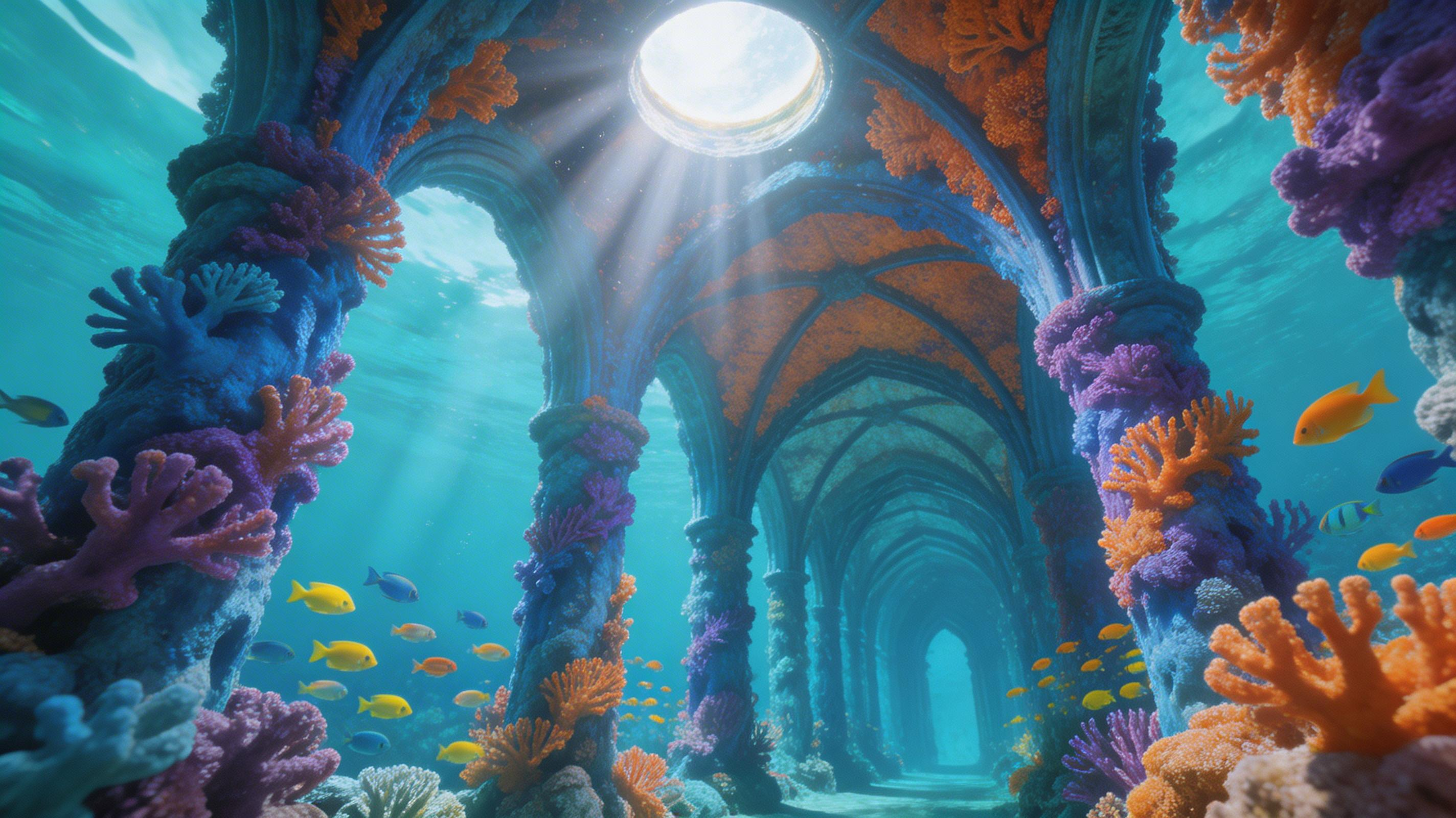
Coral arches like cathedral windows. God rays from above, tropical fish schools. The light physics are convincing.
Minimalism & Negative Space
This one is counterintuitive: when you want a minimalist image, you need to describe the emptiness as carefully as the subject. "Enormous negative space above and to the left" gives the model explicit permission to leave most of the frame empty, which it otherwise tends to fill.
Bird on Wire
A single small bird perched on a thin electrical wire against a vast empty pale blue sky. The bird is positioned in the lower right third of the frame. Enormous negative space above and to the left. Minimalist composition, Japanese wabi-sabi aesthetic, muted pastel tones, contemplative mood, clean and simple, fine art photography.
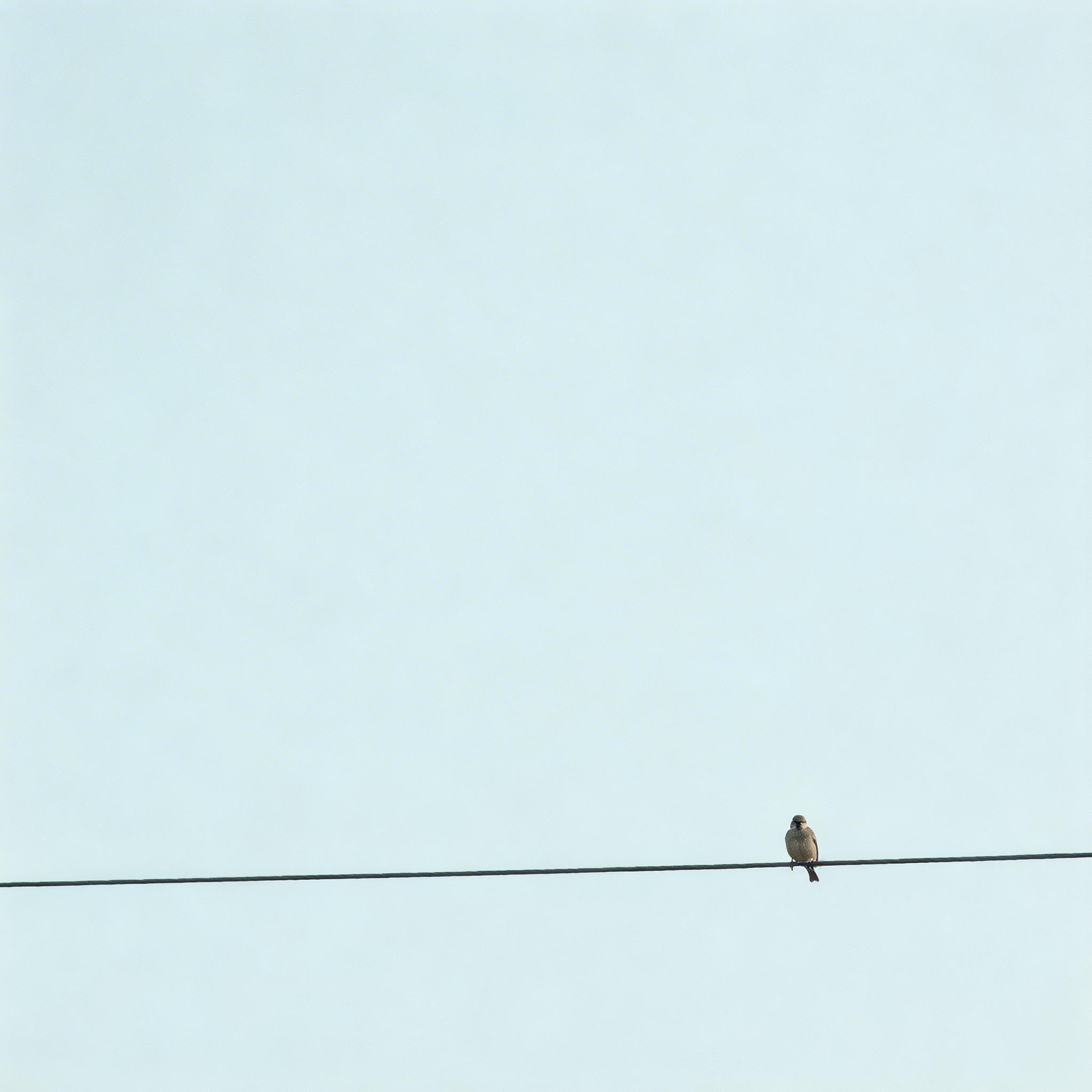
Bird on wire, vast sky. The emptiness IS the composition.
Red Umbrella
A single red umbrella lying abandoned on an endless white salt flat that stretches to the horizon. The sky is overcast white, blending with the ground. The red umbrella is the only color in the entire frame, positioned slightly off-center. Extreme minimalism, high-key photography, vast emptiness, solitude, editorial fine art.
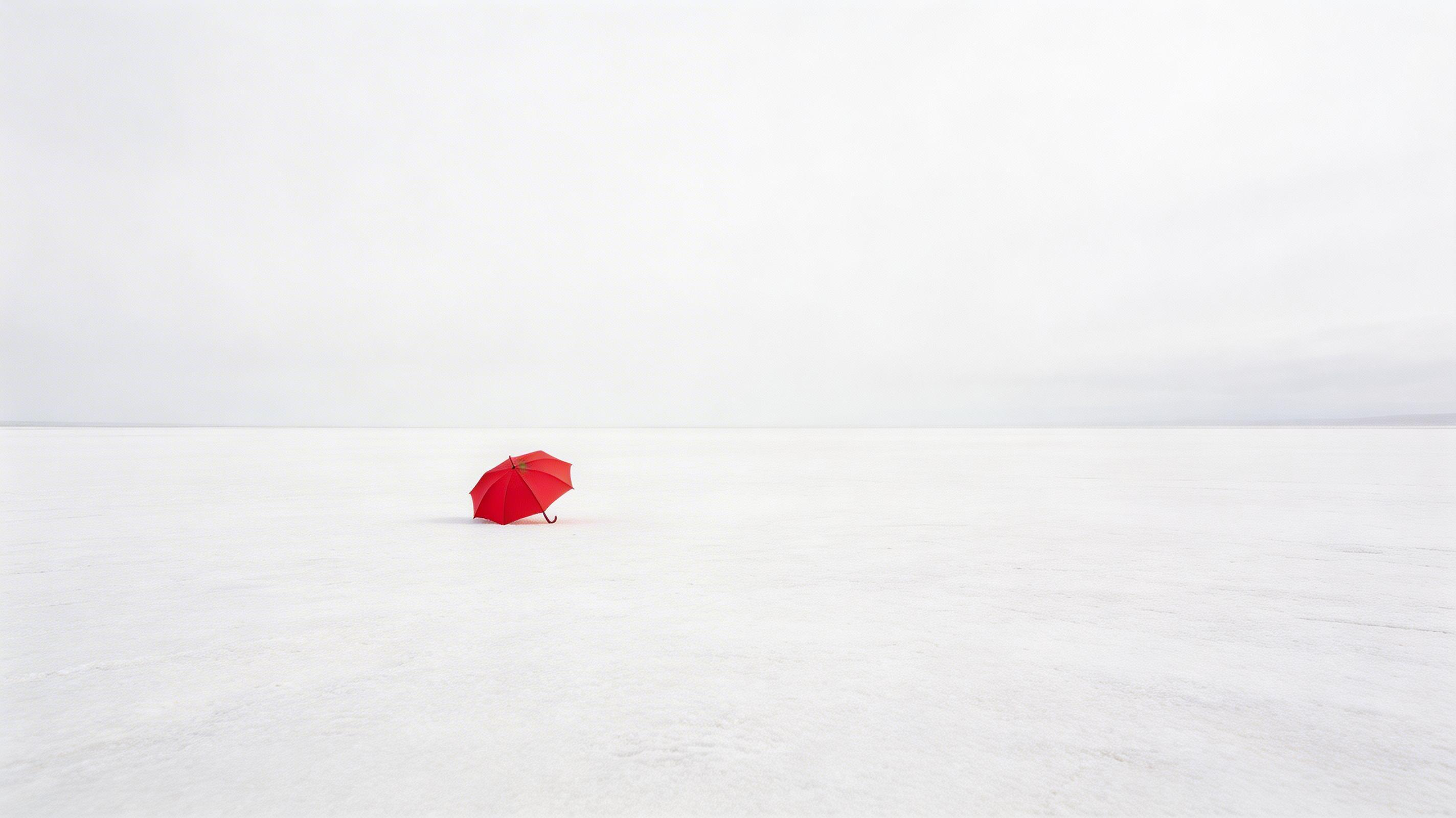
One red object in infinite white. The power of a single color accent.
Motion & Action (Ballet)
Including shutter speed in the prompt, like "1/15 second," renders the corresponding motion blur. Be explicit about what should stay sharp and what should blur.
A ballet dancer mid-pirouette on an empty theater stage. Intentional motion blur on her spinning tutu creates a ghostly white circle while her face and raised arm remain sharp. A single spotlight from above creates a pool of light on the dark wooden floor. Long exposure dance photography, 1/15 second shutter speed, dramatic chiaroscuro, fine art black and white with subtle warm tone.
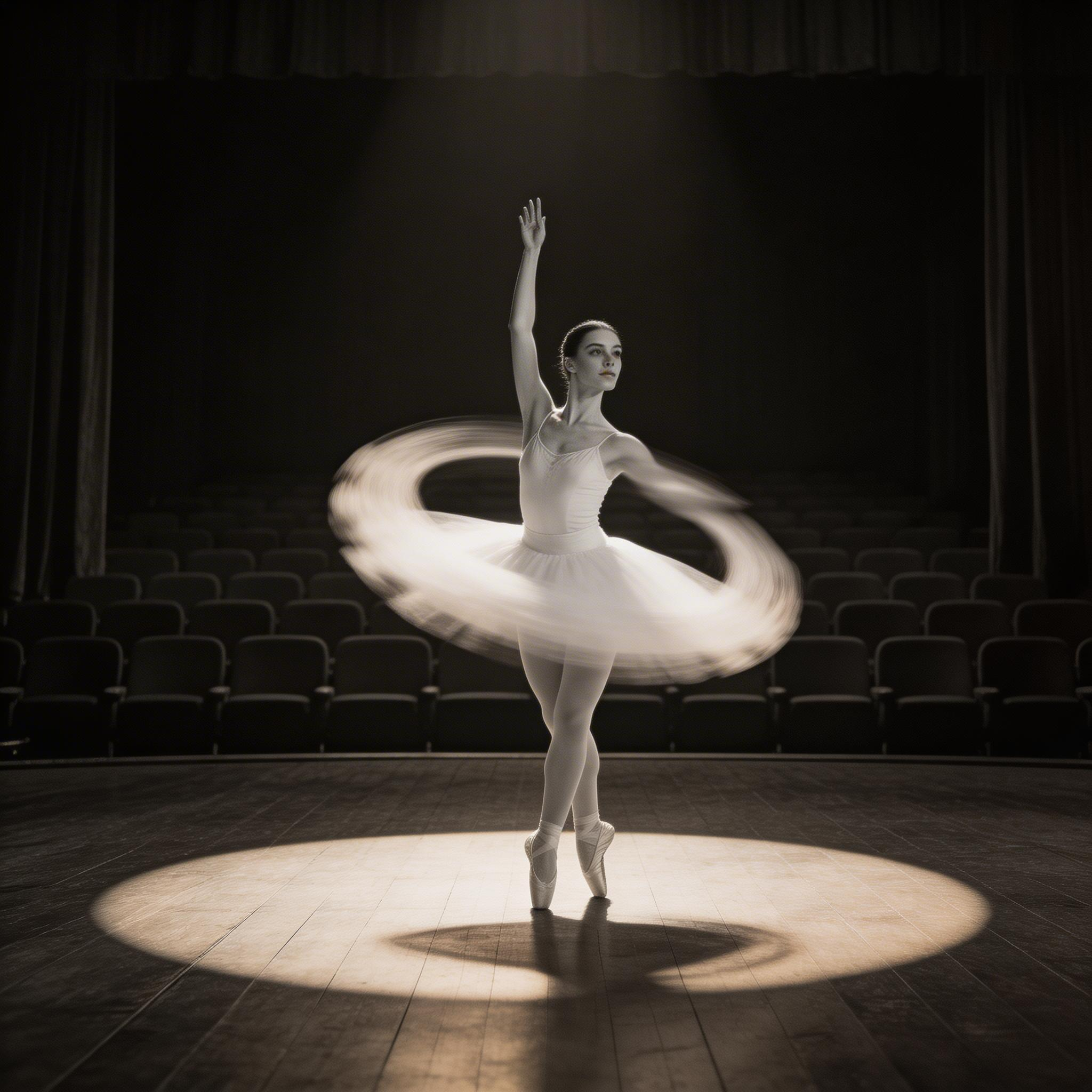
Tutu blurs into a ghostly circle. Face stays sharp. 1/15s long exposure dance photography.
Texture & Material Study
Macro texture shots push the model to generate convincing surface detail at extreme magnification. Seedream handles this well. Describe layers and depth. "Rust, turquoise, cream, and deep red layers" gives it something to work with.
Extreme close-up of layers of peeling paint on an old ship hull. Rust, turquoise, cream, and deep red layers reveal themselves like geological strata. Textures of bubbling, cracking, and flaking paint create abstract patterns. Harsh directional sunlight from the side emphasizing every ridge and valley. Macro photography, full frame detail, abstract found textures.
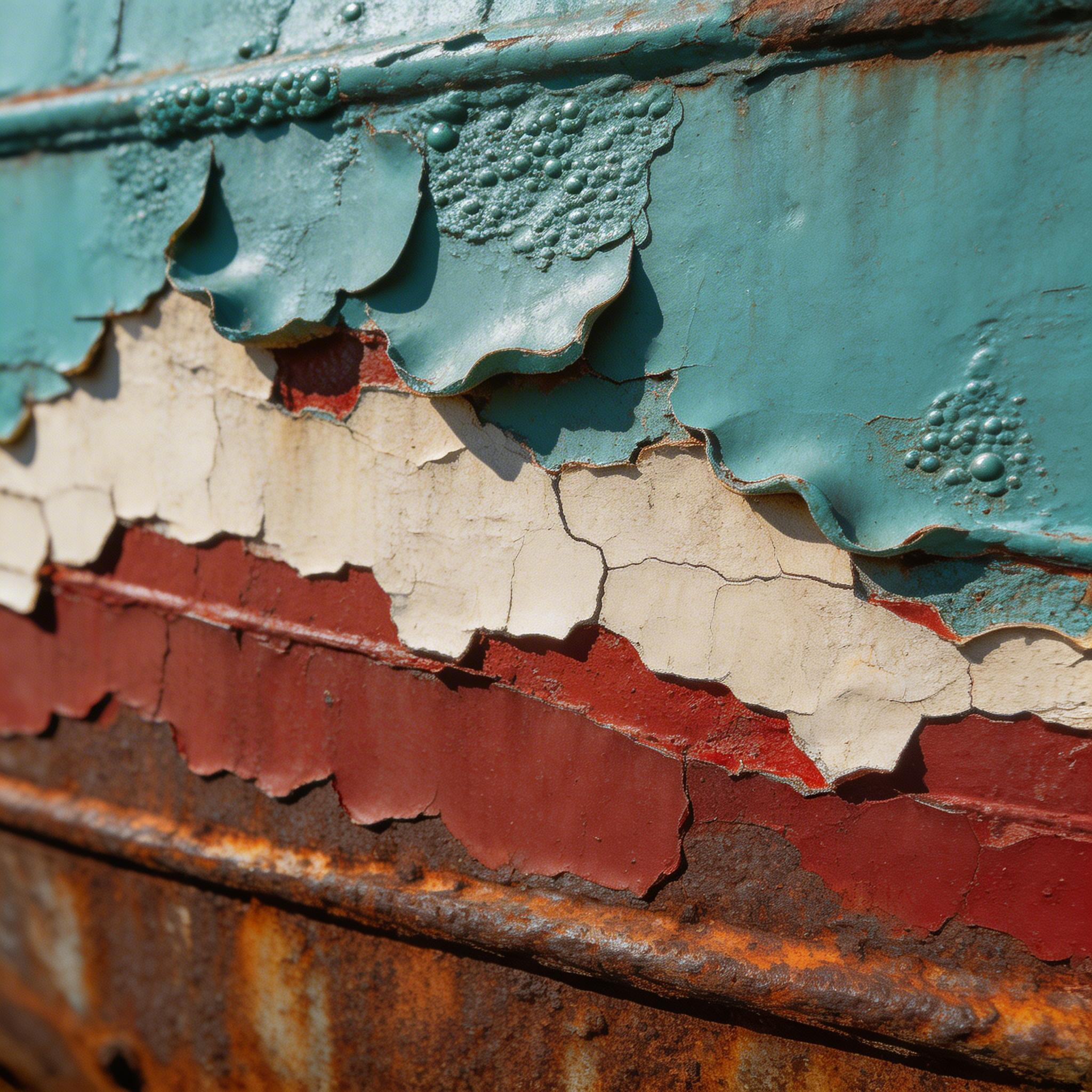
Peeling paint layers like geological strata. Rust, turquoise, cream, deep red. Every ridge and valley catches the light.
Macro & Detail Work
Extreme macro photograph of morning dewdrops clinging to a spider web stretched between two blades of grass, each droplet acting as a tiny lens refracting the sunrise, golden backlight creating sparkling bokeh, shallow depth of field, nature documentary photography, Canon 100mm macro lens
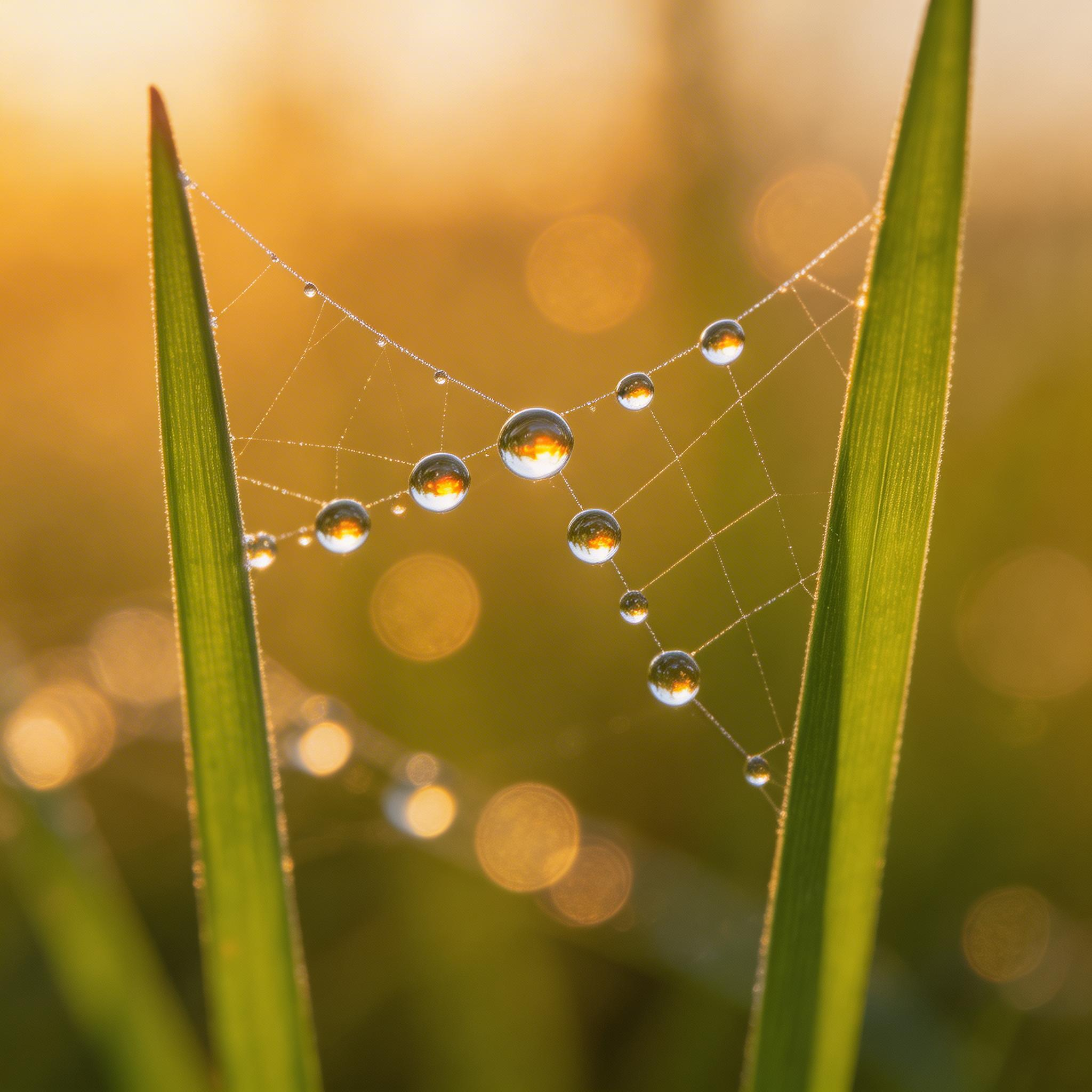
Each dewdrop acts as a tiny lens refracting the sunrise. The specific lens reference (Canon 100mm macro) helps the model nail the depth of field and magnification level.
Comic Strip & Sequential Art
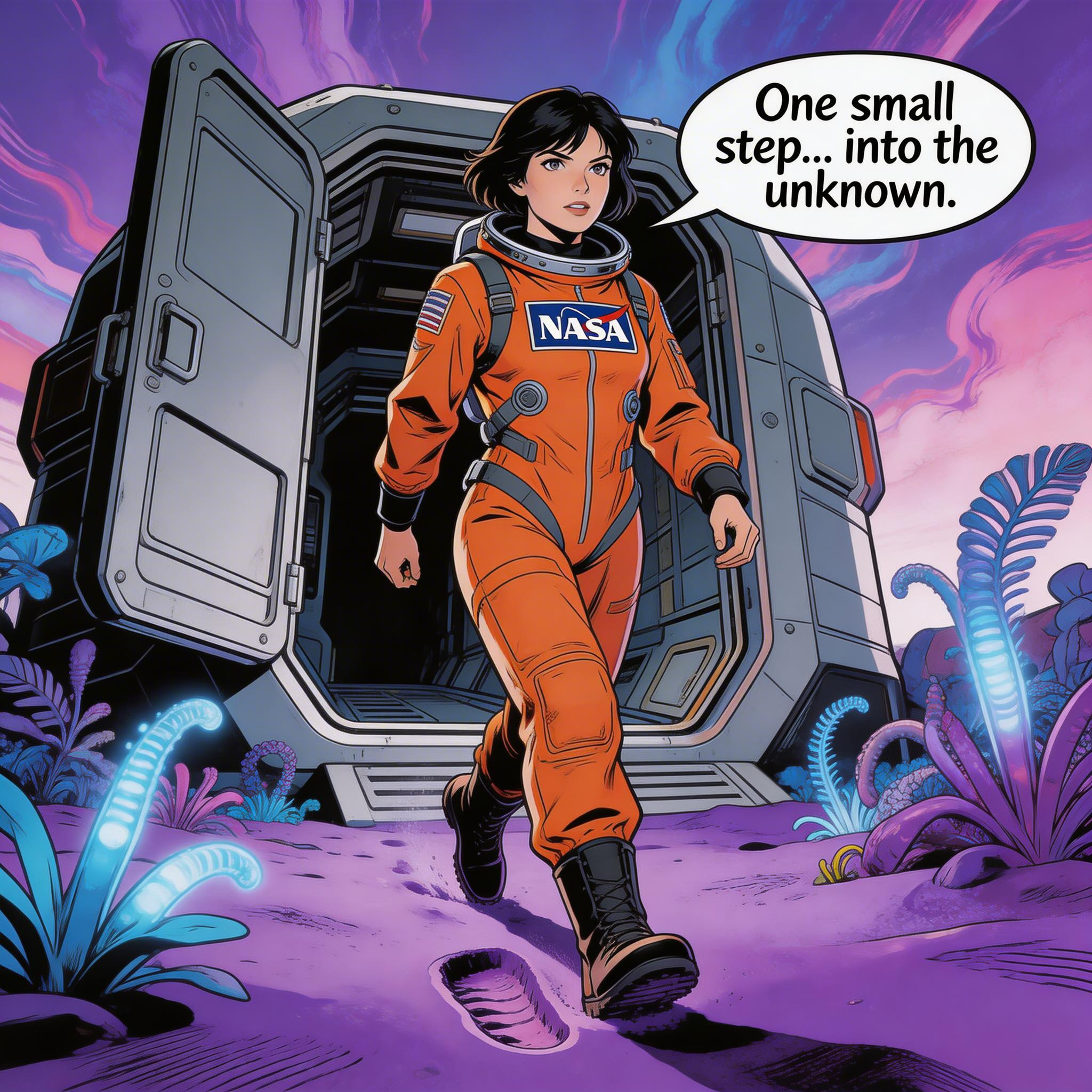
Keeping a character looking the same across multiple panels is genuinely difficult for image generation. The trick we found: copy-paste the character description exactly between prompts, word for word. Change the scene, the angle, the action, but keep the character description identical.
Panel 1: Discovery
Comic book panel, clean ink lines with cel shading. A young woman astronaut with short black hair and a determined expression, wearing an orange NASA flight suit, looking through the window of a spacecraft at a mysterious glowing planet. Speech bubble reads: "Houston, you need to see this." Bold comic book style, vibrant colors, sharp outlines.
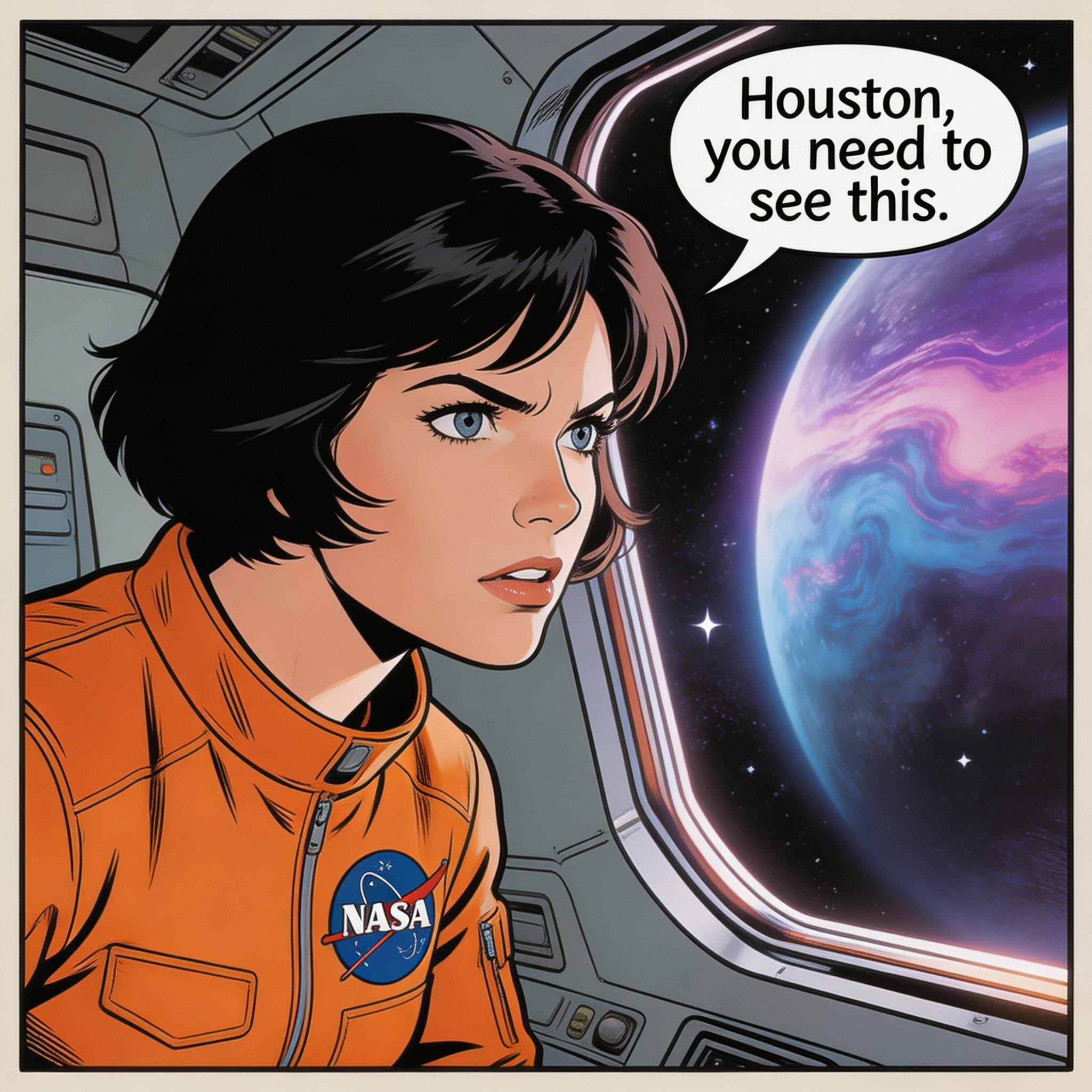
Panel 2: First Steps
Comic book panel, clean ink lines with cel shading. The same young woman astronaut with short black hair in an orange NASA flight suit, now stepping out of the spacecraft airlock onto the surface of the glowing planet. Her boots leave prints in luminescent purple sand. Speech bubble reads: "One small step... into the unknown." Bold comic book style, vibrant colors, dramatic low angle.
Tips for comic panels:
- Lock character description. Copy-paste exactly between panels.
- Specify comic style. "Clean ink lines", "cel shading", "bold outlines".
- Vary camera angles. "Dramatic low angle", "overhead shot" for visual storytelling.
Storybook Illustration
For storybook illustrations, referencing specific artists or studios goes a long way. "Beatrix Potter meets Studio Ghibli" immediately puts the model in the right visual neighborhood: warm, inviting, slightly magical.
A little fox wearing a tiny red scarf and carrying a lantern walks through a magical winter forest at twilight. Snow-covered pine trees tower above. Friendly woodland creatures peek out from behind trees: a rabbit, an owl, a hedgehog. Warm lantern light creates a golden glow on the snow. Children book illustration, watercolor and gouache, Beatrix Potter meets Studio Ghibli, warm and inviting, storybook page layout.
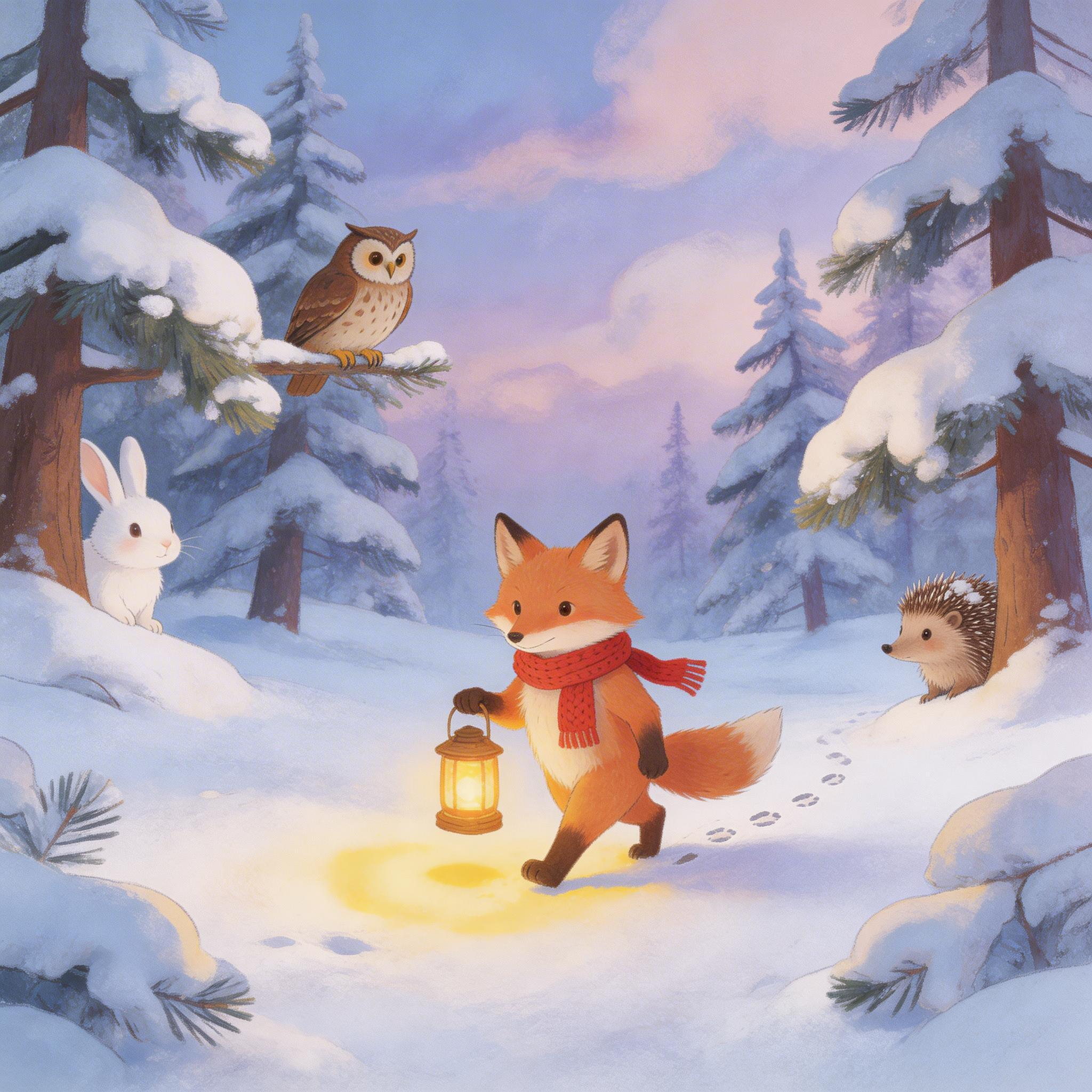
Fox with lantern in winter forest. Watercolor warmth, woodland friends peeking out. This is the kind of image that makes you want to read the whole book.
Abstract & Generative Art
Abstract art prompts work best when you describe physical properties (materials, textures, surface finish) rather than concepts. "Glossy wet appearance with tiny air bubbles trapped in the medium" is infinitely more useful than "beautiful abstract art."
Fluid Marble
Abstract fluid art resembling luxury marble. Swirling veins of deep navy blue, rose gold metallic, and pure white create organic flowing patterns. The surface has a glossy wet appearance with tiny air bubbles trapped in the medium. Extreme close-up, perfectly even lighting, fine art print, suitable for large-scale wall art, 8K detail.
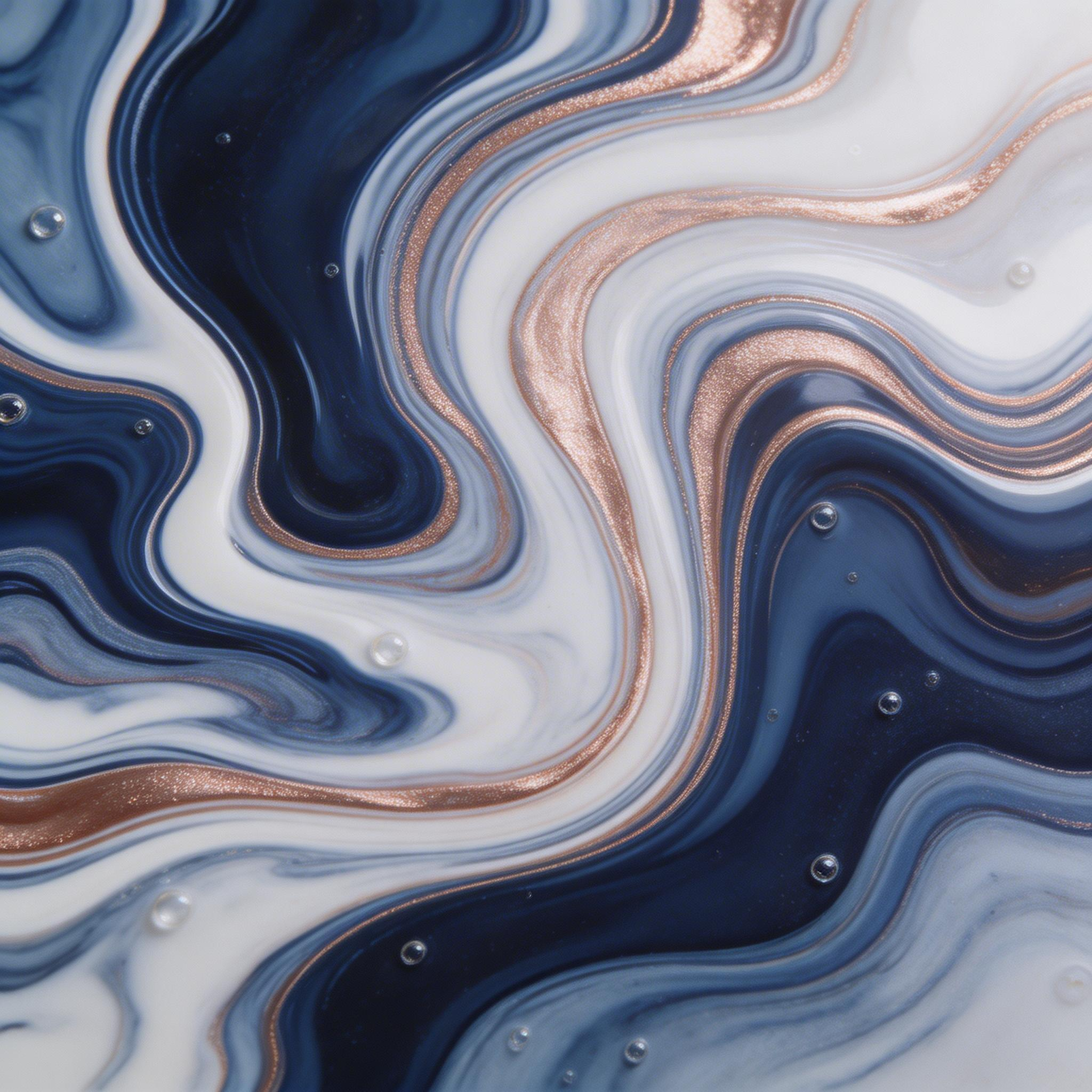
Navy, rose gold, white. Glossy fluid patterns with trapped air bubbles. Wall-art quality.
Sacred Geometry
Sacred geometry pattern with overlapping Fibonacci spirals, flower of life, and Metatron cube rendered in luminous gold lines on a deep matte black background. Subtle iridescent rainbow refractions where the lines intersect. Mathematical precision, perfect symmetry, mystical atmosphere, digital art, ultra-sharp vector-like quality.
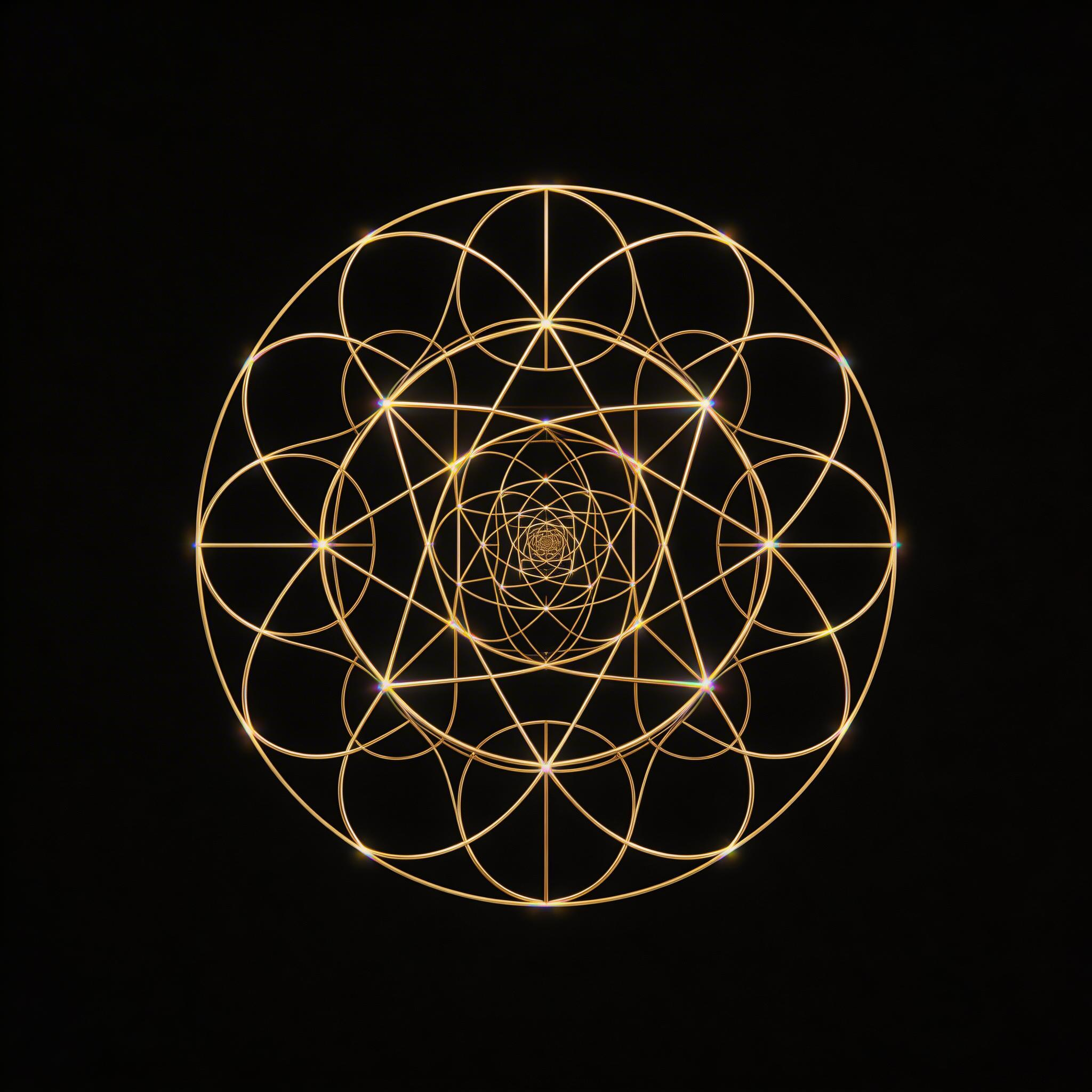
Gold sacred geometry on black. Fibonacci spirals, iridescent intersections.
Isometric & 3D Render
Isometric renders are popular for game art and product illustrations, and they come out clean here. "Cutaway view" is the magic phrase. It tells the model to slice the scene open so you can see inside. We found that leaving people out gives much cleaner results in this style.
Isometric 3D render of a cozy corner cafe interior, cutaway view. Detailed miniature furniture: wooden tables, velvet chairs, a barista counter with an espresso machine. Warm hanging pendant lights, exposed brick walls, potted plants on windowsills. No people, empty cafe. Low-poly stylized 3D art, soft pastel color palette, clean render, game art style, no outlines.
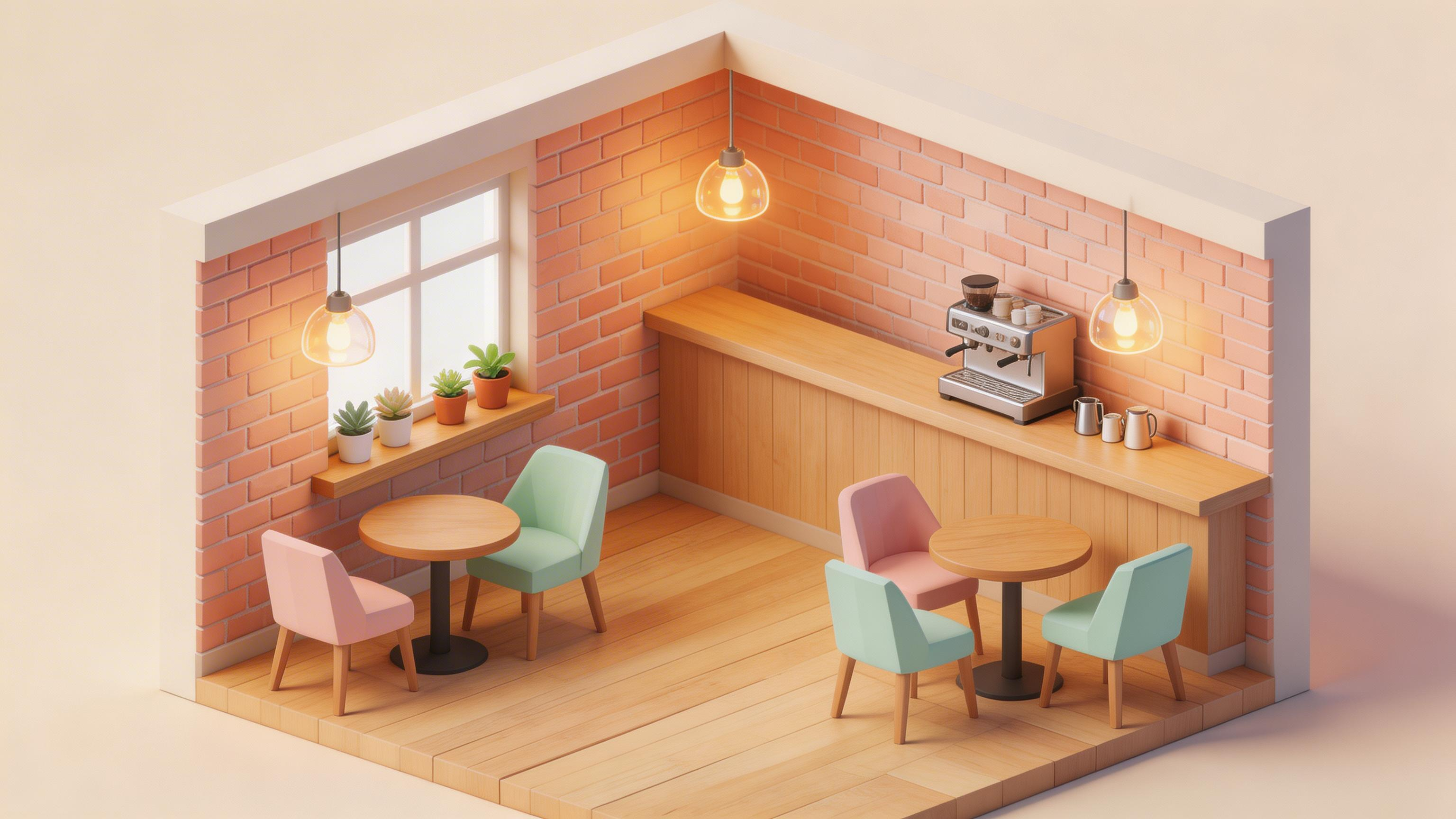
Cutaway cafe in isometric view. Low-poly stylized, pastel palette, no people. Perfect for game art or product illustrations.
Miniature & Tilt-Shift
Tilt-shift is hard to mess up. Mention "tilt-shift photography effect" with "extreme shallow depth of field at top and bottom" and you get that satisfying miniature look every time.
Aerial view of a real European coastal town that looks like a miniature model village due to tilt-shift photography effect. Tiny colorful houses with terracotta roofs line a small harbor filled with toy-like boats. Extreme shallow depth of field at top and bottom, hyper-saturated colors, bright midday sunshine. Everything looks like a carefully crafted architectural model.
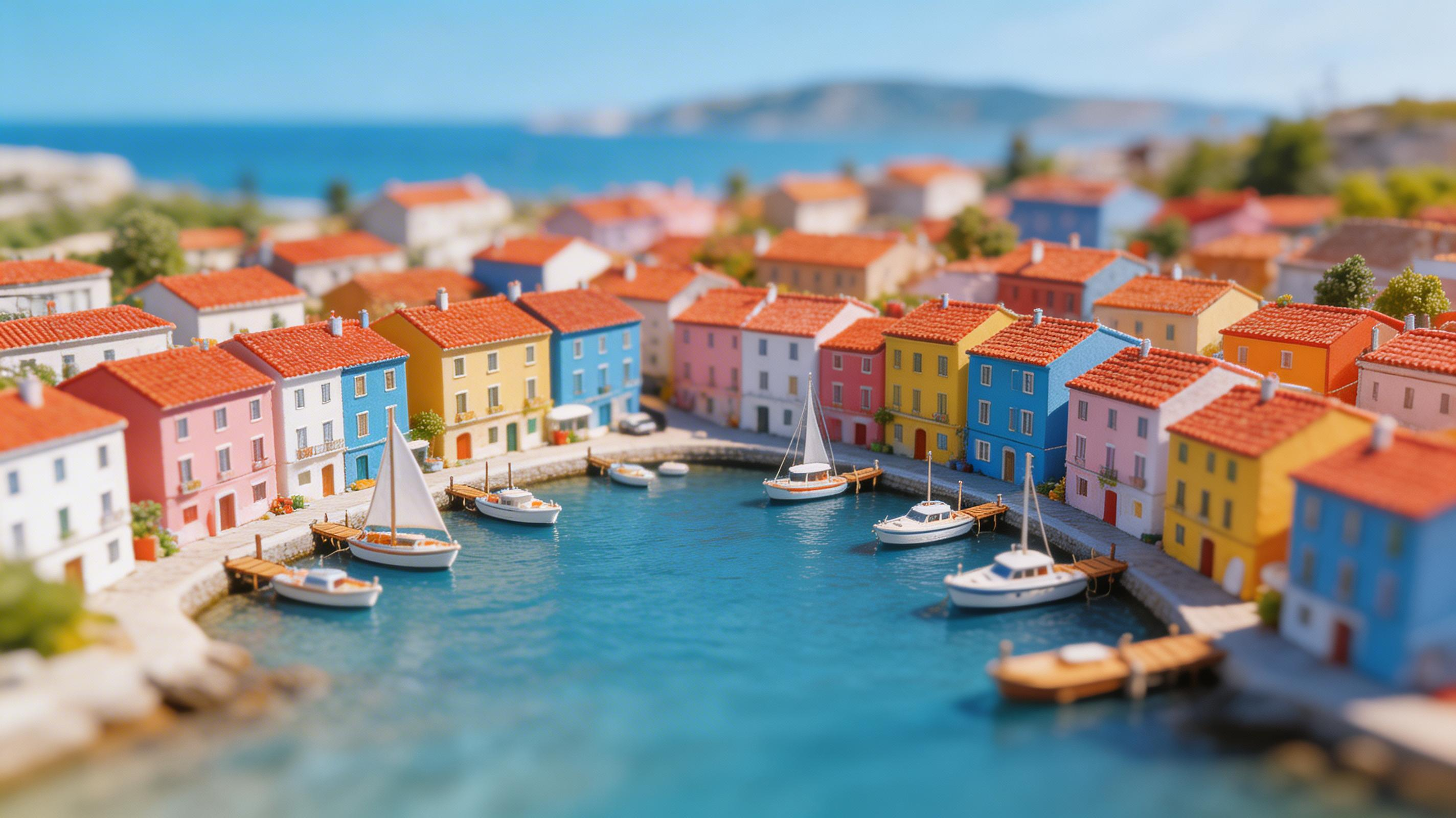
Real town made miniature. Tilt-shift blur, hyper-saturated toy colors.
Image Editing: The Deep Dive
The edit endpoint is arguably the most powerful part of Seedream. You feed it a photo and describe what you want different, and it figures out what to preserve and what to rebuild. The editing examples below are all real before/after pairs.
Style Transfer: One Image, Three Worlds
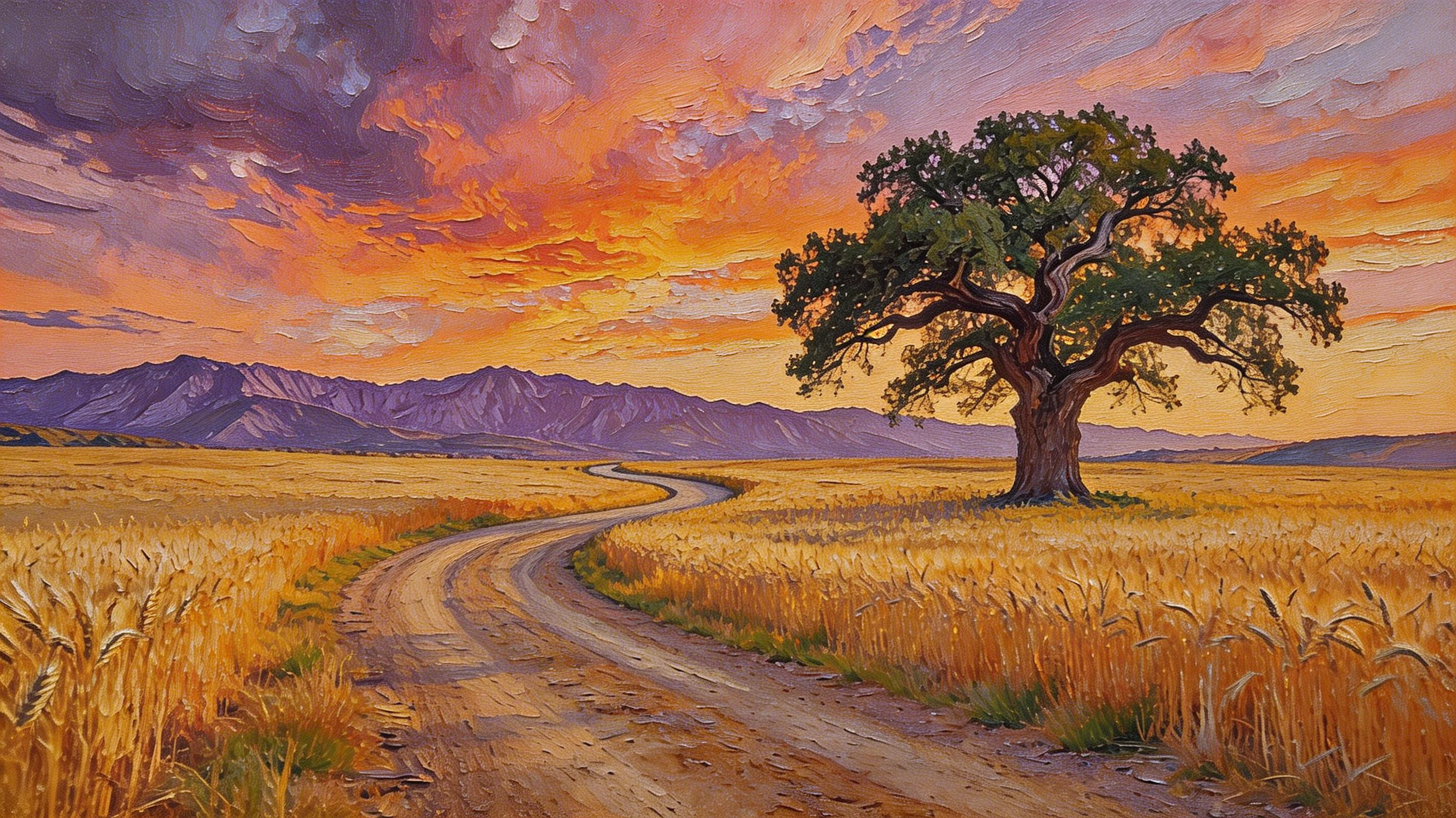
Start with a dramatic sunset over wheat fields with a winding road and old oak tree:
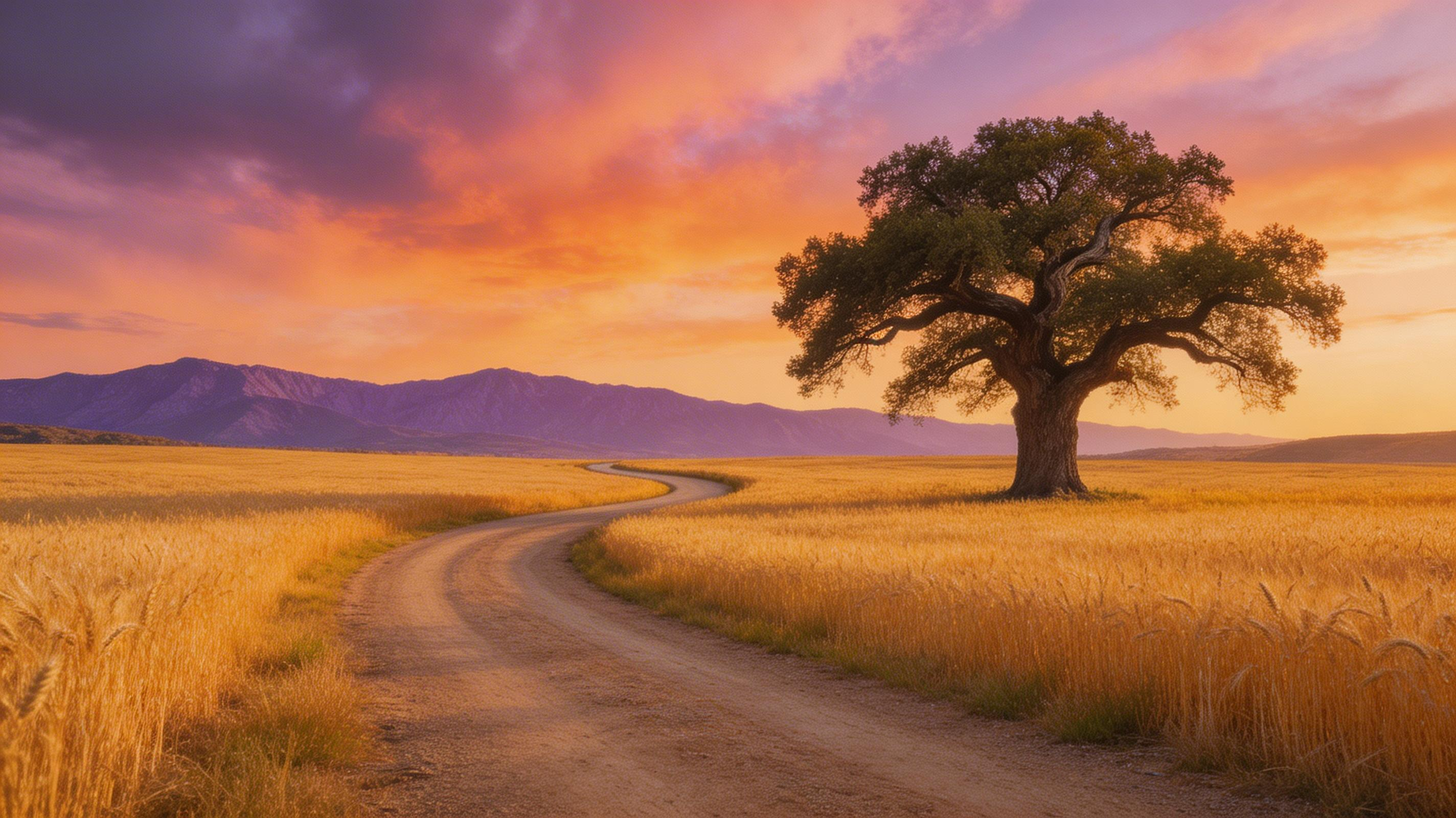
Now watch what happens with three different edit prompts:
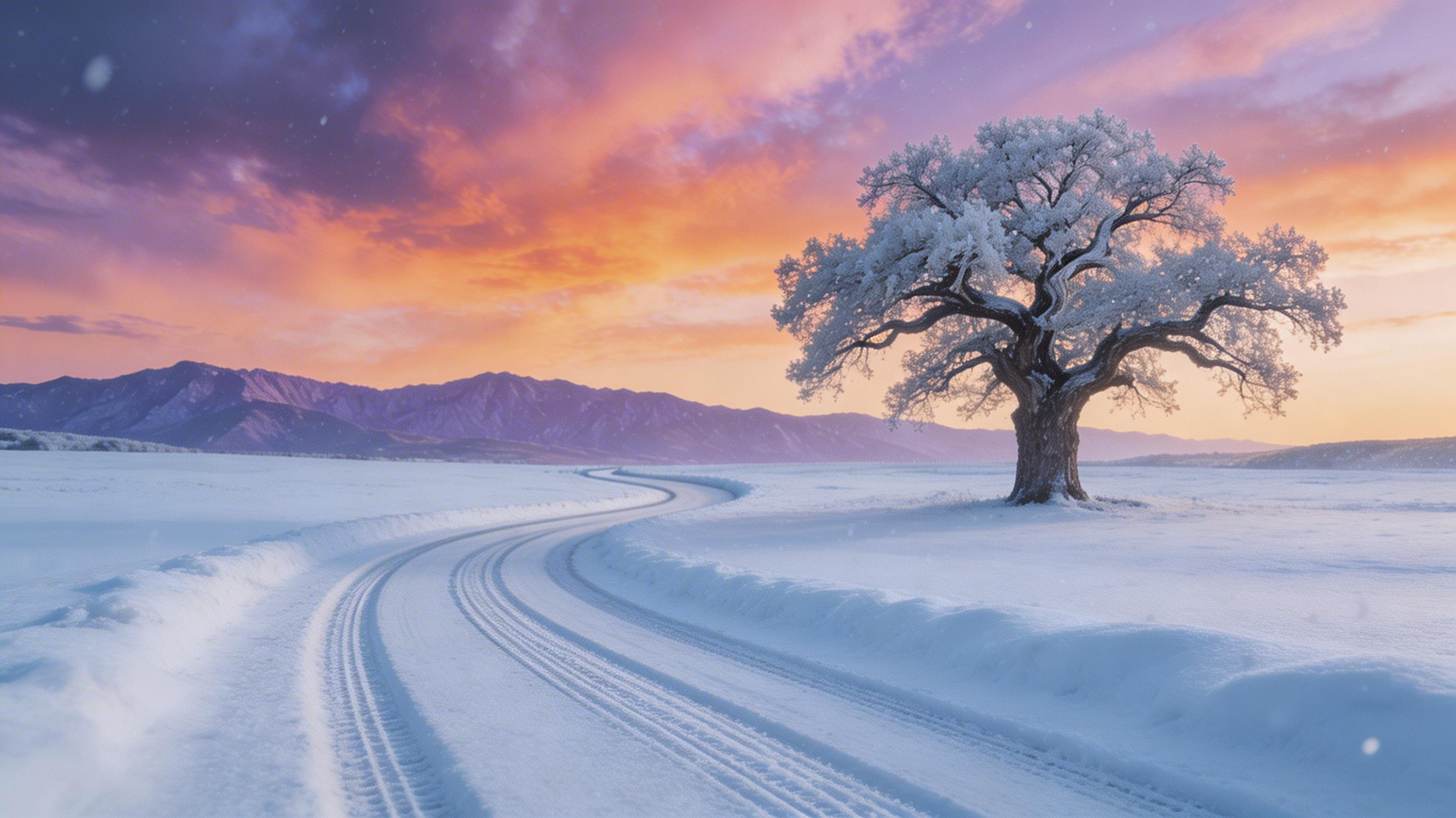
Winter scene:
Transform this into a cold winter scene. The wheat fields are covered in deep snow, the oak tree is bare with frost on its branches. The sunset sky shifts to cool blues and pale pinks. Keep the same road, tree, and composition.
Oil painting:
Convert this photograph into a classic oil painting. Thick visible brushstrokes, rich impasto texture on the sky and fields. Warm color palette with deep oranges and golden yellows. Keep the same composition and elements. Traditional landscape painting style, gallery quality.
16-bit pixel art:
Convert this into 16-bit pixel art style. Limited color palette, visible square pixels, retro video game aesthetic. Keep the same landscape composition with the road, tree, and sunset. SNES-era graphics look.
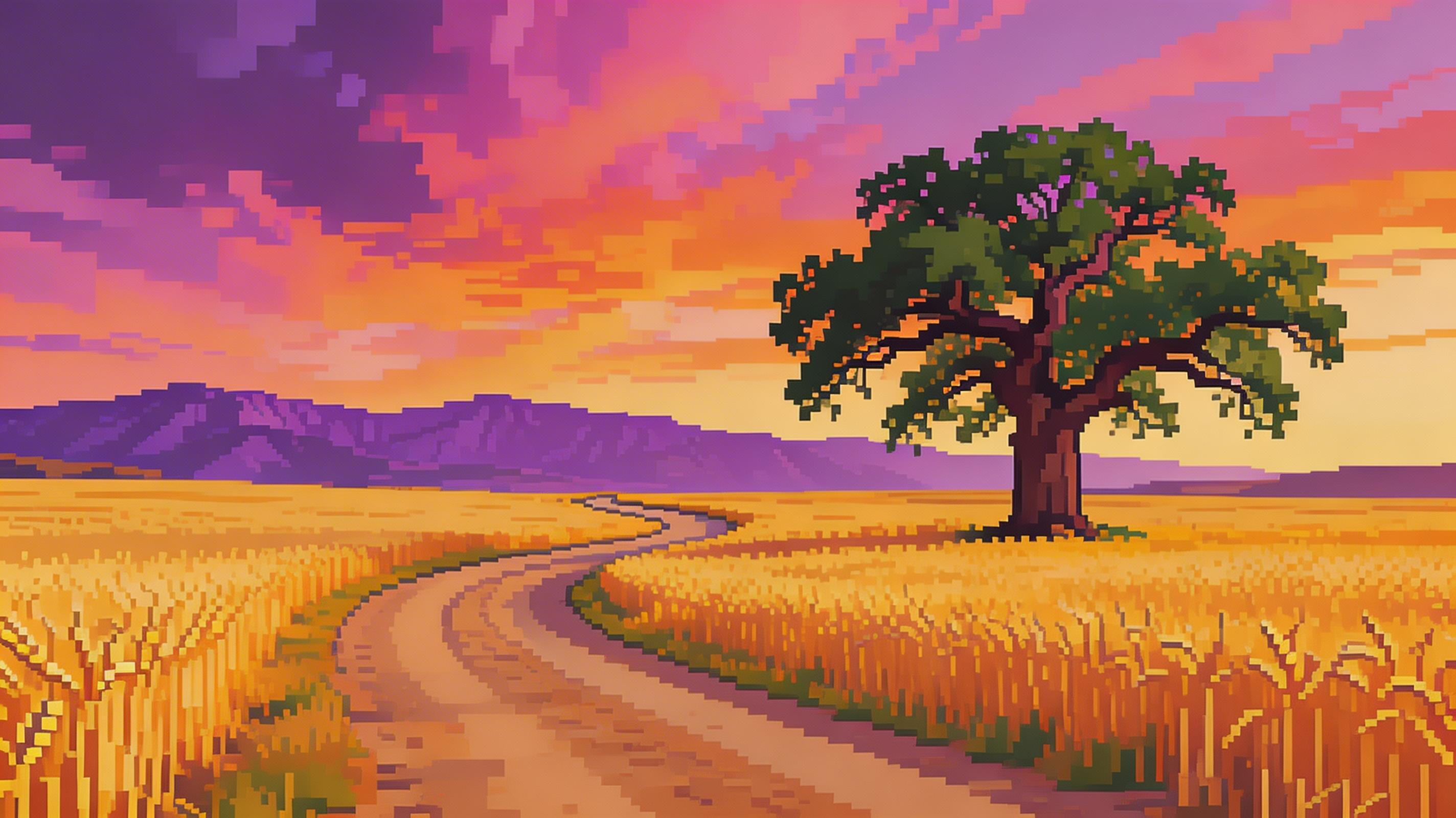
Same road, same tree, same framing. Three completely different images. The edit endpoint kept the bones of the composition and rebuilt everything else.
Season & Weather Changes
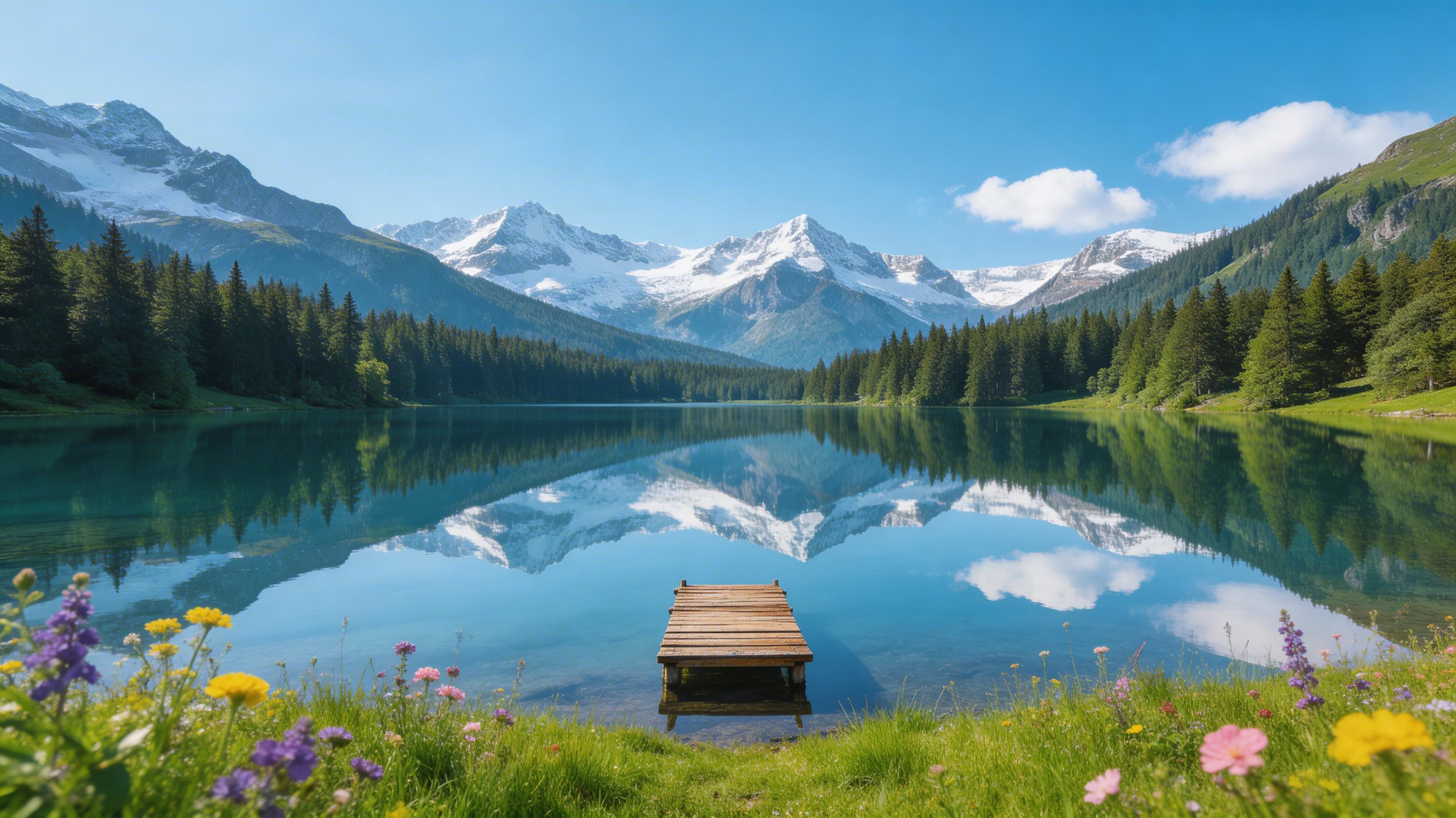
Starting with a summer alpine lake:
Autumn foliage:
Change the season to mid-autumn. The trees surrounding the lake turn to vivid orange, red, and golden yellow. The water reflects the autumn colors. Keep the mountains, lake shape, and overall composition the same. Warm afternoon light.
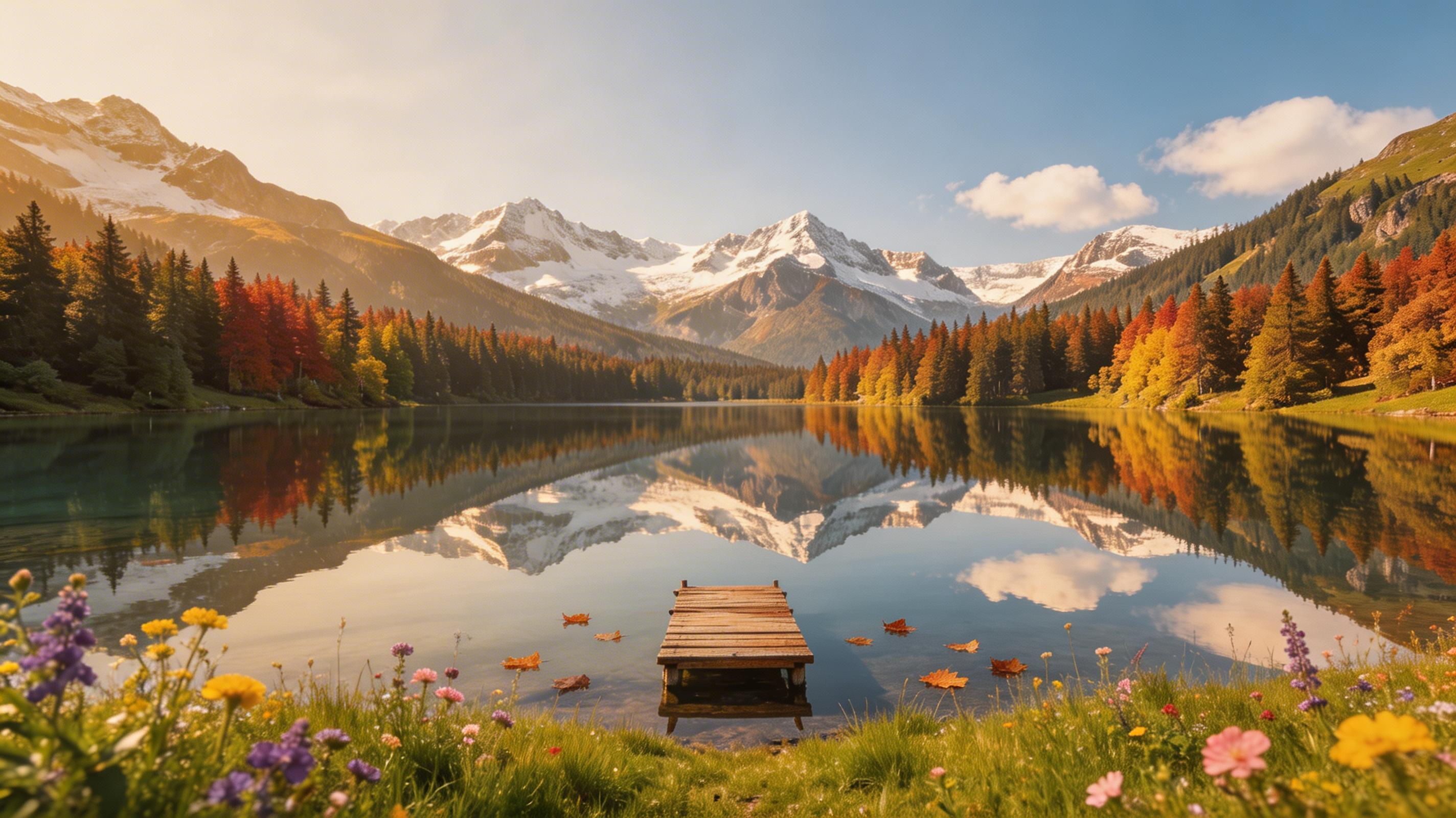
Mountains and shoreline are exactly where they were, but the trees turned and the water reflects a different sky.
Night with Milky Way:
Transform this to a clear night scene. The sky is filled with the Milky Way and thousands of stars. The lake reflects the starlight. Keep the same mountains and shoreline. Cool blue tones, astrophotography look, long exposure feel.
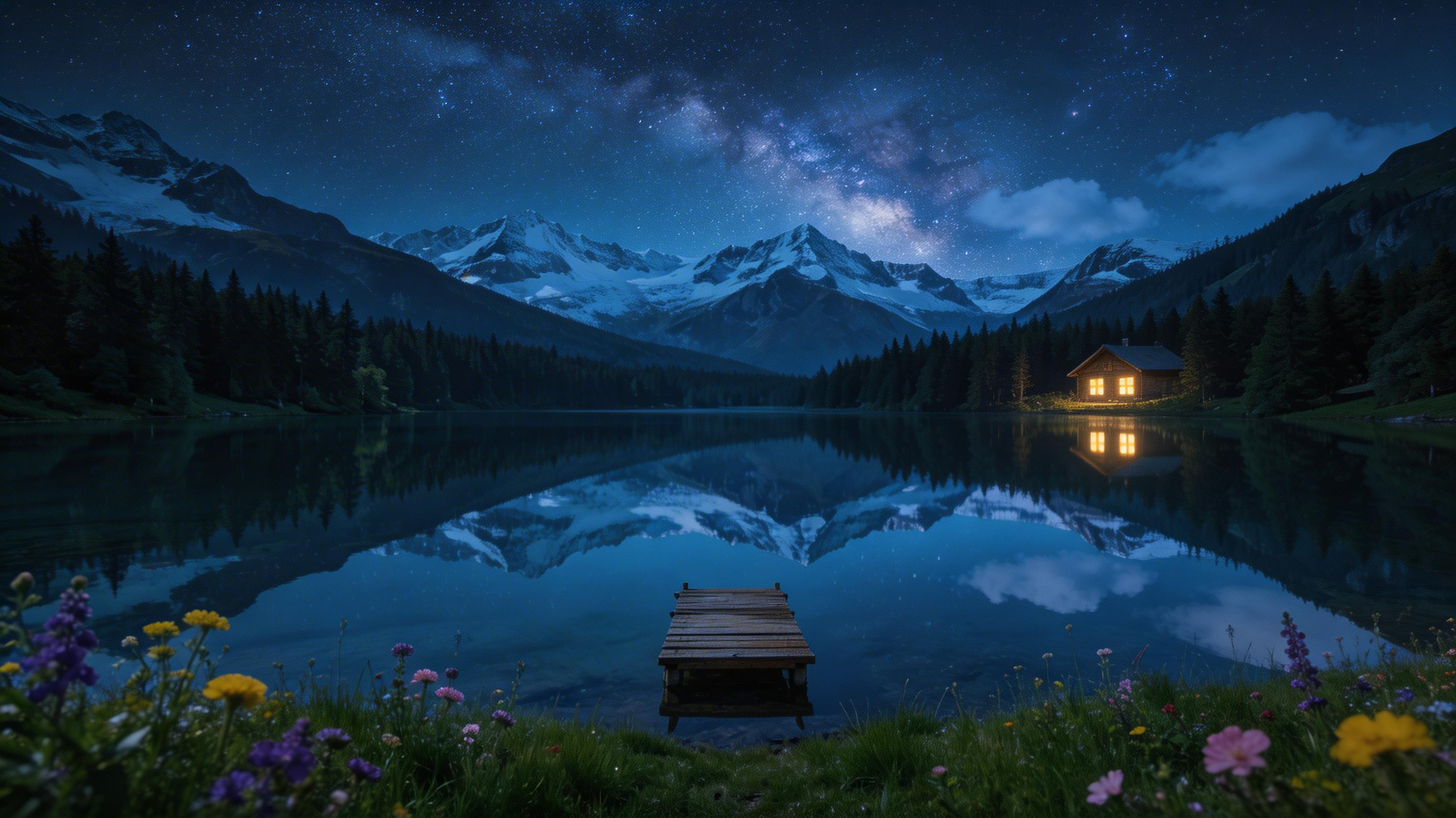
Same geography, but the time jumped forward 12 hours and a star field appeared overhead.
Thunderstorm:
Change the weather to a dramatic thunderstorm. Dark storm clouds roll over the mountains, lightning in the distance. The lake surface is choppy with wind. Rain is visible in the air. Keep the same landscape and composition. Moody, dramatic atmosphere.
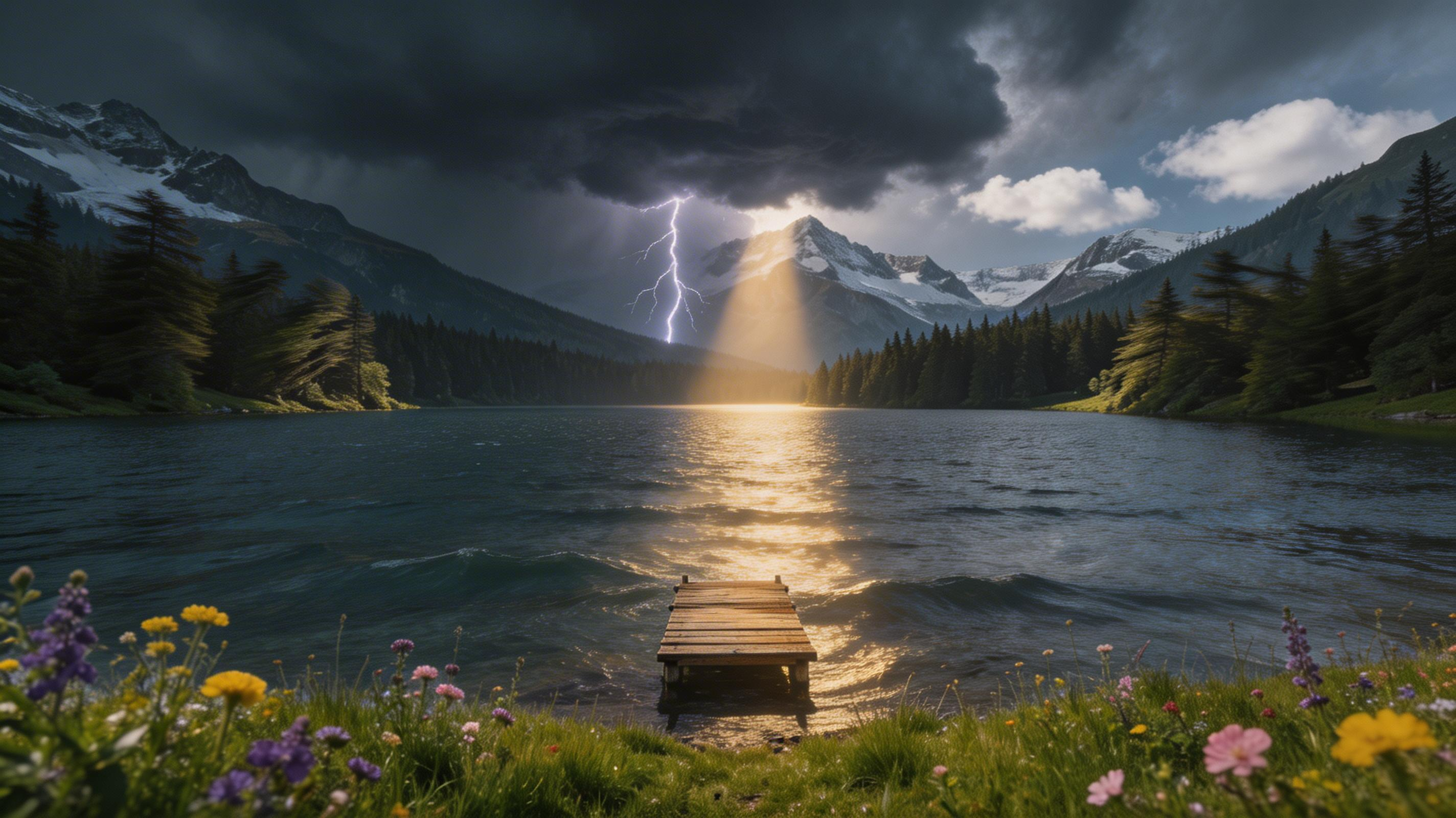
The lake darkened, clouds rolled in, you can almost feel the wind picking up.
Interior Design Transformations
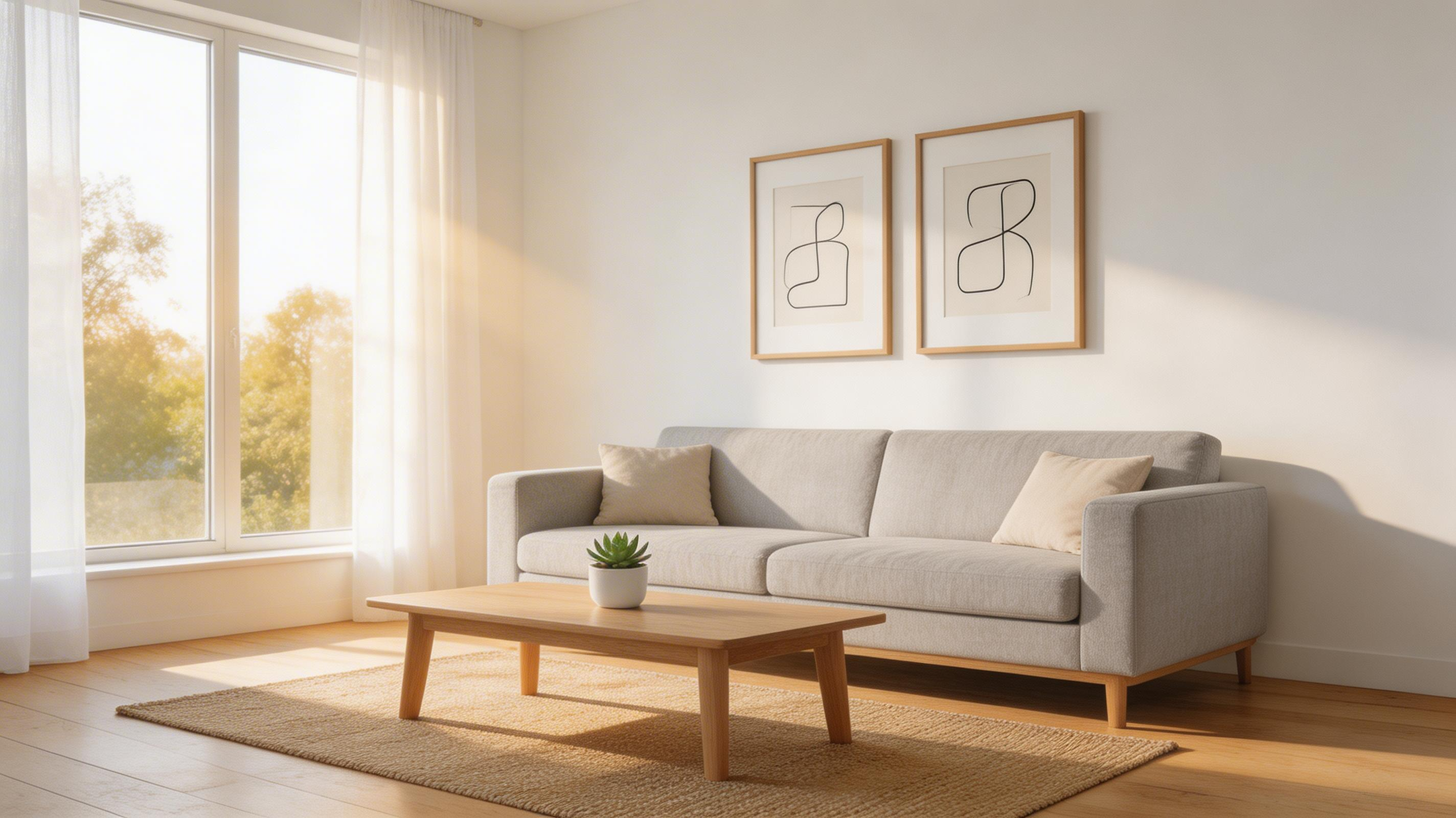
Starting with a bright Scandinavian living room:
Evening mood:
Change the time to a cozy evening. Turn off the daylight, switch on warm table lamps and floor lamps. The window shows a dark blue evening sky. Keep all furniture and layout exactly the same. Warm amber lighting, hygge atmosphere.
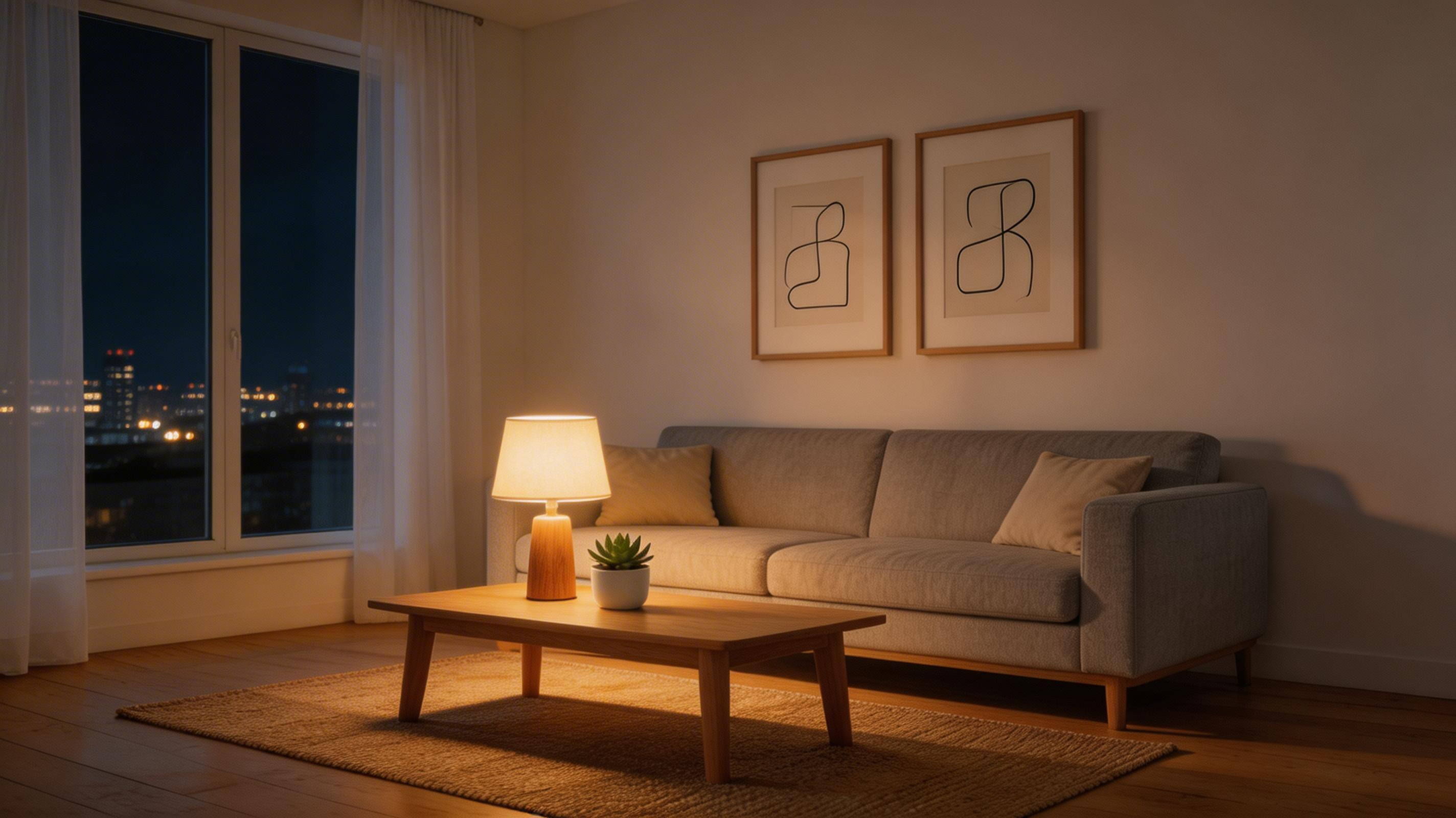
Furniture didn't move an inch, but the light shifted to warm lamps and the whole room feels different.
Christmas decor:
Add Christmas decorations to this room. A decorated Christmas tree in the corner, stockings hung on the wall, string lights along the window, wrapped presents on the floor. Keep the existing furniture and layout unchanged. Warm holiday lighting.
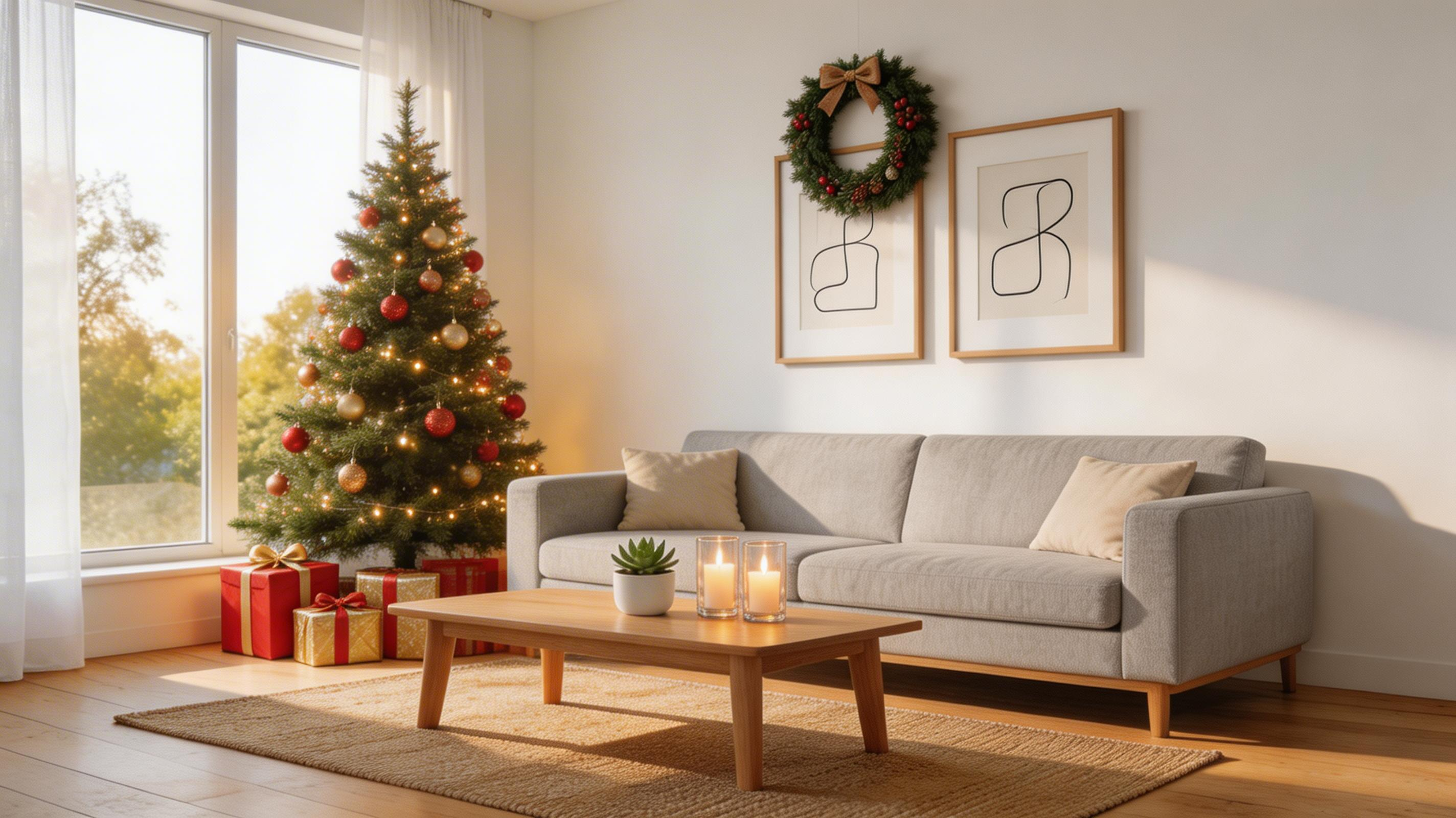
Same layout, now with a tree in the corner, stockings, string lights. The model figured out where to put everything.
Urban jungle:
Fill this room with lush indoor plants. Large monstera and fiddle leaf fig plants in corners, trailing pothos and string of pearls hanging from shelves, small succulents on the coffee table. Keep all existing furniture in place. The room should feel like an urban jungle greenhouse.
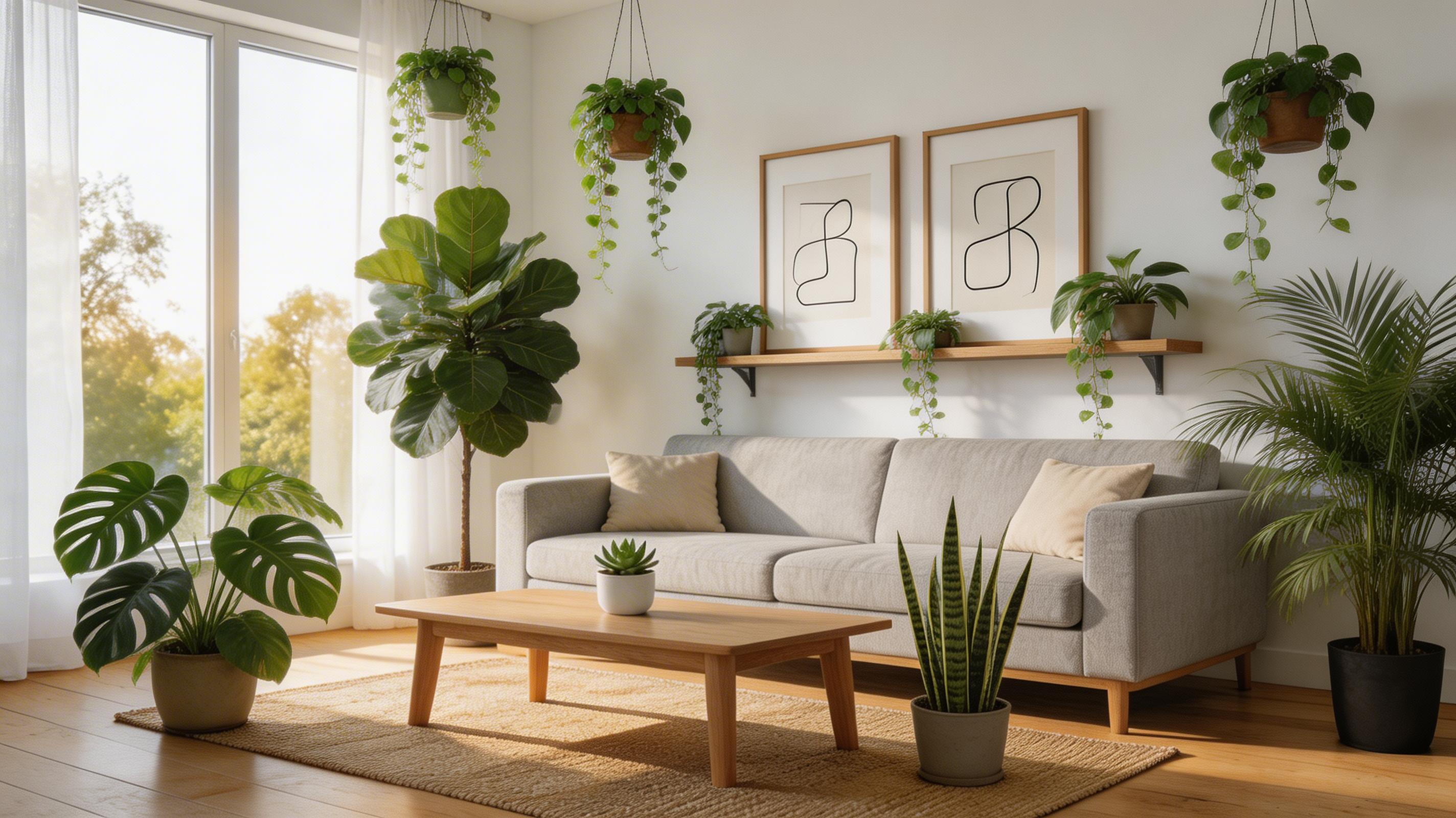
Plants everywhere, trailing vines. The room turned into a greenhouse without touching the furniture arrangement. If you're doing interior design mockups, this is the fast lane.
Portrait Edits
Starting with a Mediterranean afternoon portrait:
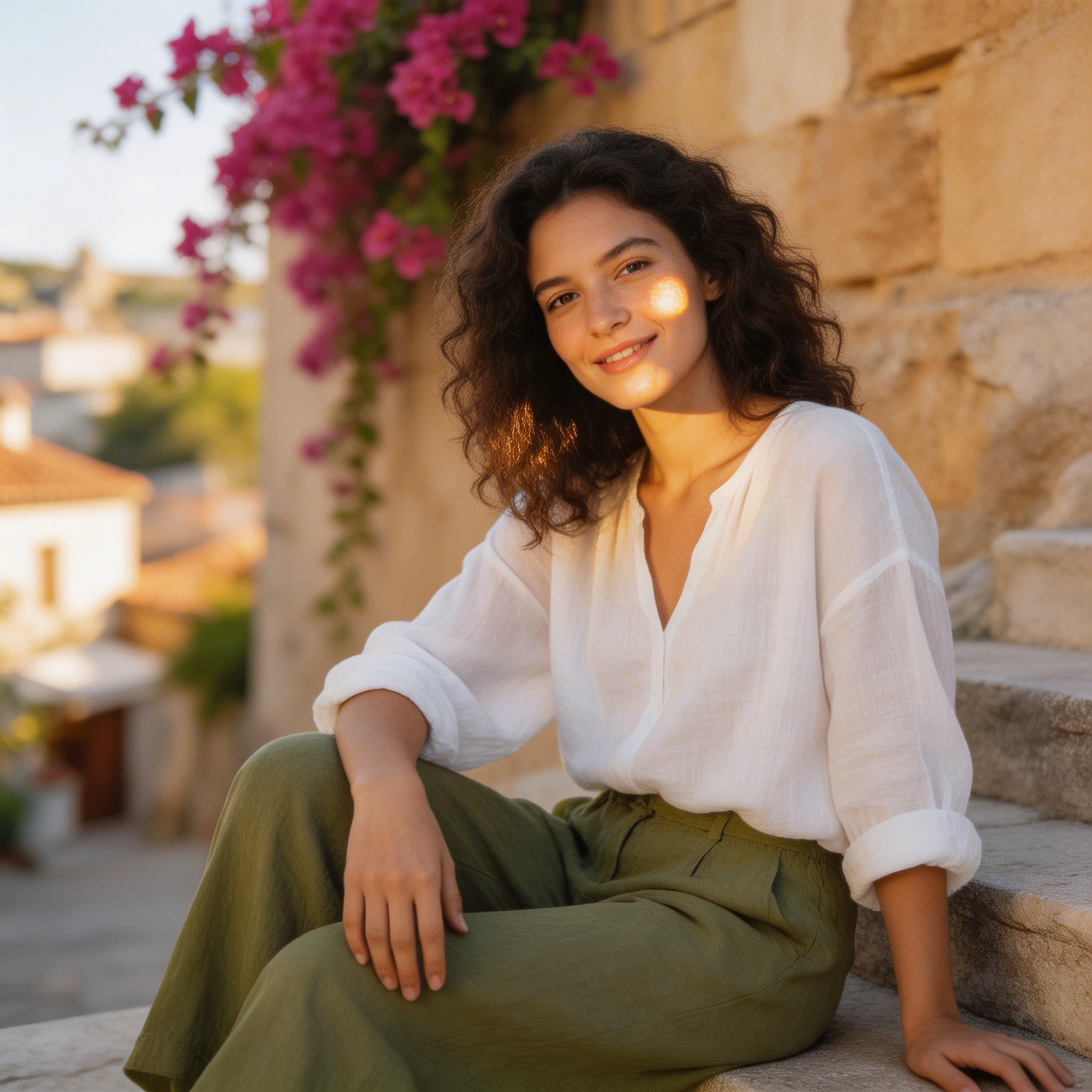
Heavy rain:
Add heavy rain to this scene. The person's hair is wet, water droplets on their skin and clothing. Rain streaks visible in the air, wet surfaces reflecting light in the background. Keep the same person, pose, and framing. Moody overcast lighting.
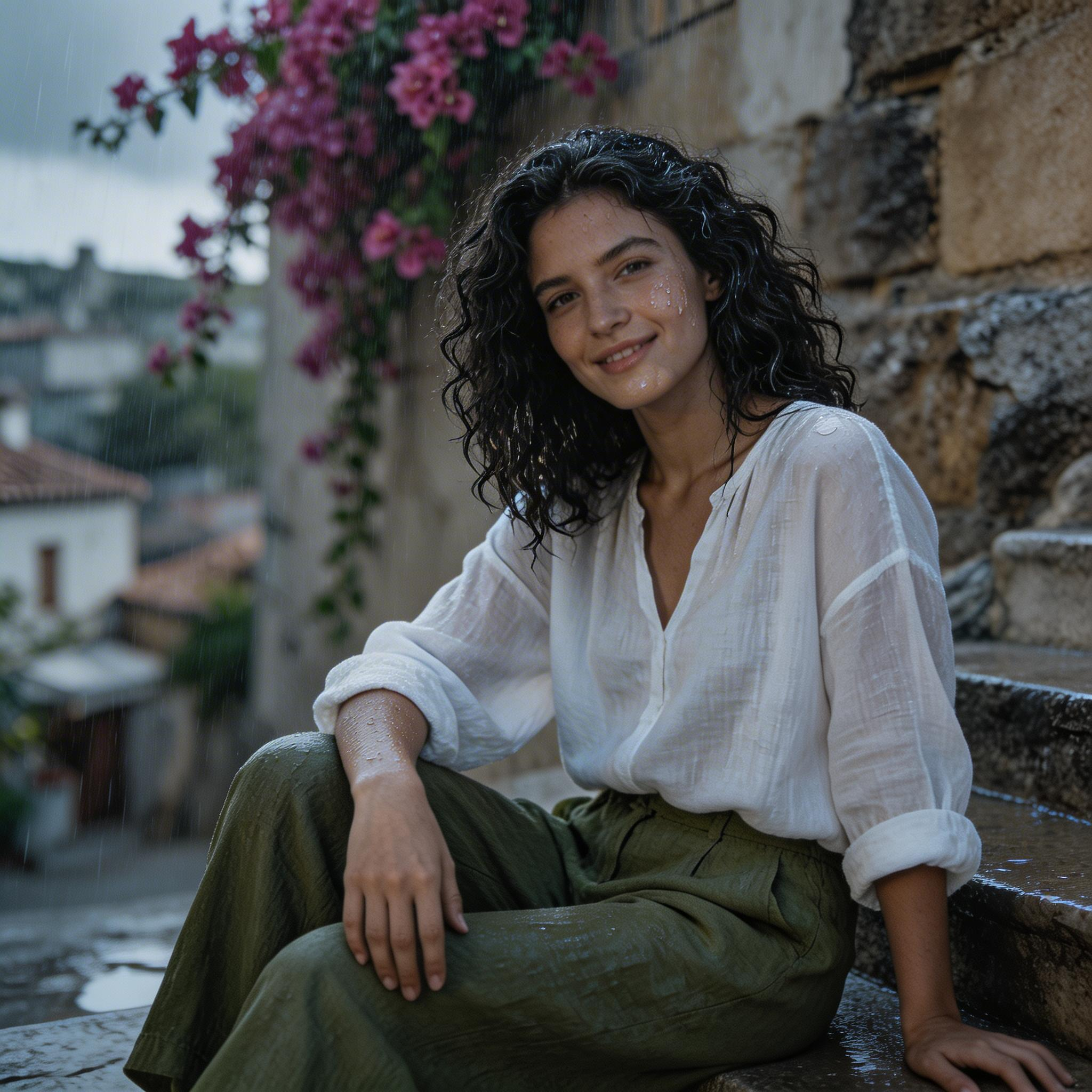
Same person, same composition, but the weather changed around her. Wet hair, water on skin, rain streaks in the background.
Winter + new wardrobe:
Change the season to winter. The person wears a warm wool coat, knit scarf, and winter layers. Snow falling gently in the background, cold breath visible in the air. Keep the same person's face and general pose. Cool winter light with warm clothing tones.
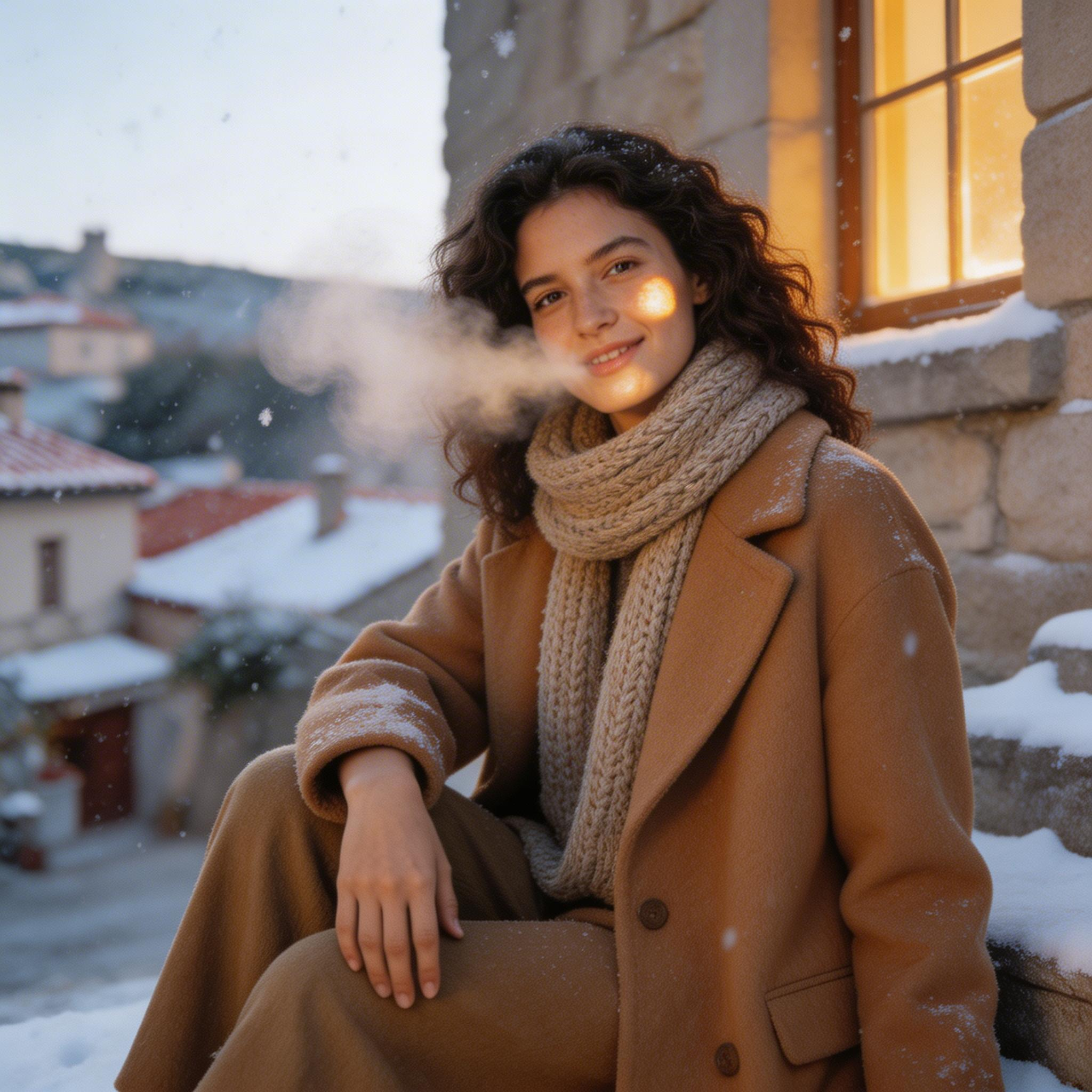
Same face, now bundled up in winter layers. The edit prompt handled the wardrobe swap on its own.
Product Customization
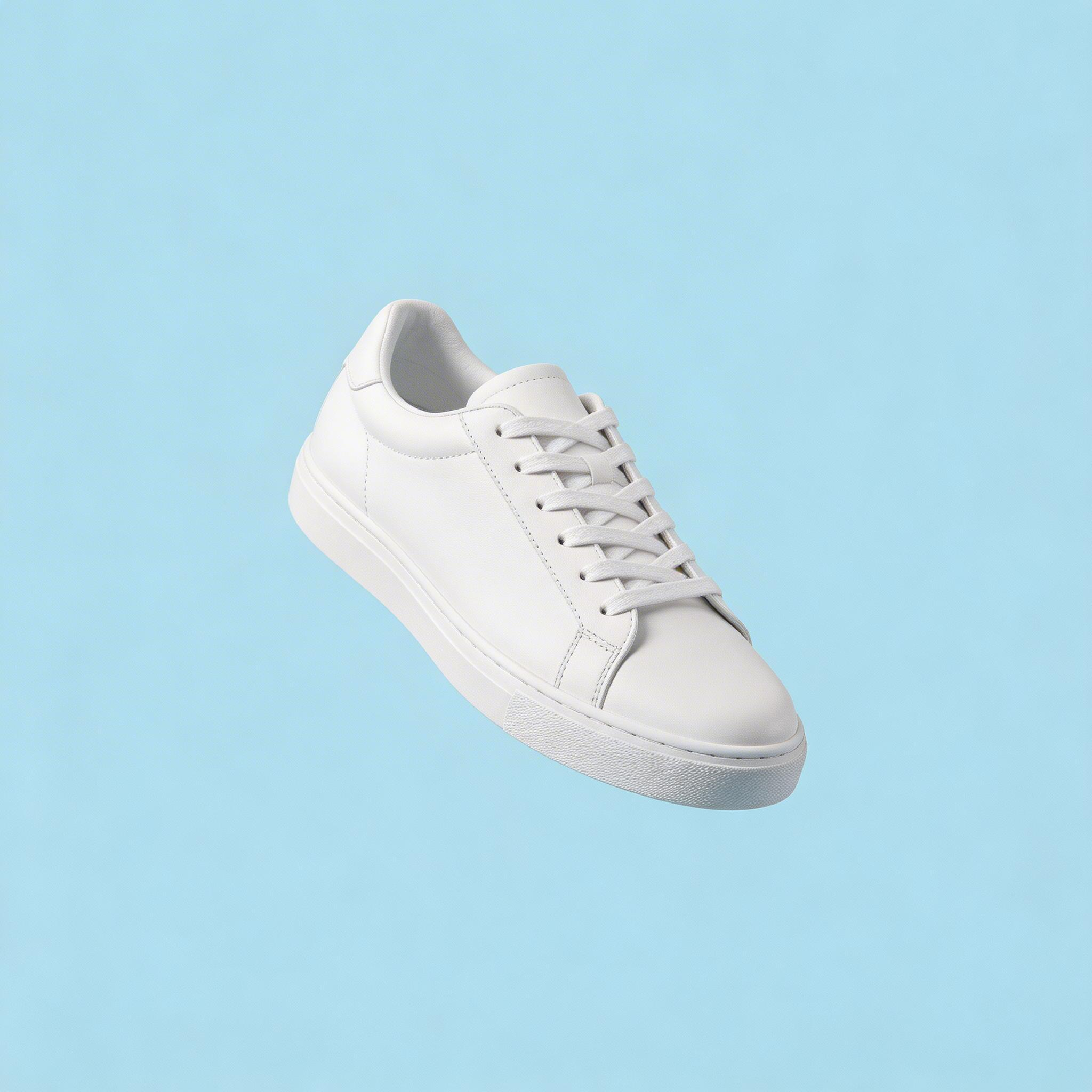
Starting with a clean white sneaker studio shot:
Neon custom colorway:
Change the sneaker colors to a bold neon colorway. Hot pink upper, electric blue swoosh, neon green sole. Keep the same shoe shape, angle, and studio background. Clean product photography lighting.
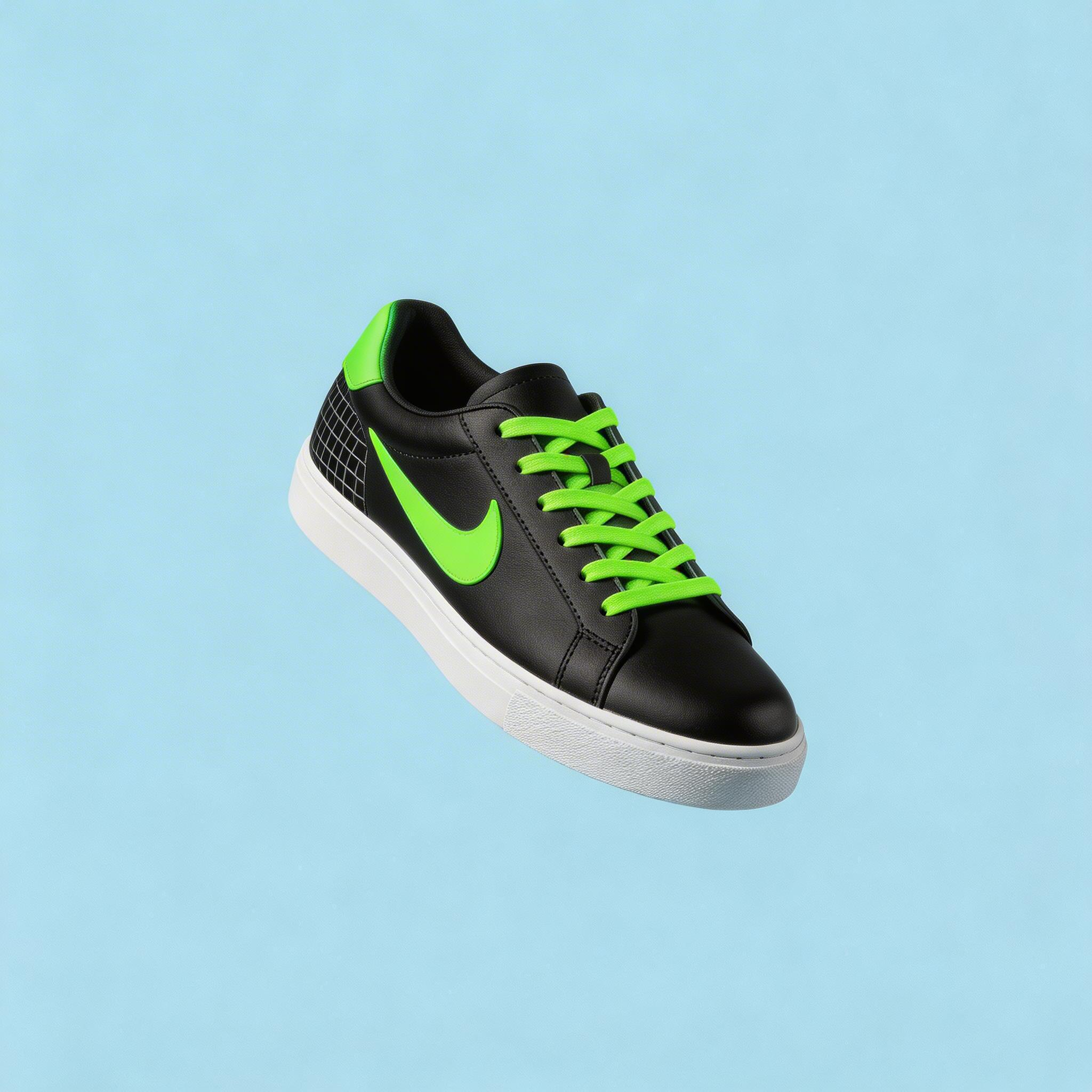
The sneaker kept its shape and proportions while the colors changed entirely. Good for visualizing colorways before production.
Muddy forest trail:
Place this sneaker in an outdoor forest trail setting. The shoe is slightly dirty with mud splashes. The ground is a wet dirt trail with fallen leaves, forest trees in the blurred background. Action lifestyle photography, natural daylight. Keep the same shoe model.
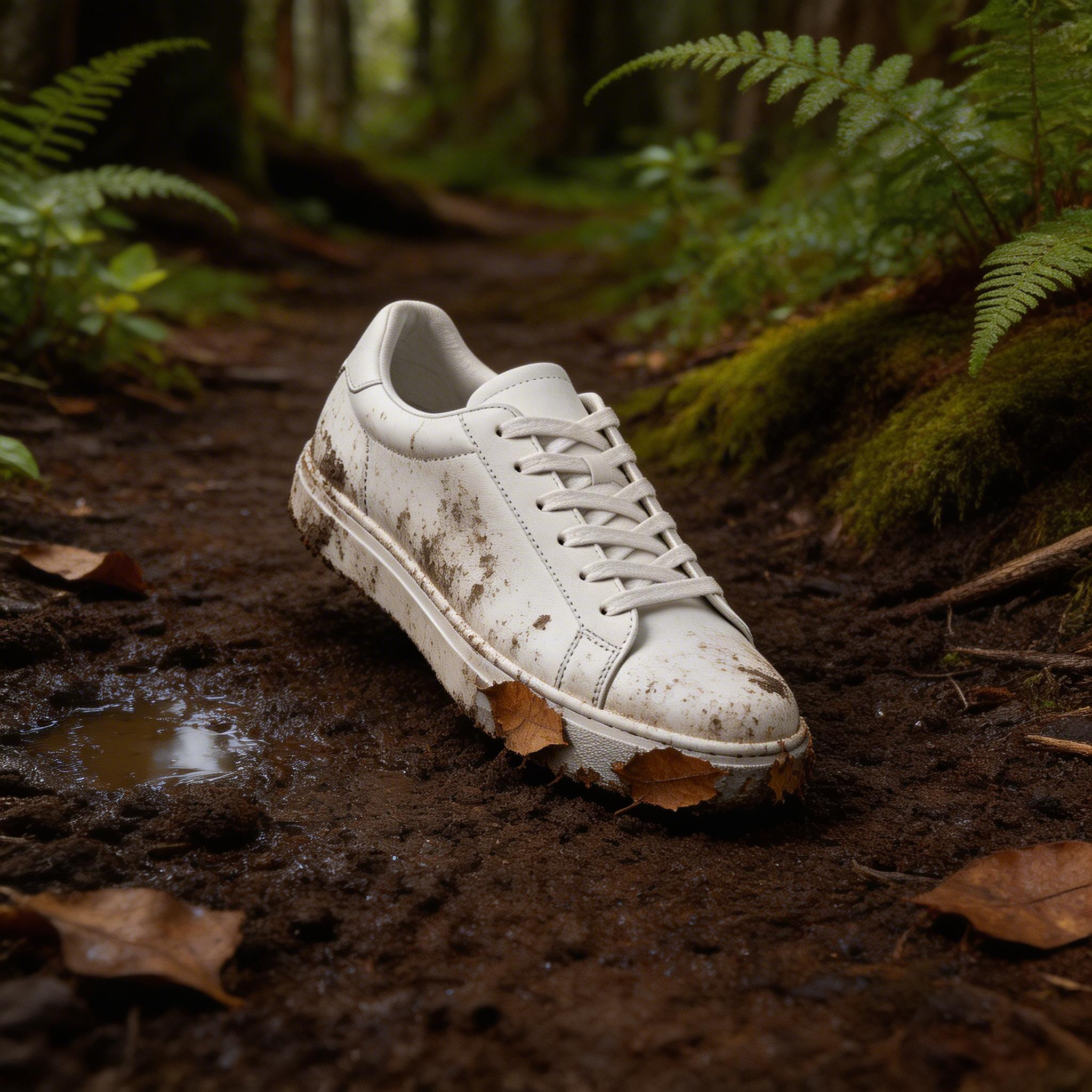
One prompt took it from a studio shot to a muddy trail. The sneaker picked up dirt and the environment is completely new. Product marketing teams, take note.
Food Styling
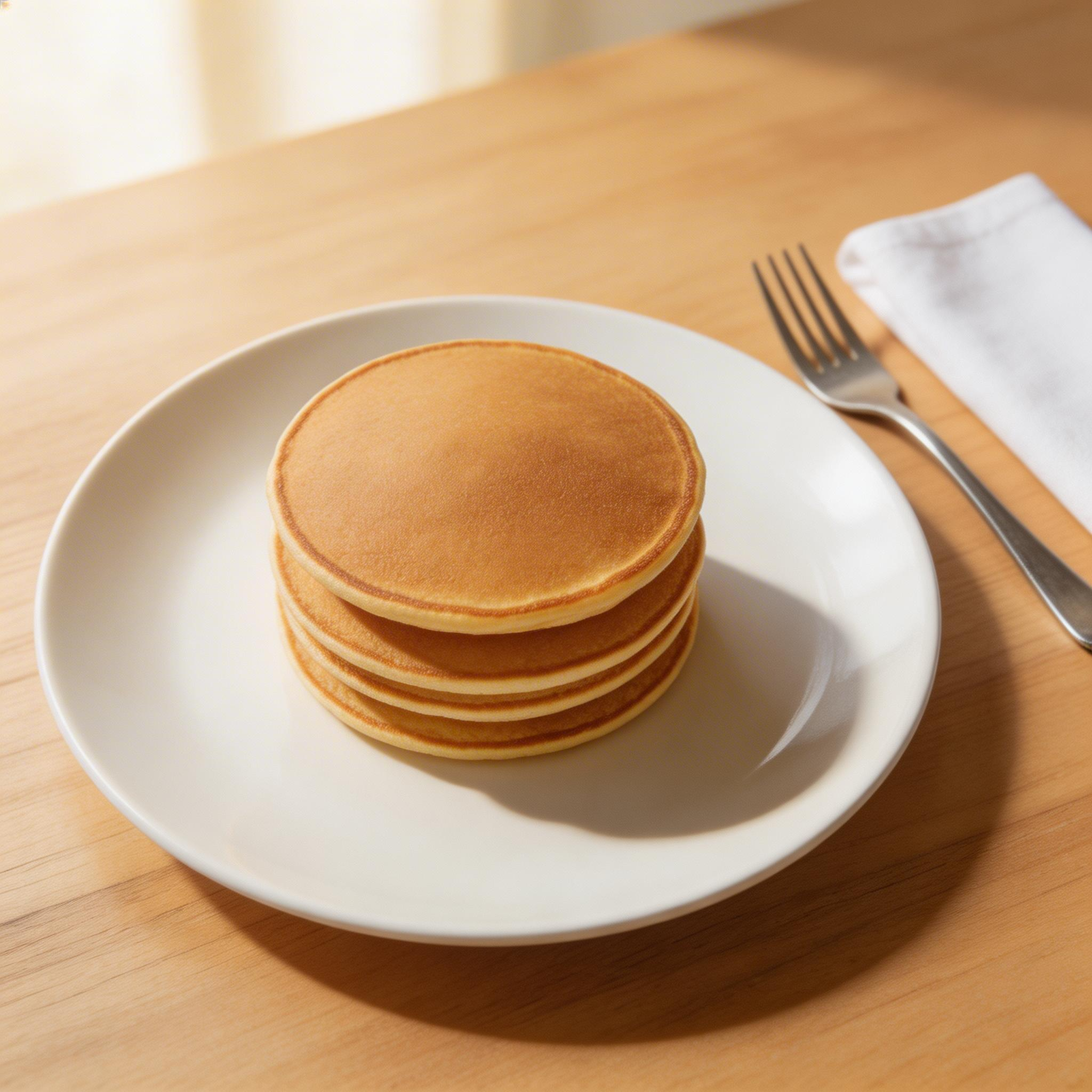
Starting with plain pancakes:
Loaded with syrup, berries, and butter:
Add toppings to these pancakes. Maple syrup dripping down the sides, a pat of melting butter on top, fresh blueberries and sliced strawberries scattered over the stack. Keep the same plate, table, and composition. Appetizing food photography.
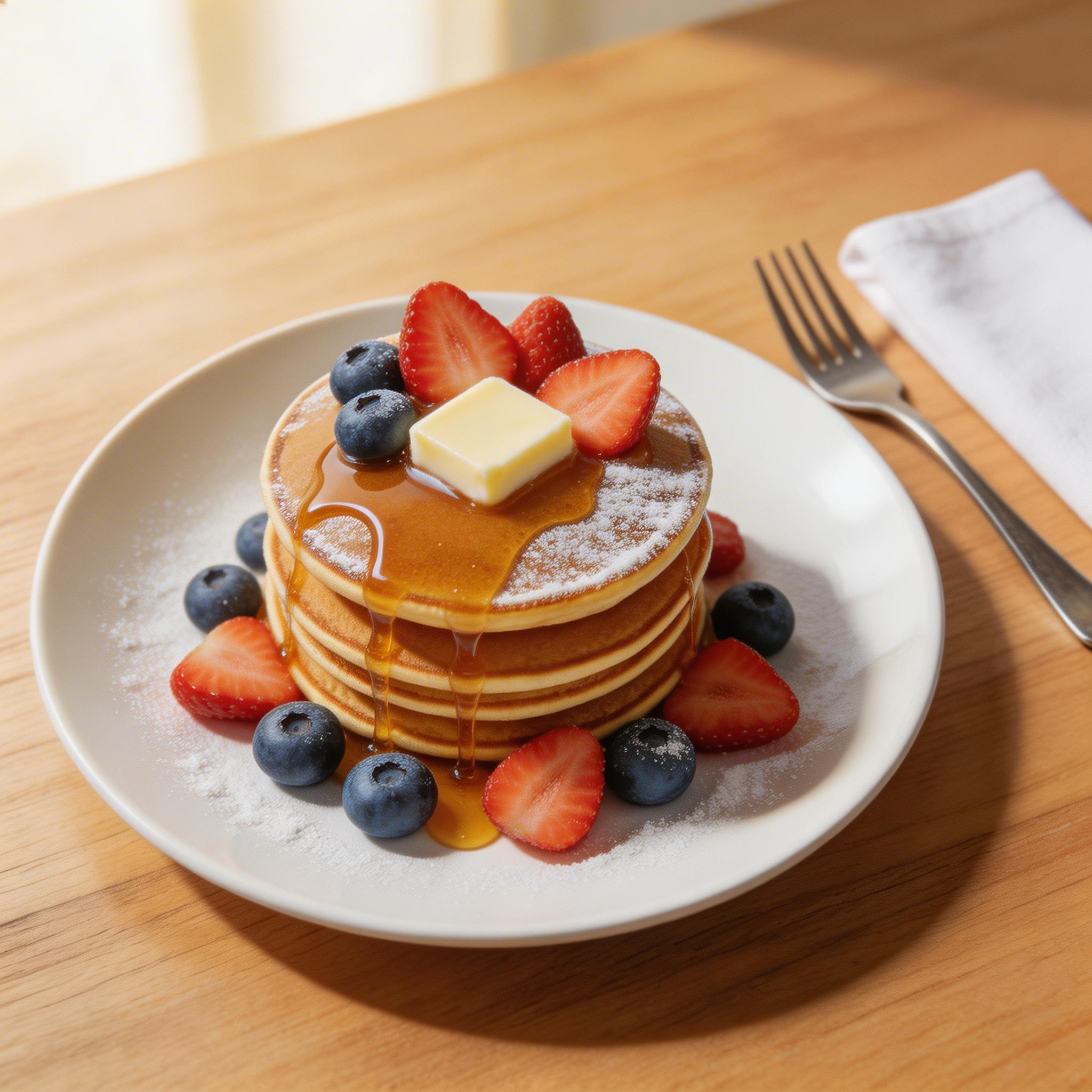
The pancake stack stayed put, toppings appeared. The syrup drip looks natural.
Japanese souffle pancakes:
Transform these into Japanese souffle pancakes. Tall, fluffy, jiggly pancakes stacked two high with powdered sugar dusted on top, a small pat of butter, and warm maple syrup on the side. Keep the same table setting. Soft cafe lighting, Japanese kissaten aesthetic.
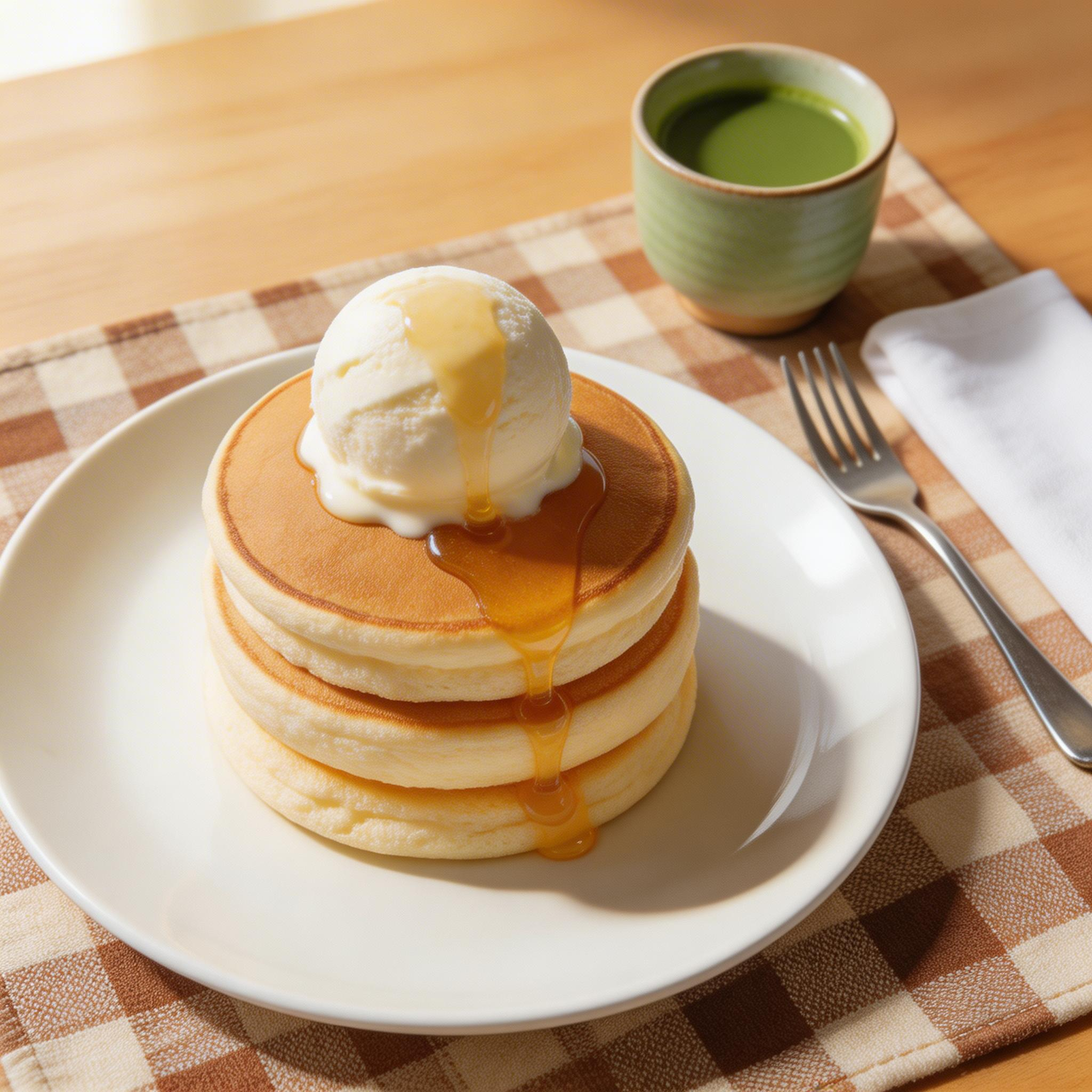
This one didn't just add toppings. It changed the pancakes themselves, from flat American-style to tall, jiggly souffle pancakes. The model understood the cuisine difference.
Style Transfer: Photo to Art
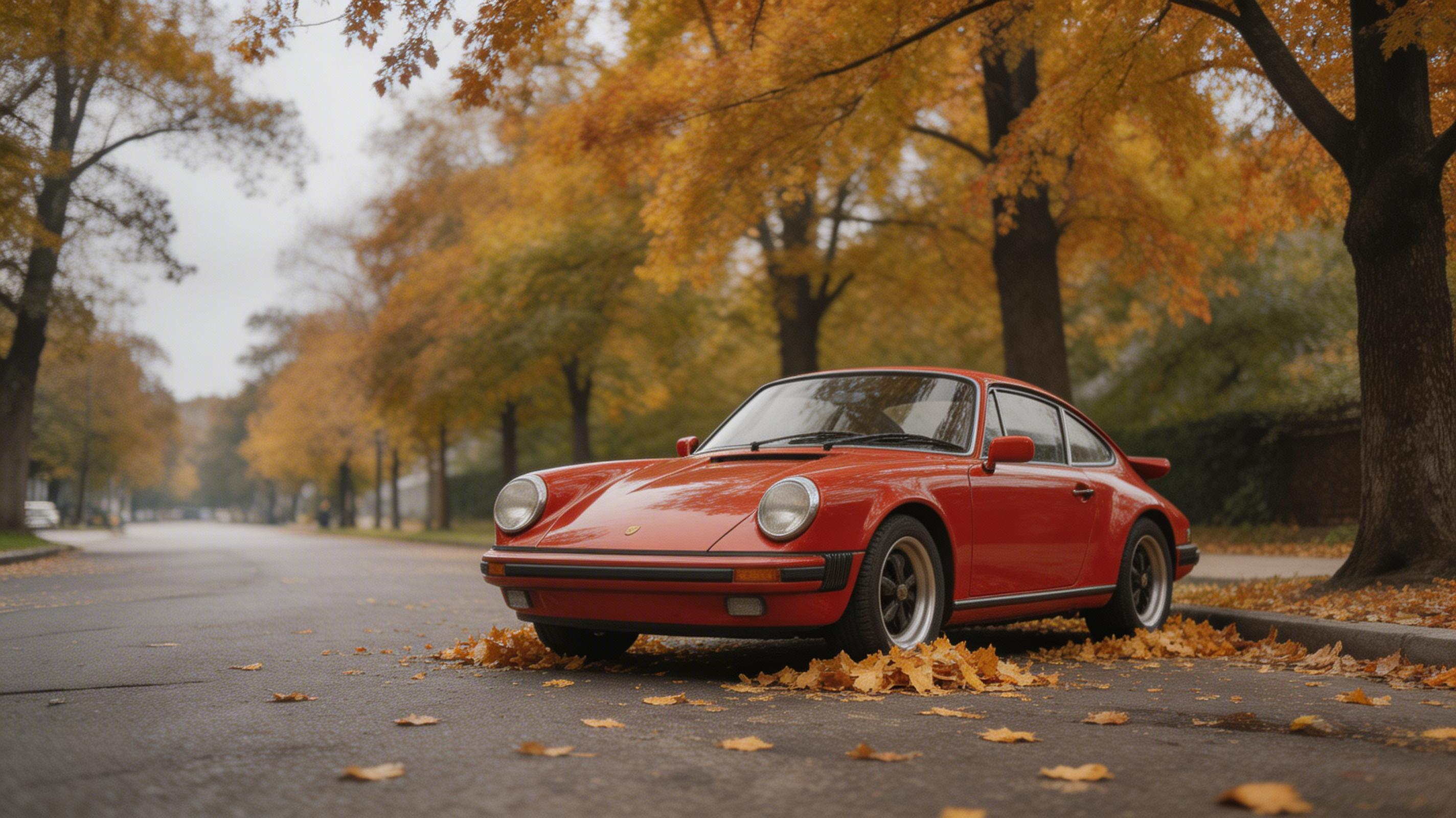
Starting with a red Porsche 911 in autumn:
Cyberpunk night:
Place this car in a cyberpunk city at night. Wet pavement reflecting neon signs in pink and blue. The car is parked on a rain-soaked street with futuristic buildings and holographic advertisements in the background. Keep the same car model and angle. Cinematic night lighting, Blade Runner atmosphere.
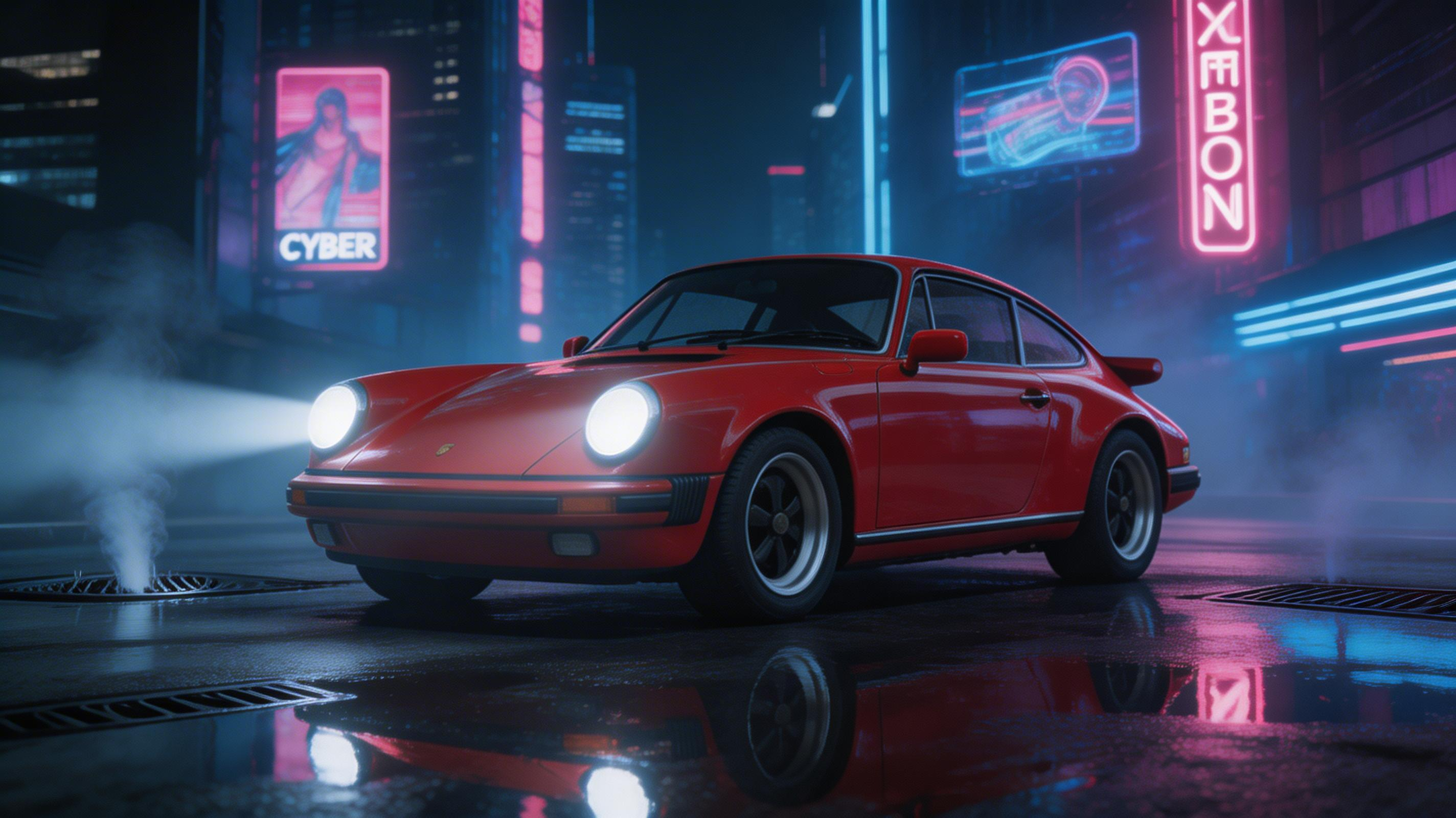
The Porsche kept its shape and angle. Everything else went neon and wet pavement.
Watercolor painting:
Convert this photograph into a loose watercolor painting. Visible brushstrokes, soft color washes bleeding into each other, white paper showing through in places. Keep the same car and composition. Traditional watercolor illustration on textured paper.
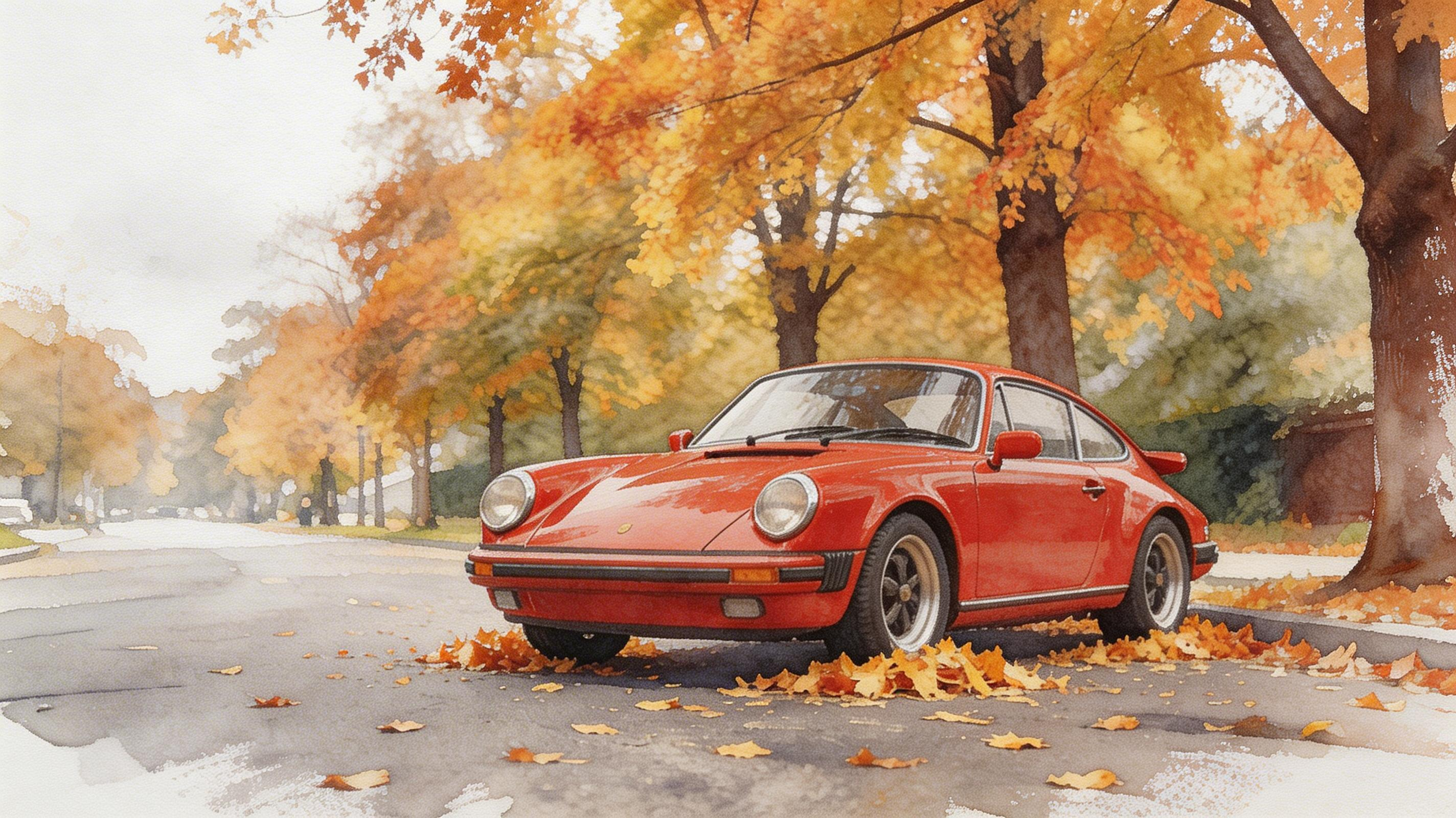
Same car, same composition, but now it looks hand-painted with visible washes and paper texture.
What We Learned About Editing
What works well:
- Season and weather changes
- Time of day shifts
- Adding or removing objects
- Color and material changes
- Style transfers (photo to painting, pixel art)
- Clothing changes on people
- Food styling modifications
- Background replacement
Tips for better edits:
- Specify what to change AND what to keep
- Describe the end state, not the process
- For style transfers, describe target style characteristics
- More dramatic changes need more detailed prompts
- Use reference images for color/style transfer
The bottom line: "Make it better" won't work. "Change the background to a sunset beach, keep the person and their clothing exactly the same" will. Describe the specific end state.
Negative Prompts
Don't use negative prompts preemptively. Generate first, then add negatives to fix specific problems you see in the output. If the image has blurry hands, add "blurry hands" to the negative prompt. If there is unwanted text, add "text, watermark." But starting with a wall of negative prompts before you have even generated anything is not going to help.
A general-purpose negative prompt that covers most situations:
blurry, low quality, distorted, deformed, watermark, text overlay, cropped, out of frame
Use it as a starting point and customize based on what you are actually seeing in the output.
Style Keywords That Actually Matter
After testing hundreds of prompts, these are the keywords that consistently made a difference. Not exhaustive, but these are the ones we keep coming back to.
Photography Styles:
- "editorial photography" for magazine quality
- "street photography" for candid documentary
- "product photography" for clean studio
- "macro photography" for extreme close-up
- "Kodak Portra 400" for warm film tones
- "Fujifilm Velvia" for punchy saturated colors
- "tilt-shift" for miniature model look
Art Styles:
- "watercolor illustration" for soft painterly
- "oil painting" for thick brushstrokes
- "concept art" for polished digital
- "matte painting" for epic landscapes
- "isometric 3D render" for tech illustrations
- "storybook illustration" for warm inviting
Lighting Terms:
- "golden hour" for warm, reliable, and flattering results
- "rim lighting" for dramatic edge highlights
- "volumetric lighting" for visible light shafts
- "chiaroscuro" for dramatic contrast
- "soft box lighting" for clean studio
- "god rays" for cinematic beams
Mood Keywords:
- "ethereal" for dreamy, otherworldly
- "gritty" for raw, textured
- "whimsical" for playful, fantastical
- "melancholic" for somber, reflective
- "Wes Anderson palette" for symmetrical pastels
- "film noir" for high-contrast moody black and white
Aspect Ratios
| Ratio | When to Use |
|---|---|
| 1:1 | Social media, profile pictures, centered compositions |
| 16:9 | Cinematic scenes, web banners, desktop wallpapers |
| 9:16 | Mobile wallpapers, full-body portraits, vertical posters |
| 3:2 | Classic photography, landscapes |
| 21:9 | Ultra-wide cinematic, website hero images |
Common Mistakes
1. The "Beautiful Sunset" Trap
Your first instinct is to write "a beautiful sunset over the ocean." You get a sunset. A generic, stock-photo sunset that could have come from any model. The word "beautiful" tells the model nothing useful. Beautiful how? What coast? What clouds? What time exactly?
Instead, swap every adjective for a concrete detail. "A sunset over the Pacific coast with scattered altocumulus clouds lit from below in deep orange and magenta, silhouetted cypress trees on a rocky headland, long exposure smoothing the waves." Now the model knows what you're actually picturing.
2. Keyword Soup
It's tempting to pile on keywords: "8K, ultra HD, hyper-realistic, photorealistic, award-winning, masterpiece, trending on ArtStation." The reasoning engine works best with natural sentences, not keyword spam. When we switched to writing actual descriptions, talking to the model like we'd describe an image to a friend, the results got noticeably better. Write prompts like sentences, not SEO metadata.
3. The 300-Word Novel
The opposite problem. A 300-word prompt describing every blade of grass forces the model into compromises. Two objects want to be in the same spot. You specified three different lighting directions without realizing it. The model tries to honor everything and the whole image suffers.
Keep it under 200 words. If your prompt is longer than that, you're probably contradicting yourself somewhere. Pick the details that actually matter and let the model handle the rest.
4. Forgetting Quotation Marks for Text
Without quotes, the model treats "OPEN" as a descriptive keyword and renders something open-related, but not the actual word. Wrap any text you want rendered literally in quotation marks inside your prompt. Always. No exceptions.
5. No Style Anchor
You described the scene in detail but forgot to say what it should look like. Photograph? Watercolor? 3D render? Oil painting? Without that anchor, the model picks whatever it wants, and the result feels aimless. It might be technically fine but it won't feel intentional. Always include at least one style term: "cinematic photography," "watercolor illustration," "isometric 3D render." Think of it as telling the model what medium to work in.
6. "Make It Better" Edits
Uploading a photo and writing "make it better" gets you random subtle changes that weren't what you had in mind. The edit endpoint needs specifics. Describe the end state you want and call out what should stay untouched: "Change the background to a sunset beach, keep the person and their clothing exactly the same." That works. "Make it better" doesn't.
7. Vague Spatial Descriptions
"Two people at a cafe" tells the model nothing about who sits where, and you end up with awkward overlaps. Switch to explicit positions ("on the left side of the table... on the right side... between them") and compositions snap into place. Use left, right, foreground, background, between, above, below. Don't leave positioning to chance.
Quick Reference
The cheat sheet:
- Prompt structure: Subject > Setting > Style > Lighting > Technical
- Text in images: Always use quotation marks around text you want rendered
- HEX colors: Pair hex codes with color names for best results (
#FF006E hot pink) - JSON prompting: Use for multi-subject scenes with precise placement
- Spatial control: Use explicit positional language (left, right, foreground, between)
- Character consistency: Copy-paste character descriptions word-for-word between panels
- Multi-language: Match prompt language to scene culture for more authentic results
- Editing: Describe the specific end state, not "make it better"
- Style keywords: Always include at least one style anchor
- Keep it under 200 words. Longer prompts tend to contradict themselves
- Generation endpoint:
fal-ai/bytedance/seedream/v5/lite/text-to-image - Editing endpoint:
fal-ai/bytedance/seedream/v5/lite/edit